REVIEW · ROME
Vespa Sidecar Tour : Express Highlights of Rome
Book on Viator →Operated by Luxurbe · Bookable on Viator
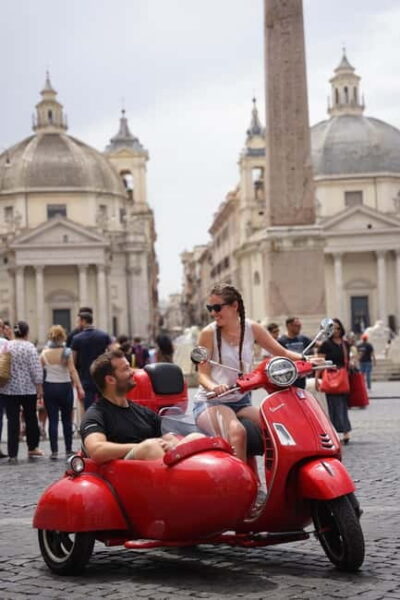
Rome feels faster on a Vespa sidecar. In 90 minutes, you get Vespa Sidecar fun and live commentary as you skim past major sights like Piazza del Popolo, the Colosseum area, and the Pantheon without the slow, line-heavy pace. One possible catch: wind and traffic can make the narration hard to hear unless the mic is working well.
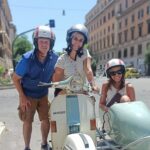
I like that the vibe stays relaxed because it’s a small group (maximum 10). You’ll get a certified helmet, photo stops at the landmarks, and a guide who keeps explaining what you’re seeing while you keep moving.
This is an express, panoramic-style tour. That means you’ll enjoy viewpoints and exterior stops, but no interior admission tickets are included for monuments.
In This Review
- Key things that make this Rome Vespa Sidecar Tour work
- Why a Vespa sidecar tour beats walking Rome in 90 minutes
- Piazza del Popolo and the Altare della Patria: a majestic start
- Colosseum views from the scooter, plus the Forum connection
- Trevi Fountain on the move: classic Rome, minimal waiting
- The Pantheon: a stop that reminds you Rome can engineer
- St. Peter’s Square and the Janiculum Hill viewpoint finish
- Guides, commentary, and what to do if you can’t hear
- Sidecars, seats, and the group-size reality
- Speed, safety, and the feeling of being part of Rome
- Price and value: what $60.33 buys you here
- Should you book this Rome Vespa Sidecar Tour?
- FAQ
- How long is the Vespa Sidecar Express Highlights of Rome tour?
- Where does the tour start?
- Is this tour inside the Colosseum, Pantheon, or other monuments?
- What language is the tour offered in?
- Are helmets provided?
- How many people are in the group?
- What happens if the weather is bad?
Key things that make this Rome Vespa Sidecar Tour work
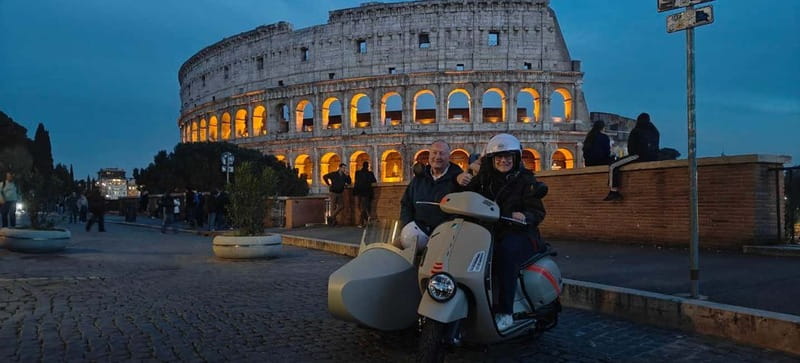
- Express highlights, not museum time: Quick photo stops at top landmarks keep you moving.
- Helmeted safety gear is included: You’re not left scrambling for proper protection.
- Photo stops are built in: You get brief time to shoot from a great angle.
- Guides bring the stories: Many guides share family details and local context as you ride.
- Seating can vary in small groups: Some people may ride behind the driver instead of in the sidecar.
Why a Vespa sidecar tour beats walking Rome in 90 minutes
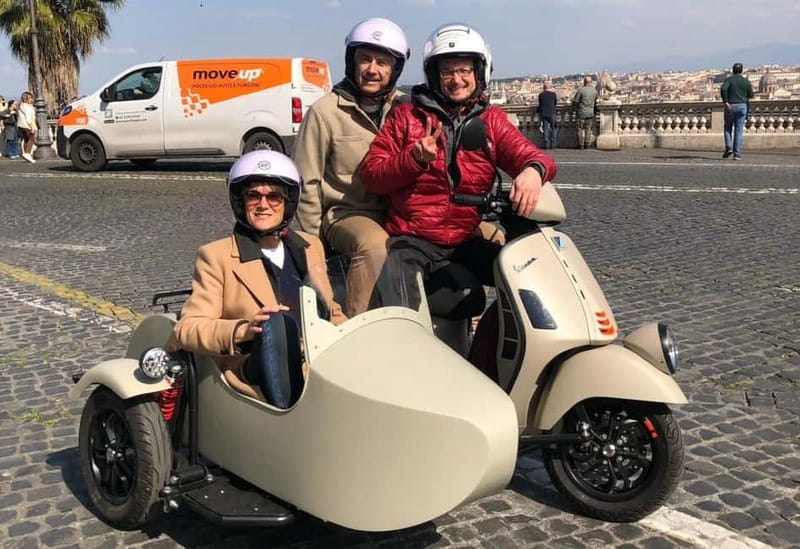
Rome can be gorgeous and exhausting in the same hour. A sidecar ride fixes that problem by turning the city into a moving viewpoint. You trade repeated stops and crossings for short breaks at the biggest icons, then you’re off again.
The best part is how the ride changes your sense of scale. From the scooter, you notice sight lines you usually miss when you’re stuck on sidewalks. The guide’s running commentary also helps you connect the dots, so you’re not just taking photos—you’re understanding what you’re looking at.
The value angle is real here. At around $60 per person for about 1.5 hours, you’re paying for three things at once: a guided route, a ride experience, and safety equipment. For first-timers who want highlights without building a whole day around one neighborhood, that’s a strong deal.
Piazza del Popolo and the Altare della Patria: a majestic start
You kick off at Piazza del Popolo, one of Rome’s grand entry points. It’s where major streets converge, so it’s a smart place to begin: you get an immediate sense of how Rome connects old and new.
From there, you move toward the area dominated by the Altare della Patria (the Altar of the Fatherland monument). This stop is a photo-and-look-around moment, with views down toward the Roman Forum and up toward Capitoline Hill. It’s one of those Rome scenes that feels bigger when you’re slightly elevated, and the stop gives you just enough time to absorb it without turning it into a long museum-style visit.
If you’re sensitive to loud streets, keep in mind the ride starts right in the thick of traffic and energy. It’s thrilling, but it can also mean the guide needs a good mic setup—something a few people have flagged.
Colosseum views from the scooter, plus the Forum connection
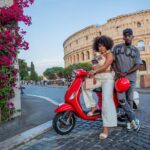
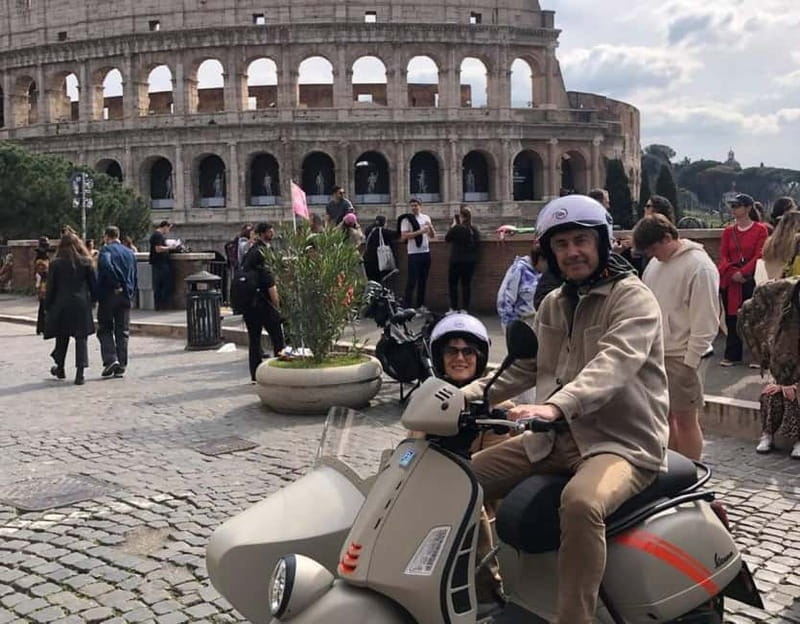
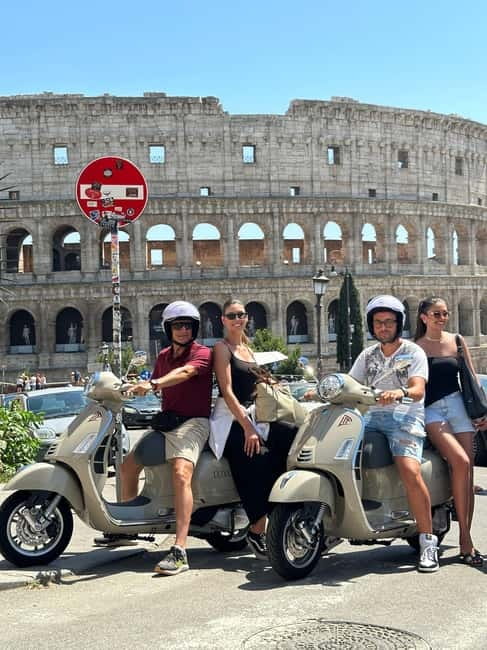
The Colosseum is the headline, even when you’re not going inside. From the road, you get a clear impression of its scale and setting, and you can still connect it to the ancient civic center nearby.
You’ll also hear how the Roman Forum served as the heart of ancient Rome—temples, basilicas, and public spaces that shaped daily life. Even with just exterior stops, that context makes the ruins feel less random. You’re guided to look at the big picture.
This is also where the express format shines. Ten minutes is short, but it’s long enough to get photos and orient yourself. If you’re only in Rome for a few days, this can be the kind of first-hit experience that helps the rest of your trip make more sense.
Trevi Fountain on the move: classic Rome, minimal waiting
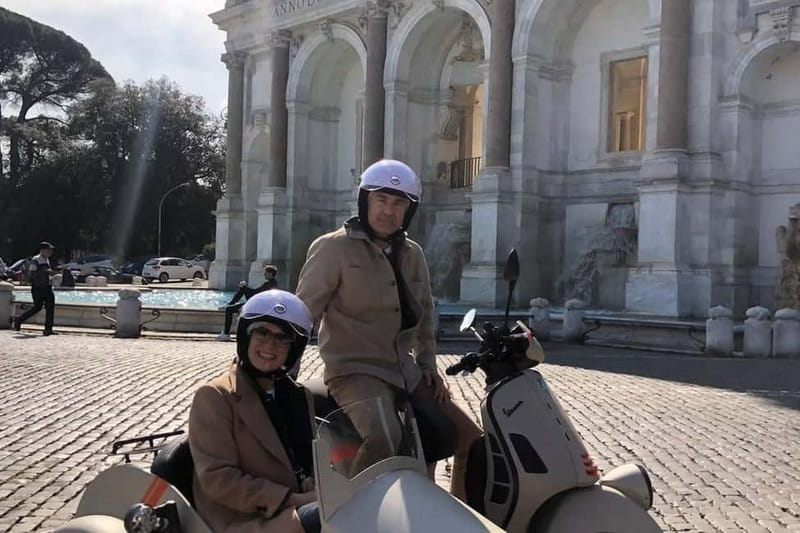
Trevi Fountain is one of those places you can’t really understand from a single angle. This tour gives you quick access to its main spectacle without dragging your day into the heaviest crowds.
You’ll learn what makes it famous—Baroque artistry and the dramatic sculptures around Neptune’s chariot. The fountain’s sound also plays a role in why people fall for it. Even if your stop feels brief, you’ll still catch that “I’m really here” feeling when water and stone dominate your view.
Practical note: plan to keep your expectations realistic. This is an exterior and photo-stop moment, so if you want a long, unhurried walk around the fountain, you’ll probably add your own time later.
The Pantheon: a stop that reminds you Rome can engineer
The Pantheon is pure wow, even when you’re not stepping inside. You’ll see the iconic dome and the oculus overhead, which is the standout visual feature people remember long after they leave.
What makes this stop valuable on a scooter tour is how quickly it gives you an architectural “anchor.” When you later read about Roman engineering, you’ll know exactly what you’re looking for: the geometry, the proportions, and the idea that stone can create a sky-like opening.
The tour style here is simple: look, take a few photos, listen, and move on. If your schedule is tight, this is a smart way to get a first impression without building an entire half-day around one building.
St. Peter’s Square and the Janiculum Hill viewpoint finish
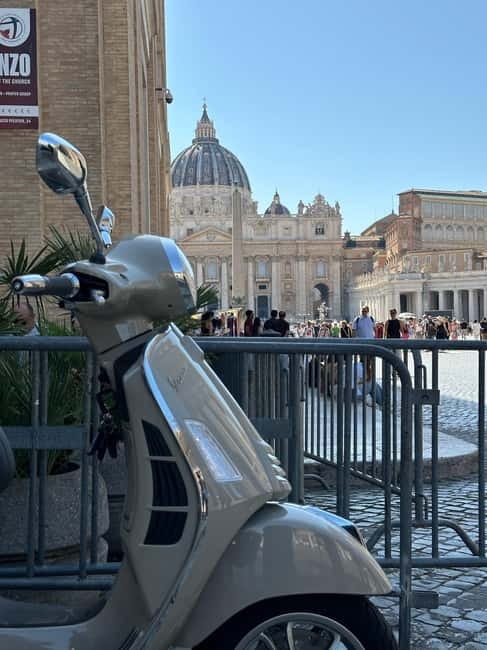
St. Peter’s Square is where the tour slows emotionally. It has that big, ceremonial feeling, framed by Bernini’s colonnade, facing St. Peter’s Basilica. The guide’s commentary helps you interpret what you’re seeing beyond the postcard level.
Timing can matter here. The tour notes that St. Peter’s Square can feel especially magical at night. If your slot happens later in the day, you may get that quieter, more atmospheric mood that makes the square feel less like sightseeing and more like a moment of pause.
Then you wrap with Colle del Gianicolo, also called Janiculum Hill. This is high up for Rome, with sweeping views over rooftops and domes. It’s one of the easiest places to feel the city’s shape—where neighborhoods cluster, how the skyline rises, and where the eye naturally wants to wander.
More than once, people highlight the views and the “wow” feeling of ending a ride with a panorama. On a scooter tour, the final stop can feel like a reward for surviving traffic and learning the route in motion.
Guides, commentary, and what to do if you can’t hear
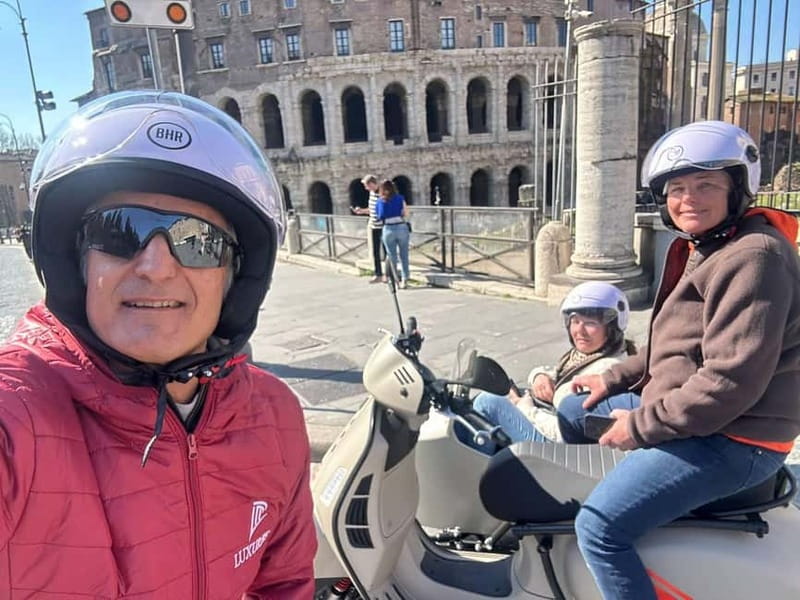
The experience often comes down to your guide. In the feedback, names like Luca and Massimo show up for making the ride smooth and fun. Others—Matt, Ernesto, Roberto, and Fabrizio—are praised for local stories and for pointing out details beyond the obvious.
If you care about narration, be ready for the reality of scooter sound. Wind noise and street noise can drown out audio. One person specifically suggested that a microphone would help, and another noted narration was hard to hear from their seat arrangement.
What you can do: try to sit where you have the best line to the guide, keep your phone secured so you’re not fussing with it mid-sentence, and accept that a few moments will be more about watching than listening.
Sidecars, seats, and the group-size reality
This is where you should read your expectations carefully.
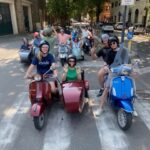
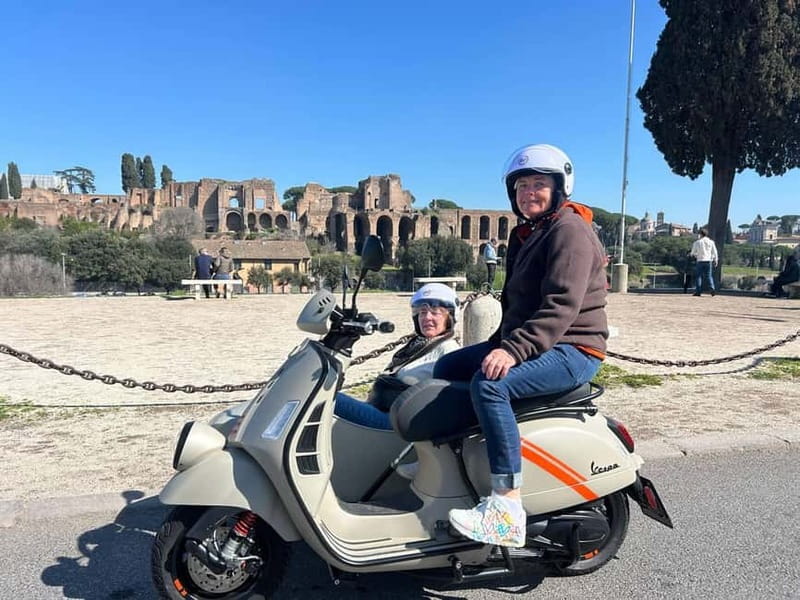
A Vespa sidecar setup typically means two people can ride together: one in the sidecar and one behind the driver. In small groups, not every person may end up in a sidecar at all moments. Some feedback mentions situations where only one sidecar was available and others rode behind drivers. Another notes that with three participants, the arrangement can rotate so not everyone is always in the same spot.
That’s not a deal-breaker for the experience, but it matters for comfort and for how clearly you hear the commentary. If you’re traveling as a group with mixed ages or you strongly prefer the sidecar specifically, I’d treat this tour as a flexible ride experience rather than a guarantee that every seat is a sidecar seat.
Also, the max group size (10) helps. It’s not a giant parade, so you’re more likely to feel guided rather than herded.
Speed, safety, and the feeling of being part of Rome
A Vespa ride comes with a sensation you can’t replicate walking. In one account, the ride reached around 60 km/h when the bike pulled away, and people clearly loved that burst of exhilaration.
At the same time, safety is part of the package. Helmets are provided by the operator, and guides are described as patient and focused on keeping riders comfortable. One family even pointed out that their 8-year-old felt safe in the sidecar.
My practical advice: wear secure shoes, keep loose items tied down, and don’t overthink the first few minutes. Once you get used to the motion, the ride becomes the point.
Price and value: what $60.33 buys you here
Let’s talk value in plain terms. You’re paying for an hour-and-a-half combination of transport, expert guidance, and prime photo access. The tour is timed for quick exterior stops, and that keeps the cost reasonable compared with longer, full-day guided programs.
You’re also getting included safety equipment (certified helmets) and an English-speaking driver/guide. Plus, you can request audio guides if available, which can help if the live mic is overwhelmed by street noise.
What you’re not paying for: interior monument tickets and food. So if you want museum time inside the big attractions, plan to add that separately. The tour is best as your Rome orientation and highlight hit.
Should you book this Rome Vespa Sidecar Tour?
Book it if you want a fast, fun introduction to Rome with a guide talking as you ride. It’s a great fit for couples, families with kids who enjoy adventure, and anyone who doesn’t want to spend the whole trip fighting lines and long walks.
Skip it or at least manage expectations if you need guaranteed sidecar seating for everyone, or if you’re very picky about hearing commentary over street noise. It’s also not the best choice if you’re specifically hunting for inside-the-building time at Rome’s monuments.
If you can handle a short stop rhythm and you’re excited by the thrill of seeing Rome from a moving scooter, this is one of those experiences that can turn into a trip highlight fast.
FAQ
How long is the Vespa Sidecar Express Highlights of Rome tour?
It runs for about 1 hour 30 minutes.
Where does the tour start?
The meeting point is Piazza del Popolo, 11, 00187 Roma RM, Italy.
Is this tour inside the Colosseum, Pantheon, or other monuments?
No. It’s described as a panoramic tour, so entrance tickets to monuments are not included and interior visits are not part of it.
What language is the tour offered in?
It’s offered in English.
Are helmets provided?
Yes. Certified helmets are included with the tour.
How many people are in the group?
The maximum group size is 10 travelers.
What happens if the weather is bad?
This experience requires good weather. If it’s canceled due to poor weather, you’ll be offered a different date or a full refund.