REVIEW · ROME
Rome on Wheels: Experience the City with a Vespa Tour
Book on Viator →Operated by MY VESPA TOURS · Bookable on Viator
Rome moves fast. This Vespa tour turns that into a smooth plan for seeing Rome’s big sights in a few hours. I especially love the detailed audio guide that helps you connect the dots as you ride, and the complimentary souvenir photos so you leave with more than just memories. The main drawback is simple: Rome traffic takes confidence, so if you choose to self-drive, you need real scooter or motorcycle experience (not just a little practice).
I also like that this runs with a small group (up to 15), so you’re not stuck in a long human conga line. The stops are timed tightly—think quick, high-impact looks rather than long museum-style wandering.
If you’re a first-time rider, you can still do this, but pick your comfort level carefully. One smart move: consider riding as a passenger the first time and let your guide handle the pace, the turns, and the tricky streets.
In This Review
- Key highlights worth planning for
- How a Vespa Tour Gets You Past Rome’s Slow Parts
- Getting Started at Via Cavour 80 (and What to Expect Before You Ride)
- Palatine Hill Stops: Ancient Rome’s Viewpoint and Ruins
- St. Peter’s Basilica and the Dome Moment You Can’t Skip
- The Buco della Serratura Keyhole: A Quick Shot, Big Feel
- Entering the Colosseum Moment Without Overplanning
- Circo Massimo: The Chariot Racing Stadium in a Modern Park
- Janiculum Hill (Colle del Gianicolo): Panoramas and Fontana dell’Acqua Paola
- Riding in Rome: Safety, Skills, and Choosing the Right Option
- Photo Souvenirs and an Audio Guide You’ll Actually Use
- Value Check: Is $235.92 Worth It for This Much Sightseeing?
- Who Should Book This Vespa Tour (and Who Might Want Another Plan)
- Should You Book Rome on Wheels?
- FAQ
- How long is the Rome on Wheels Vespa tour?
- How much does the tour cost?
- Where do we meet for the tour?
- What are the main sights included?
- Is the tour in English?
- Do I need to print anything, or is it mobile?
- Is food included?
- What’s included besides the tour itself?
- Can I self-drive the scooter?
- What’s the maximum group size?
- Is there free cancellation?
Key highlights worth planning for
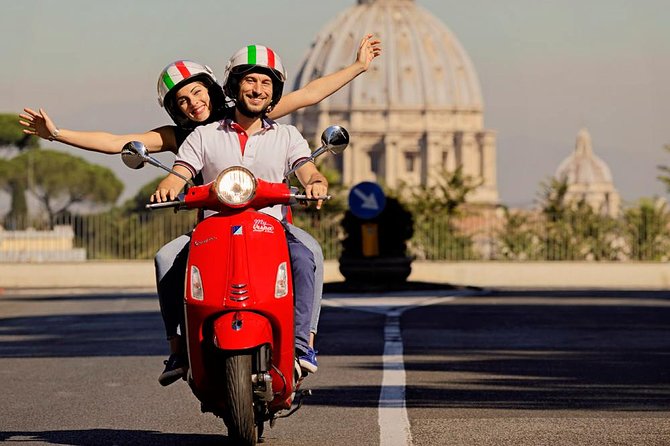
- Vespa touring beats slow walking: you cover multiple neighborhoods and landmarks in about 3 to 4 hours.
- English mobile audio guidance: you get a detailed listen as you see Palatine Hill, the Colosseum area, the Vatican zone, and panoramic viewpoints.
- Iconic viewpoints with photo stops: the keyhole view frames St. Peter’s dome, plus you get extra photos from your guide.
- Small group feel: maximum of 15 travelers means more personal attention.
- St. Peter’s and Rome’s ancient core: you pair Renaissance awe and dome views with ancient amphitheater and chariot-racing sites.
- Bottled water included: small, practical comfort during ride-heavy sightseeing.
How a Vespa Tour Gets You Past Rome’s Slow Parts
Rome is gorgeous, but it can be a time sink. Traffic, long distances, and crowded sidewalks slow your day fast—especially if you only have a half-day or two. This is a 3 to 4 hour way to “cover ground” without feeling like you’re speed-running ruins and churches.
On a Vespa-style tour, you get the city’s rhythm. You see Rome the way locals experience it: moving through streets, catching views between monuments, and changing scenery without changing plans every ten minutes. The big value here is efficiency, but not in a boring way.
The stops are built around famous names and fast photo moments. That can be perfect if you want orientation. If you prefer long, quiet time inside major sites, you’ll likely want to pair this with a separate, slower day plan too.
Getting Started at Via Cavour 80 (and What to Expect Before You Ride)
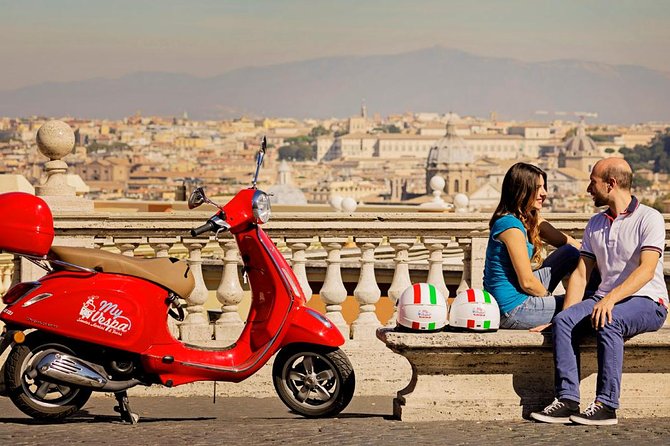
Your meeting point is Via Cavour 80, 00184 Roma RM, near the Basilica di Santa Maria Maggiore. That’s a good anchor for your first hours in Rome because it puts you in central Rome right away.
The tour uses a mobile ticket, and it’s offered in English. You’ll also be rolling with a tour escort/host, and the tour includes fuel surcharge and local taxes—basically, the ride cost covers the logistics, not just the entertainment.
If you’re thinking about self-driving, read this part twice. The important note is that self-driving requires good driving experience in scooters or motorcycles. They specifically say it’s not enough to have driven a few times before, and you’ll need license category A (motorcycles/scooters) or B (cars). Minimum age is 18.
Palatine Hill Stops: Ancient Rome’s Viewpoint and Ruins
You’ll start your sightseeing with Palatine Hill, one of Rome’s Seven Hills. It’s wrapped in origin stories—believed to be the birthplace of Rome—and it’s still one of those places where the city feels layered under your feet.
What makes this stop work on a scooter tour is the way it mixes atmosphere and perspective. You get dramatic viewpoints over the surrounding area, and you’re also near major archaeological ruins, including remnants tied to imperial palaces.
This is also a practical stop for your first pass through Rome. When you look out from a high point like Palatine, your brain starts mapping neighborhoods in a way that later walking days become easier. You’ll understand why certain streets feel like they’re leading somewhere important.
Time is short, so treat this as a “sights and stories” moment rather than a deep archaeological session. Use the audio guide here. It’s the kind of content that makes the ruins feel less random and more connected.
St. Peter’s Basilica and the Dome Moment You Can’t Skip
Then you head into Vatican territory for St. Peter’s Basilica. This is billed as the largest church in the world, and it’s famous for Renaissance architecture—especially the magnificent dome designed by Michelangelo. It’s also a spiritual center for Catholicism and draws millions of visitors each year.
On a Vespa tour, you’re not going for a slow, hour-long visit. You’re going for the big impact: seeing the space, absorbing the scale, and getting oriented for a return visit if you want to go deeper later.
One smart reason this stop belongs in a Vespa day is contrast. Ancient Rome is all about mass and age. St. Peter’s is about structure, design, and grand scale. Seeing both on the same day helps you understand how Rome keeps rebuilding itself—different eras, same city energy.
The Buco della Serratura Keyhole: A Quick Shot, Big Feel
Right after St. Peter’s area sightseeing, you’ll reach Buco della Serratura—the Keyhole at Piazza dei Cavalieri di Malta. This is the famous trick viewpoint where you see St. Peter’s Basilica’s dome framed through a keyhole, with greenery around it.
The tour keeps this stop tight (about 10 minutes), so you’ll want to bring your camera ready and your patience on standby. This is one of those Rome moments where the “how did I miss this?” factor is part of the charm.
If you’re traveling with people who prefer photos over long explanations, this stop is a crowd-pleaser. Even if you know Rome’s icons, it gives you a different angle—one that feels playful instead of just reverent.
Entering the Colosseum Moment Without Overplanning
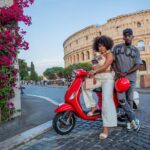
The Colosseum is next, and the tour lists the stop at around 10 minutes, with admission ticket free noted for that segment. It’s one of ancient Rome’s most iconic amphitheaters, and it was built to hold up to 80,000 spectators.
Even in a short visit window, the Colosseum’s scale hits you. The arches, the stone mass, and the fact it once hosted gladiatorial contests and public spectacles all make the place feel real fast. This is also where an audio guide helps, because you can listen while you look and your brain turns the structure into story.
The only thing to watch: 10 minutes is not enough to see everything. Think of it as a strong first connection. If you want to go inside or study details, plan a separate time later.
Circo Massimo: The Chariot Racing Stadium in a Modern Park
You’ll also stop at Circo Massimo, the site of the largest ancient chariot racing stadium in Rome. It’s described as able to accommodate over 150,000 spectators, which is a number that makes you stare for a second, even if you’ve read it before.
Today, it’s a historic site and a public park. That matters because you’re not just looking at a monument—you’re in a space where Rome still breathes. You can picture the energy of races when you’re standing where crowds once surged.
This stop is also a great “reset.” After tight monumental focus, Circo Massimo lets you take in a broader area and imagine motion. The tour gives it about 10 minutes, so you’re likely getting a quick view and a few story highlights rather than a long sit-down break.
Janiculum Hill (Colle del Gianicolo): Panoramas and Fontana dell’Acqua Paola
For views, Colle del Gianicolo, also called Janiculum Hill or Gianicolo, is a standout. It’s known for panoramic looks over Rome, and it’s where the tour leans into the “wow, this is Rome” feeling.
The tour highlights a few specifics: there are parks and monuments, plus the famous Fontana dell’Acqua Paola, a baroque fountain. The stop is about 15 minutes, which is long enough to grab photos and actually enjoy the sight for a moment.
I like this part of the day because it slows things down slightly. Rome from a hill can make the city feel easier to read. After you see the monuments spread out, your later walking routes feel more natural.
If you’re sensitive to wind or sudden temperature swings, Janiculum can be cooler than the streets. Dress for that, not for the time you started your tour.
Riding in Rome: Safety, Skills, and Choosing the Right Option
This is the part you should take seriously, because Rome is not a practice ground. The tour emphasizes that self-driving needs real experience, and one review phrase sums up the vibe: it’s not for the faint of heart with traffic and inconsistent rules.
On the positive side, guides in this tour brand their work around safety. People have praised guides for taking it slow for less confident riders. One example from the guide names you might meet: David was described as cautious with an inexperienced rider while allowing the other rider to follow closely. Other named guides include Alessandro and Virgilio, with riders crediting them for helping everyone survive Rome traffic.
If you haven’t driven a Vespa before, your best move is to choose the passenger role. You’ll still get the sights, the audio guide, the photo stops, and the city perspective. You avoid the stress of threading through lanes while still getting the full value of the itinerary.
Helmets are provided, and one review notes they were new and in good shape. Still, ride with respect for the scooter and for Rome’s driving reality.
Photo Souvenirs and an Audio Guide You’ll Actually Use
This tour includes souvenir photos, and you’ll also have a detailed audio guide while moving through key sights. The result is practical: you don’t just stop and hope you remember what you saw.
A good audio guide changes how you look at monuments. Instead of skimming past names, you get story beats that connect what you’re seeing to the broader city. It’s especially helpful when stops are short and your time is limited.
And because the tour includes bottled water, you’re not stuck hunting for snacks the moment you finish a stop. Food isn’t included, though, so if you get hungry mid-day, plan a meal before or after your ride.
Value Check: Is $235.92 Worth It for This Much Sightseeing?
At $235.92 per person, this isn’t the cheapest way to tour Rome. But it is priced like a full service: escorted movement, fuel and local taxes covered, bottled water included, plus photos and an audio guide.
You’re also getting a lot of “coverage” in a short window—ancient Rome, Vatican landmarks, and panoramic views. If your trip schedule is tight, that kind of time efficiency can be worth more than you think. You avoid spending half your day figuring out transport or losing momentum to walking distances.
The tour is also capped at 15 travelers, which tends to make the experience feel more controlled than larger bus-style outings. That matters because scooter touring already has motion built into it.
The main value trade-off: the stops are short. If you want to linger inside monuments, you’ll still need additional time in Rome after the Vespa tour.
Who Should Book This Vespa Tour (and Who Might Want Another Plan)
This experience fits best if you:
- Want a fast, high-impact introduction to Rome’s top sights
- Like getting orientation so your walking days feel easier later
- Are comfortable with short sightseeing windows and photo stops
- Want the help of a guide telling stories as you ride
It’s less ideal if you:
- Don’t want scooter traffic as part of the day
- Lack the driving experience required for self-driving
- Prefer slow, deep museum visits during a single outing
The minimum age is 18, so this is an adult-focused activity. And it runs in all weather conditions, so dress for rain or sun as needed and don’t rely on Rome being gentle.
Should You Book Rome on Wheels?
If you want to see Palatine Hill, the Colosseum area, panoramic Gianicolo views, and St. Peter’s highlights all in one go, this tour makes a strong case. The included audio guidance and souvenir photos turn a short day of stops into something you can actually remember and talk about later.
Book it if you’re time-limited and you want Rome to feel like a living city, not a checklist. Skip or adjust your approach if the idea of riding in traffic worries you—choose passenger mode, or plan a different style of tour.
FAQ
How long is the Rome on Wheels Vespa tour?
It runs for about 3 to 4 hours.
How much does the tour cost?
The price is $235.92 per person.
Where do we meet for the tour?
The meeting point is Via Cavour 80, 00184 Roma RM, Italy.
What are the main sights included?
You’ll see Palatine Hill, St. Peter’s Basilica, the Colosseum, Colle del Gianicolo (Janiculum Hill), Circo Massimo, and the Buco della Serratura keyhole.
Is the tour in English?
Yes, the tour is offered in English.
Do I need to print anything, or is it mobile?
You get a mobile ticket.
Is food included?
No. Food and drinks are not included.
What’s included besides the tour itself?
The tour includes souvenir photos, bottled water, and coverage for taxes/fees, plus fuel surcharge. It also includes a tour escort/host.
Can I self-drive the scooter?
You can only self-drive if you have good scooter or motorcycle driving experience, and you need the proper license (A for motorcycles/scooters or B for cars). If you don’t meet that standard, choose to ride with the guide.
What’s the maximum group size?
The tour has a maximum of 15 travelers.
Is there free cancellation?
Yes. You can cancel up to 24 hours in advance for a full refund.