REVIEW · ROME
Vespa Sidecar Tour By Night with Pickup
Book on Viator →Operated by 7 HILLS TOURS · Bookable on Viator
The first evening in Rome can be a blur of streets. This Vespa sidecar tour at night turns that chaos into an easy route with great photo stops.
I like that you don’t have to drive, and you get a guide calling out what you’re seeing while you move through traffic. I also like the pacing: long enough to enjoy viewpoints and neighborhoods, but efficient enough to hit major sights in one evening.
One drawback to weigh: it’s a night ride in city traffic, and the tour time can shorten to 2 hours if you pick the 9:30 PM departure. Wear layers and plan for chilly wind.
In This Review
- Key things I’d bet on (from what you’re actually getting)
- Pricing and what you should expect for $146.33
- Getting on the Vespa: how the sidecar works
- Meeting point and pickup: start where it’s easy
- The route in plain English: what each stop feels like
- Piazza Venezia: start in the heart of Rome
- Colosseum viewpoint area: the arena from the outside
- Baths of Caracalla ruins: ancient leisure, viewed up close
- Pyramid of Cestius and the city ride-by moments
- Aventine Hill: villas, views, and a more local rhythm
- Giardino degli Aranci (Orange Tree Garden): the view stop with the trick
- Circus Maximus and Palatine Hill ruins: you fly past history
- Trastevere: gelato and coffee in a lively neighborhood
- Janiculum Hill finale (Fontanone): panoramic photos at the end
- Guides, drivers, and the value of personality
- Safety and comfort: what to plan for
- How long is it really, and when should you go
- Who this tour suits best
- Should you book the Vespa Sidecar Tour by Night with Pickup?
Key things I’d bet on (from what you’re actually getting)
- Night ride without the stress: your driver handles the streets, so you focus on the views
- Real small-group feel: capped at 16 travelers, so stops stay lively instead of crowded
- Sidecar layout for comfort and photos: two guests share each Vespa sidecar setup
- Gelato and coffee included: built-in pause points for a Roman reset
- Big-name sights plus viewpoint stops: Colosseum area and several hillside overlooks
- Guides with personality: names like Andrea, Manuel, Roberto, Simone, and Stefano show up in strong reviews
Pricing and what you should expect for $146.33
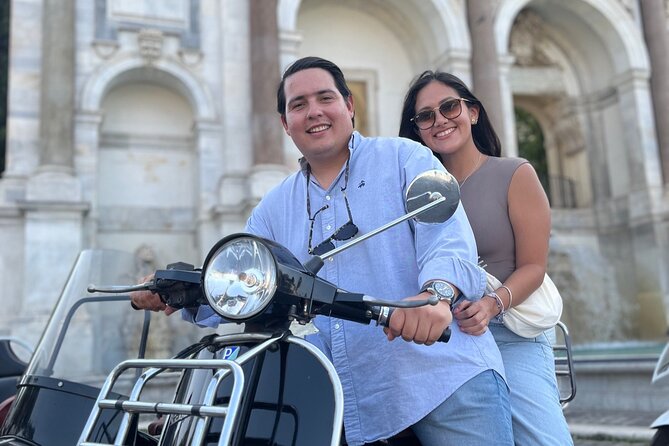
At about $146.33 per person for roughly 3 hours, this isn’t a “cheap” Rome activity. The value comes from how much is bundled in: a professional driver/guide, helmet use, local taxes, and food stops (gelato and coffee/tea). Add pickup availability, plus the fact that you’re covering multiple Roman landmarks in one evening, and it starts to make sense.
Think of it like paying for convenience and momentum. Instead of spending your first night figuring out transit timing, meeting spots, and which neighborhoods are worth your limited hours, you get a planned route and someone keeping the story straight.
Getting on the Vespa: how the sidecar works
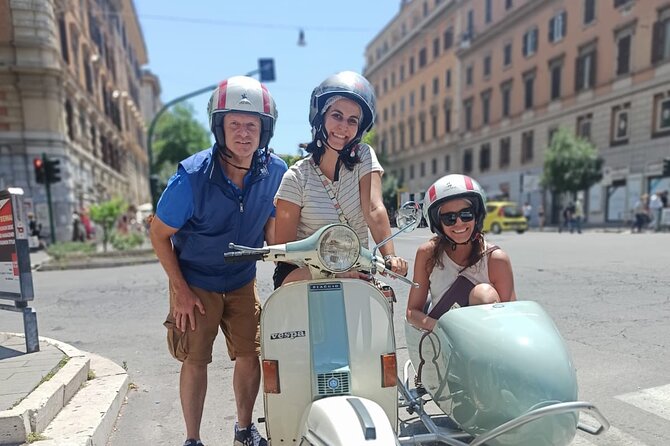
This tour is designed so you’re not the one wrestling traffic. Your guide rides the Vespa as the driver, and you’re either seated behind the driver or in the sidecar.
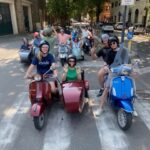
Here’s the part that matters for your group planning: one Vespa with sidecar is for 2 guests. That means 1 person rides behind the driver, and the second person sits in the sidecar. If your party has an odd number, they’ll add a single Vespa (no sidecar) with a driver. If you’re one guest only, expect a single Vespa arrangement (no sidecar).
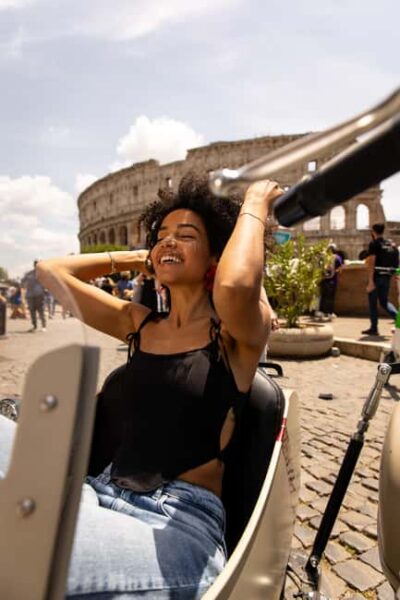
If you care about where you sit for photos and viewing, this is worth thinking about ahead of time. The sidecar gives a different angle than the seat behind the driver, and a review even mentions positioning for maximum views.
Meeting point and pickup: start where it’s easy
Your start point is Piazza della Cancelleria 1, 00186 Roma RM, Italy. The tour ends back at the meeting point. Pickup is offered, and you’ll recognize the team by the Vespa sidecar.
This matters because Rome can be slow for “walk and find the group” logistics. If you can use pickup, it helps you start relaxed instead of cramming your arrival plans.
The route in plain English: what each stop feels like
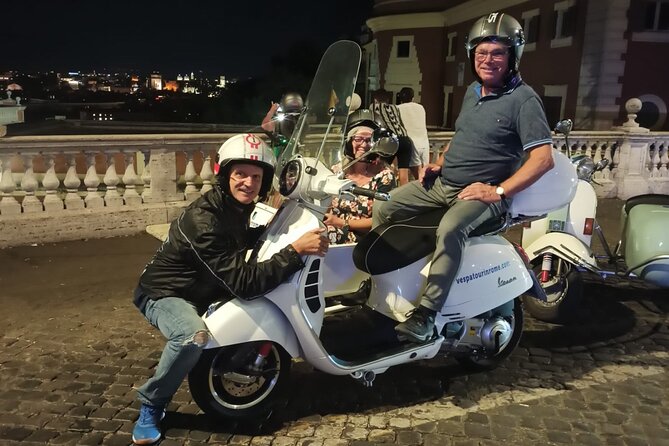
This tour mixes major landmarks with Rome’s “in-between” streetscape energy. You’ll ride, stop briefly, and move again. The stops are short on purpose, so the evening stays flowing.
Piazza Venezia: start in the heart of Rome
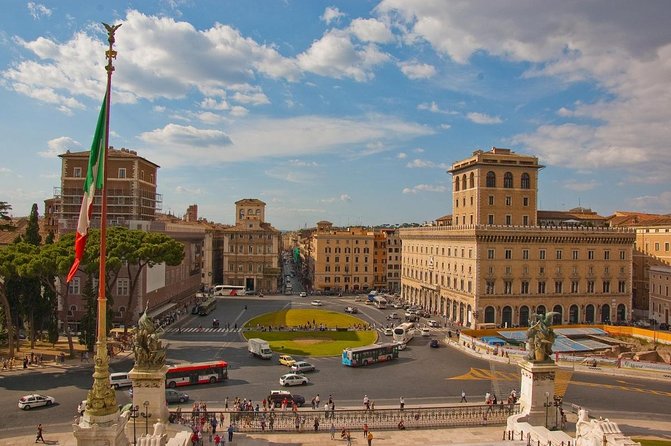
You begin at Piazza Venezia, where the city’s layers feel visible right away. Expect a 30-minute starting segment that sets the tone, including a look at the Vittoriano Monument area.
Why this is a good start: you get your first orientation fast. Within minutes, you understand how Rome’s monuments, hills, and major streets relate to each other, which makes the later stops feel less random and more connected.
Colosseum viewpoint area: the arena from the outside
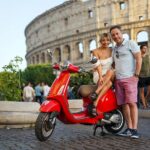
Next comes the Colosseum zone. You’ll leave the Vespa for a short walk to a viewpoint and have around 15 minutes for photos and explanations. Colosseum entrance is not included, so you’re not doing a full ticketed visit here.
This stop is still worth it even without entry. At night, the Colosseum area reads differently than daytime crowds. The guide’s talk helps you connect what you see with the Roman Forum and Palatine Hill context, even if you’re just viewing from outside.
Practical note: it’s a quick stop. If you want a deep, ticketed Colosseum experience, plan that separately. This is about getting the highlights and stories into your first-night brain.
Baths of Caracalla ruins: ancient leisure, viewed up close
Then you hop back on and ride to the Baths of Caracalla. You’ll spend about 10 minutes here. Entrance is free, and the experience is about seeing the ruins as the remains of a huge public leisure center.
This is one of those stops that makes the tour feel less like a checklist. The Baths aren’t as universally “look, I’m there” as the Colosseum, but they show Rome’s scale in a different way—less iconic postcard, more atmospheric archaeology.
Pyramid of Cestius and the city ride-by moments
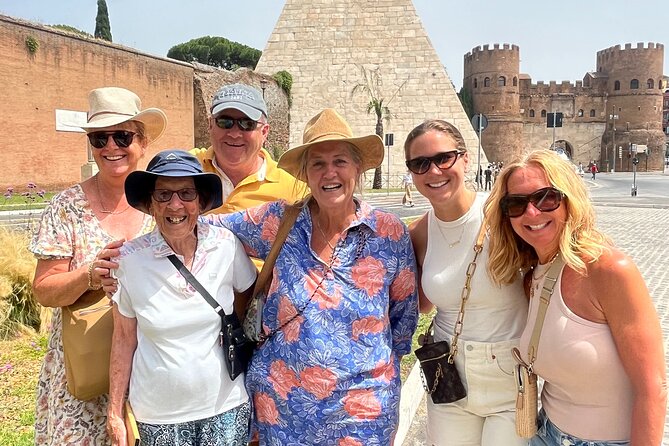
After Caracalla, the tour includes ride-by glimpses—most notably the Pyramid of Cestius, a real ancient pyramid sitting right in the city fabric. You also pass through other historic corridors where the value is what you catch between the big stops.
These moments are great if you like “Rome texture.” You’ll get small surprises without needing to stop and queue.
Aventine Hill: villas, views, and a more local rhythm
Then you head up Aventine Hill, one of Rome’s richer areas with elegant villas. This portion works because it changes the scenery while you’re still moving. The ride up the hill can feel like Rome switching modes—from grand monuments to quieter residential streets and sweeping sightlines.
The key advantage here is timing and pacing. Doing Aventine at night means you’re more likely to enjoy the light and overlook energy without turning it into a full daytime excursion.
Giardino degli Aranci (Orange Tree Garden): the view stop with the trick
At the top, you park and take a 20-minute break at Giardino degli Aranci. This is where you get the “calm” counterbalance to the ride. You can walk around, breathe fresh air, and enjoy one of Rome’s classic viewpoints.
There’s also an optical illusion here, and it’s the kind of stop that keeps people smiling and repositioning for photos.
If you’re the type who likes a break without committing to a museum, this is the stop. It also gives you time to re-center before Trastevere and the final panoramic finish.
Circus Maximus and Palatine Hill ruins: you fly past history
On the way through, you pass Circus Maximus, once the grand stadium for chariot races, and you catch sight of the ruins of Palatine Hill.
The value of these “ride-past” elements is clarity. Even with limited stop time, the guide connects what you’re seeing to who lived where and what Rome was for. You don’t need to spend an entire day on Palatine to get the mental picture.
Trastevere: gelato and coffee in a lively neighborhood
Now you shift into neighborhood mode with Trastevere. You’ll spend about 25 minutes here, and it’s one of the most pleasant segments of the evening because you get a break from monuments.
The tour includes a gelato and coffee stop here—exactly the kind of pause that keeps the ride from feeling like nonstop sightseeing. In Trastevere, you’re surrounded by the kind of street energy that makes Rome feel like Rome, not just a museum city.
I especially like this stop because it changes your perspective. After riding through historic “wow” sites, you taste the everyday rhythm. You also pick up ideas for where you might want to return later.
Janiculum Hill finale (Fontanone): panoramic photos at the end
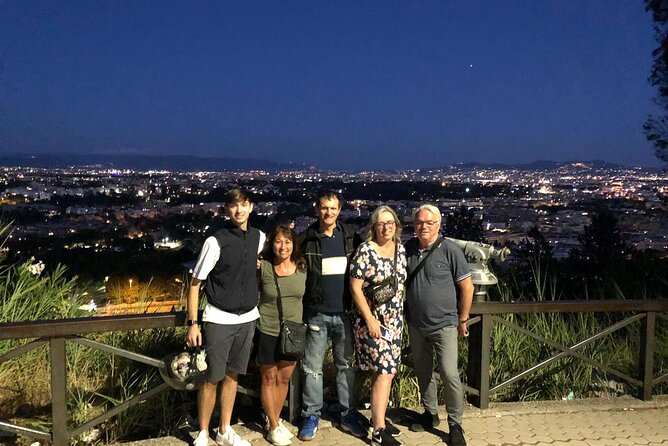
For the grand finish, you ride toward Janiculum Hill—called out as Colle del Gianicolo—and your final stop is the Fontanone. You’ll have about 15 minutes for pictures and panoramic views.
This ending works well because the tour gives you a sense of the whole city before you leave. If you’re trying to remember where everything sits, that last overlook is what makes the earlier landmarks click together.
Guides, drivers, and the value of personality
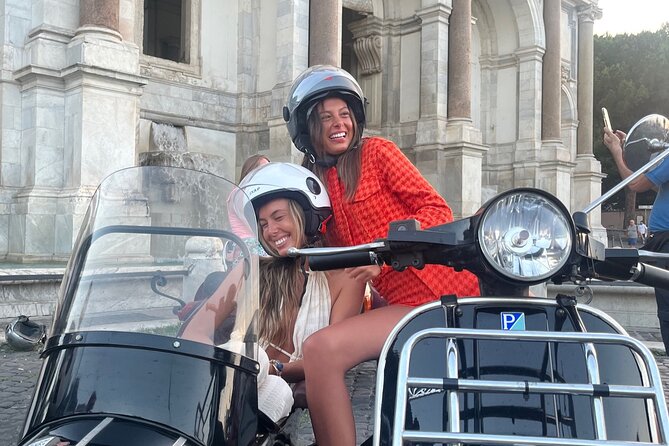
The biggest theme in the feedback is how much the guide adds beyond the mechanics of driving. Names you may see in top reviews include Andrea, Manuel, Roberto, Simon/Simone, and Stefano. When you get a strong guide, the ride becomes a story, not just moving from point A to point B.
One review even highlighted a driver handing out a blanket when it was cold. That’s not guaranteed, but it’s a reminder to expect wind, especially with night air and faster speed sections.
If you’re choosing this as your first night in Rome, aim for that “get my bearings” goal. A good guide helps you do that quickly.
Safety and comfort: what to plan for
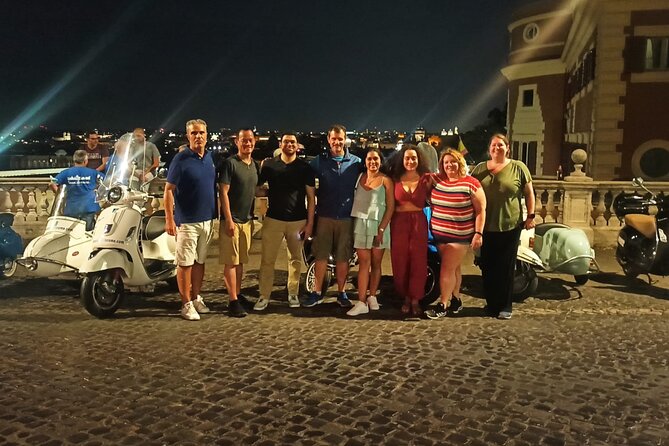
You’ll get a helmet and the tour is run with professional drivers. Reviews repeatedly describe feeling safe, even while moving through Rome traffic at night.
Still, be realistic about comfort:
- This is a moving ride, so motion and street vibrations are part of the deal.
- It can get cold on an evening scooter run, and the wind hits differently when you’re seated in the open sidecar space.
- There are limits: max weight 220 lbs/100 kg per person and max height 195cm/6.4ft.
If you’re sensitive to cold, bring layers you can handle quickly. A scarf helps more than you’d think.
How long is it really, and when should you go
The tour is approximately 3 hours, but it can run 2 hours if you book the 9:30 PM time slot. If you’re traveling with kids or anyone who gets tired late, the shorter late departure can be easier.
Also, you’re looking at an “evening sights” experience. Sunset and early night tend to be prime for views, but you’ll still get meaningful night atmosphere either way.
Who this tour suits best
This is a great fit if you:
- want a first-night Rome orientation in one easy block of time
- like photos, viewpoints, and guided context
- don’t want to manage traffic or navigation yourself
- enjoy a quick food stop and a neighborhood stop rather than only monument hopping
It might be less ideal if you:
- want ticketed entry into the Colosseum (this tour does not include admission)
- prefer slow, museum-style wandering
- strongly dislike any ride-based experience, even with helmets and experienced drivers
Should you book the Vespa Sidecar Tour by Night with Pickup?
Yes, I’d book it if your goal is a memorable, high-efficiency first evening with both big landmarks and real Roman streetscape energy. The value is in the bundle: guide, helmet, pickup option, and gelato/coffee stops, all wrapped into a route that finishes with a view-based finale.
Skip it only if you already planned a separate, ticketed Colosseum day and you want a very quiet, low-motion experience. Otherwise, this is one of the few Rome activities that feels like you’re doing something genuinely Roman, not just checking boxes.