REVIEW · ROME
Rome Vespa Sidecar Tour: 90-Minute Panoramic Experience
Book on GetYourGuide →Operated by Vesparella · Bookable on GetYourGuide
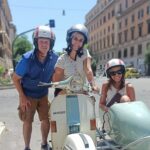
A Vespa sidecar turns Rome into a movie set. This 90-minute panoramic tour lets you zip past the highlights, then stop for viewpoints that feel bigger than your phone can hold. The vibe is pure fun: you get a celebrity-like moment riding Rome’s streets and even waving at people as you go.
What I like most is the easy “see a lot” format plus the built-in photo timing, including time around Villa Borghese’s viewpoints and a scenic stop at Fontana dell’Acqua Paola. One thing to consider: it’s a passenger-only ride with no monument entry tickets, so you’re viewing from the outside and moving again fairly quickly.
Seat swaps are part of the magic. You’ll have the chance to switch between the sidecar spot and the backseat during stops, so you don’t end up with the same view the whole time. The other consideration is basic fitness and comfort: you’ll be hopping on and off a scooter and sitting for about 90 minutes, and the tour isn’t suitable for kids under 6 or anyone over 254 lbs (115 kg).
In This Review
- Key Highlights You’ll Feel Immediately
- Why A Vespa Sidecar Makes Rome Feel Different
- Price and Logistics: What $88 Really Buys You
- Starting at Piazza di San Pantaleo: Easy Getting-In, Quick Momentum
- The Ride Past Rome’s Big Names: What You See Without Walking for Miles
- Villa Borghese and Pincio Terrace: One of the Best View Breaks
- Colosseum Photos: Close Enough to Feel It, Fast Enough to Stay Moving
- Gianicolo Hill, Castel Sant’Angelo, and the Vatican: The Big-Scope Middle Stretch
- Fontana dell’Acqua Paola: The Stop That Feels Like a Film Scene
- Trastevere and Ponte Garibaldi: The City’s Side Streets Energy
- Roman Forum and Vittorio Emanuele II Monument: The Final Big Landmarks Loop
- Seat Switching: Why It Makes the Tour More Fun Than You Expect
- The Drivers Matter: Real-World Notes From the Most Praised Experiences
- Weather, Safety, and What to Bring
- Who This Tour Is Best For (and Who Should Skip It)
- Should You Book the Rome Vespa Sidecar Panoramic Tour?
- FAQ
- How long is the Rome Vespa Sidecar Panoramic Tour?
- Where do we meet for the tour?
- Is the Vespa driven by the passenger or a driver?
- Does the tour include entrance tickets to monuments?
- What stops are included for views and photos?
- What languages are available?
- Who isn’t suitable for the tour?
- Is there free cancellation?
Key Highlights You’ll Feel Immediately
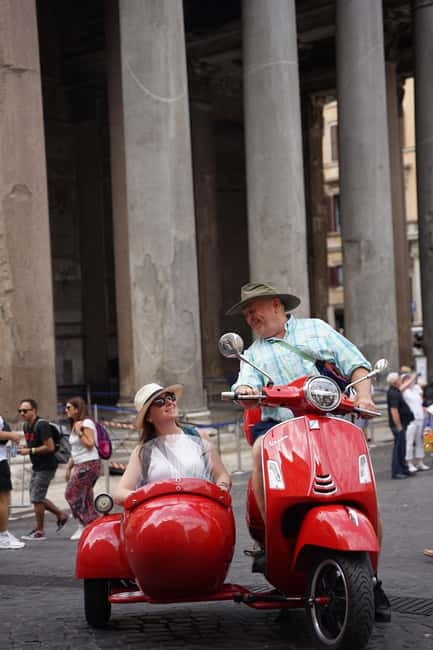
- Celebrity-style waving as you cruise Rome in a classic Vespa sidecar
- Photo stops timed for views, including the Colosseum area and two scenic breaks
- Villa Borghese + Fontana dell’Acqua Paola viewpoints that give you “wow” angles
- Seat switching during stops so you get both sides of the ride
- Safety first support with helmets, rain ponchos, and a pre-ride briefing
- Local driver energy, with many guests praising drivers for explanations and great photo tips
Why A Vespa Sidecar Makes Rome Feel Different
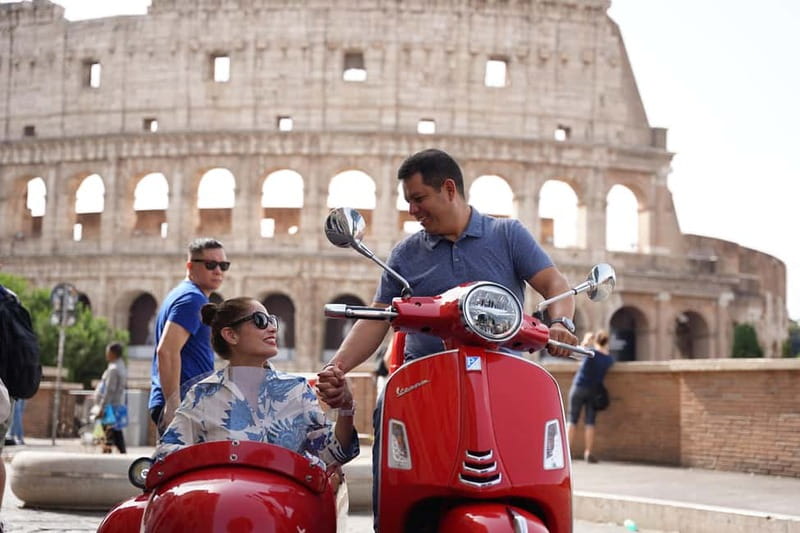
Rome can be overwhelming fast—too much marble, too many lines, too much “Where do we even start?” This tour cuts through that. A sidecar ride gives you a new vantage point without treating your vacation like an endurance test.
You’re not just watching landmarks from a bus window. You’re moving at street level, seeing how the city actually flows—bikes, scooters, pedestrians, and the steady hum of traffic. And because the vehicle is so iconic, people react. One reason the reviews keep circling back to that fun feeling is that it’s genuinely social. You’re cruising in something that looks like it belongs on a postcard, and you end up with that playful, everyone-smiles energy.
It’s also time-smart. Ninety minutes isn’t long, but it’s a useful chunk for first-timers or anyone trying to squeeze Rome highlights into a packed schedule. You won’t get the deep “stay in one place all day” experience, but you do get a fast, organized overview.
Price and Logistics: What $88 Really Buys You
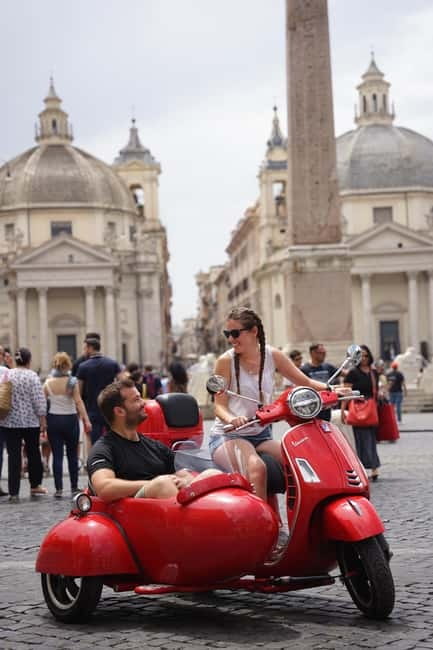
At $88 per person for 1.5 hours, the value comes from what’s included and what it replaces.
This isn’t just transport. You’re getting:
- A licensed local driver (passenger-only ride)
- Helmets and rain ponchos
- A safety briefing
- Insurance coverage for passengers
- Time for photos at key stops
- Two scenic breaks (Villa Borghese/Pincio Terrace and Fontana dell’Acqua Paola)
And you’re not paying extra for entrances to monuments, because the tour is panoramic—meaning you’re sightseeing from outside rather than doing ticketed sites. That’s a big deal if you’d rather spend your time viewing instead of lining up.
Logistics-wise, the meeting point is Piazza di San Pantaleo. The tour also lists pickup and drop-off from Monte Oppio near the Colosseum, so if you’re staying around that zone, you might be able to avoid the hassle of getting to the exact square on your own. If you’re far away, you’ll likely still need to get yourself to the meeting point.
Starting at Piazza di San Pantaleo: Easy Getting-In, Quick Momentum
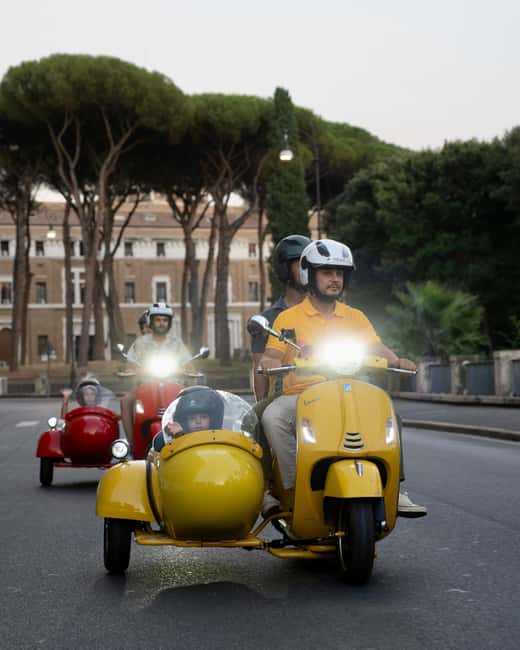
You start in Piazza di San Pantaleo, where your Vespa is parked and ready at the scheduled start time. This matters more than it sounds. Rome tours often waste the first part of the experience with wandering and waiting. Here, you get momentum fast: arrive, gear up (helmets), get a quick safety rundown, and then you’re off.
A practical tip: wear something you can sit comfortably in for 90 minutes. Even with the fun factor, you’ll be feeling street vibrations and doing small balance adjustments as you move through traffic. Closed-toe shoes help.
This is also where you should decide how you want to approach the seat swap. The tour allows switching at stops, and that’s one of the reasons the ride doesn’t feel one-sided.
The Ride Past Rome’s Big Names: What You See Without Walking for Miles
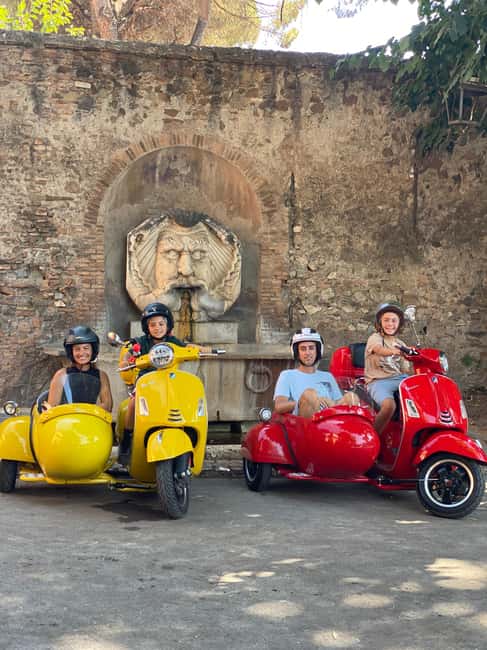
As you leave the meeting area, the route is built around giving you “Rome in one glance” moments—Spanish Steps, Piazza del Popolo, Castel Sant’Angelo, and the Vatican zone all show up as part of the panoramic flow.
A key detail: the plan is to bypass Altare della Patria (Vittoriano). You still get huge civic landmark energy, just without that specific detour.
What I like about the pass-by sections is that they work like a live map. You’re not trying to read street names while a bus drives you past. You get to recognize what you’ve seen in photos, then understand where it sits in the city.
Villa Borghese and Pincio Terrace: One of the Best View Breaks
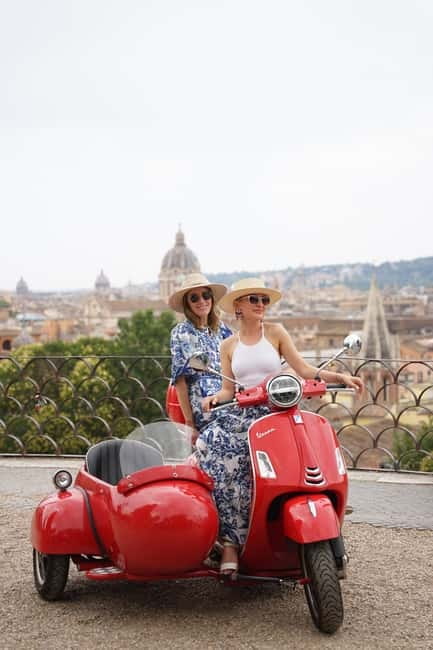
One of the two included scenic stops is at Villa Borghese, specifically the Pincio Terrace area. This is one of those places where Rome looks staged—domes, rooftops, and layered views that feel far bigger than the space you’re standing in.
You’ll get a break time there with photo stops and free time. That combination is important. Some tours force you into a rush. Here, you can take the classic shots, then step back for a minute and actually look. Rain can happen too, but you’ll have rain ponchos, which helps keep the view chase from falling apart.
If you want one simple strategy: arrive at each stop with your photo angles planned in your head. Otherwise, you end up constantly re-framing when the view is already moving.
Colosseum Photos: Close Enough to Feel It, Fast Enough to Stay Moving
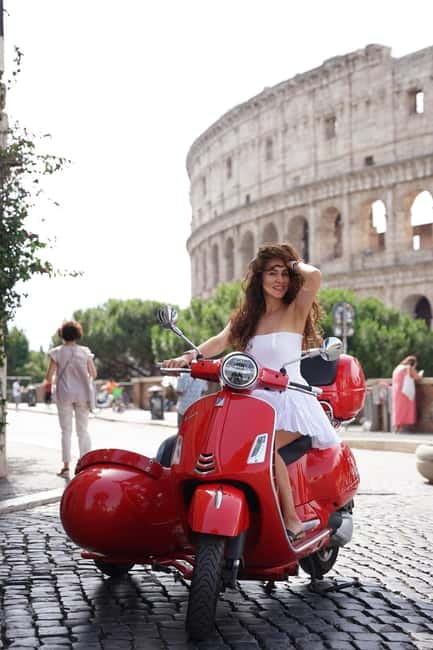
Even without entering ticketed sites, you get a photo stop in front of the Colosseum area. That’s a smart compromise. For most people, the Colosseum is the anchor sight, the one you want to point to and say, yes, I’m here.
The tour’s style means you’re not stuck in a long queue or trapped inside a strict entry schedule. You get the visual impact, then you move on while your time is still intact.
If your main goal is getting lots of landmarks in a short window, this is exactly the kind of “outside view” stop that makes the tour worth it.
Gianicolo Hill, Castel Sant’Angelo, and the Vatican: The Big-Scope Middle Stretch
After the Villa Borghese viewpoint break, you head toward Gianicolo Hill, with the route passing Castel Sant’Angelo and the Vatican City area. The ride here is where Rome feels most like it’s built on top of itself—different layers of landmarks, changing street widths, and that feeling of always turning a corner into something monumental.
This part also helps you connect the dots. From one side of the city, you can see how the Vatican zone sits in the larger city rhythm, and then how Castel Sant’Angelo fits into the Tiber-side story.
Keep your expectations realistic, though: you won’t have long “wander time” during the pass-by segments. That’s not a flaw—it’s the trade for covering many highlights in 90 minutes.
Fontana dell’Acqua Paola: The Stop That Feels Like a Film Scene
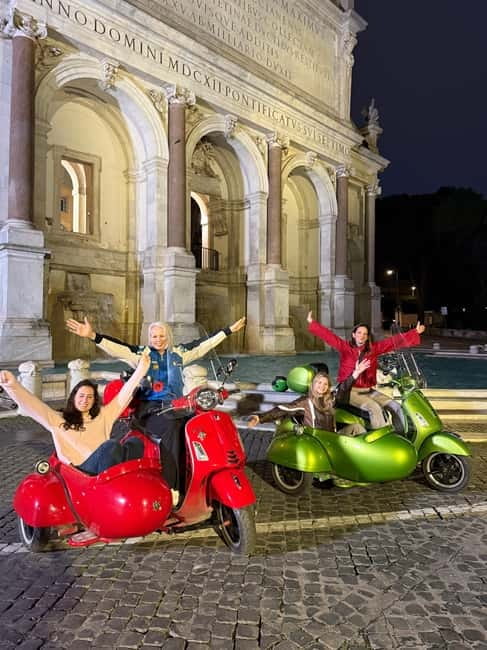
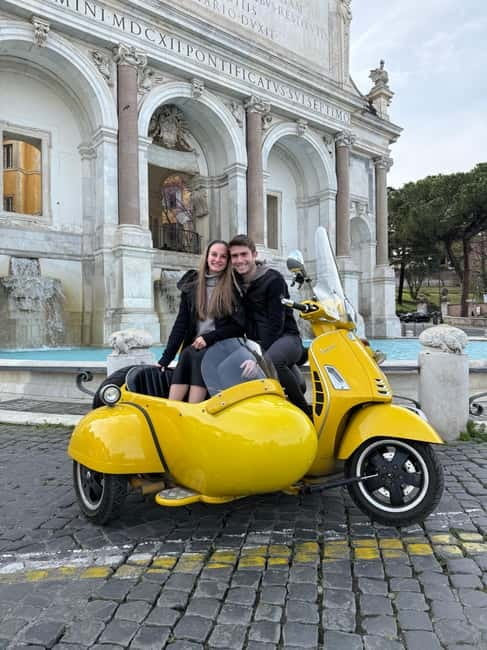
The other included scenic stop is Fontana dell’Acqua Paola, listed as one of Rome’s most picturesque fountains. You get another break time, with photo opportunities, a guided touch, and free time.
This fountain stop is a nice contrast to the bigger, heavier landmarks. It gives you a quieter, more “crafted” Roman moment—water, stone, and that classic fountain composition you can’t really replicate anywhere else.
Also, fountains are great for photos even in dull weather, because stone and water textures hold up. If it’s raining, the poncho helps you keep control while you’re shooting.
Trastevere and Ponte Garibaldi: The City’s Side Streets Energy
As you continue, the route passes through Trastevere and Ponte Garibaldi. This matters if you want more than just the official “greatest hits.” Trastevere is the part of Rome many people imagine when they picture evening stroll energy—lively streets and a different vibe than the broad monuments.
You’re not stopping for long here, but you are catching the feel of neighborhoods in motion. That’s often what’s missing from fast tours that only hit viewpoints.
Roman Forum and Vittorio Emanuele II Monument: The Final Big Landmarks Loop
Near the end, you pass by the Vittorio Emmanuel II Monument area and then the Roman Forum. These are the “end of the story” landmarks—dense, famous, and unmistakable.
Even though it’s another panoramic pass-by rather than an entry visit, it still helps your mental map. You’ll likely be able to connect the Forum to what you’ve seen earlier, instead of treating the whole city like one blur of ruins.
Then you roll back to where you started.
Seat Switching: Why It Makes the Tour More Fun Than You Expect
The tour is designed so you can switch between:
- the sidecar seat
- the backseat behind the driver
You can do this at stops. That’s a great detail, because the experience is different depending on where you’re sitting. The sidecar view can feel wider and more exposed, while the backseat often feels steadier and more centered.
Even if you think you won’t care, seat switching is one of those small design choices that makes the time feel shared rather than “someone else got the good spot.”
The Drivers Matter: Real-World Notes From the Most Praised Experiences
The driver experience is a big part of why this tour keeps getting high marks. Many guests specifically mention:
- Adam and Johnny for explanations and picture help
- Aybars, Arda, and Asim for confident driving, fun energy, and great spot timing
- Alexandra for safe, smooth driving plus thoughtful photo support
- Ahmed, Yunus, and Salman for humor, knowledge, and practical Rome tips
- In wet weather, drivers praised for staying confident and prepared when roads were slick
You can also see a theme: guides often help with photos, not just facts. That’s useful because on a scooter, you don’t want to spend your best angles trying to troubleshoot camera settings.
Weather, Safety, and What to Bring
This tour is designed with weather in mind. You’ll get:
- Rain ponchos
- Helmets
- a safety briefing before you go
- insurance coverage for passengers
In practice, that means you can keep plans intact even if Rome is doing its unpredictable sky routine.
What to bring (simple and practical):
- A phone or camera secured so it doesn’t bounce out of your hands
- A light layer if it’s cool
- A small towel or wipes if you get splashed
And one comfort note: this isn’t a sit-back-and-scroll experience. You’ll feel the ride. If you’re okay with that, you’ll enjoy it. If you’re expecting a cushy sightseeing van, you might feel the difference.
Who This Tour Is Best For (and Who Should Skip It)
This is a strong pick for:
- First-time visitors who want Rome highlights fast
- People who hate long walking loops
- Travelers who want “fun first, history second” (but still get explanations)
- Short-on-time schedules where two big viewpoints plus panoramic passes are enough
It may not be ideal for:
- Kids under 6
- Anyone over 254 lbs (115 kg)
- People over 95
- Anyone who needs monument entry tickets and guided museum-style visits
If you’re traveling as a couple, this also works well because seat swapping makes it feel balanced rather than “one person watches while the other enjoys.”
Should You Book the Rome Vespa Sidecar Panoramic Tour?
If your goal is to see a lot, get great photos, and enjoy Rome from street level without the stress of ticket lines, I’d book it. The included elements—helmets, ponchos, safety briefing, insurance, and the two scenic breaks—make the price feel more like a full experience than “just a ride.”
I’d hesitate only if you’re expecting monument entrances, long stops, or a slow, deep-dive format. This tour is fast by design. Think of it as your Rome kickoff: get oriented, take the iconic shots, then decide what you want to return to on foot later.
If you can match your schedule to a driver known for confident riding and photo help—names like Aybars, Arda, Adam, Ahmed, Yunus, and Alexandra keep showing up in praise—you’ll likely end up with a very memorable first afternoon in the Eternal City.
FAQ
How long is the Rome Vespa Sidecar Panoramic Tour?
The tour lasts 1.5 hours (90 minutes).
Where do we meet for the tour?
You meet at Piazza di San Pantaleo.
Is the Vespa driven by the passenger or a driver?
The Vespa is driven by a licensed local driver. This is a passenger-only tour.
Does the tour include entrance tickets to monuments?
No. The tour is panoramic, so there are no entry tickets included.
What stops are included for views and photos?
There are two scenic stops: Villa Borghese (Pinco/Pincio Terrace) and Fontana dell’Acqua Paola. You’ll also have a photo stop around the Colosseum area.
What languages are available?
The driver speaks Italian, English, French, and Turkish.
Who isn’t suitable for the tour?
The tour isn’t suitable for children under 6, people over 254 lbs (115 kg), or people over 95 years.
Is there free cancellation?
Yes. You can cancel up to 24 hours in advance for a full refund.