REVIEW · ROME
Rome Morning Vespa Sidecar Tour in Rome with Cappuccino
Book on Viator →Operated by Vespa Sidecar Tour · Bookable on Viator
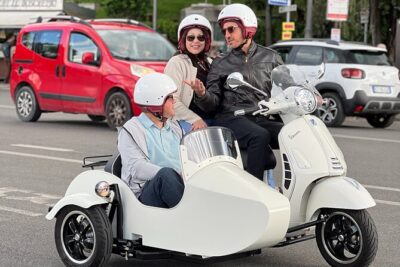
Rome on a Vespa sidecar feels like a cheat code. You cruise past the big icons in about three hours, with a licensed guide talking through audio headsets the whole time. I love how the sidecar breakfast (cappuccino and cornetto) lands right at the start, and I also love the pace: quick hops, frequent photo chances, and enough time at key stops to actually look.
The one thing to think about is weather. This runs when conditions are good, and the operator notes that poor weather can trigger a date change or refund. Also note the riding setup: you are not driving, but you are on a motorcycle with specific height and weight limits.
In This Review
- Key things to know before you go
- Meeting at Piazza della Repubblica and getting set up
- Cappuccino and cornetto: the morning fuel that makes sense
- How the Vespa sidecar tour really works (and why it feels easy)
- Piazza della Repubblica and Quirinale: big Roman power, up close
- Trevi Fountain and the Pantheon stop that’s worth planning
- Piazza Navona and St Peter’s Square: famous geometry, fast connections
- Terrazza del Gianicolo: the view break Rome owes you
- Altare della Patria and the Colosseum: monument time with real momentum
- Santa Maria Maggiore: finishing with an ancient church that still matters
- Price and value: what $163.26 buys you in real terms
- Who should book this Vespa sidecar morning tour
- Who should think twice
- Practical tips for a smoother ride
- Should you book this morning Vespa tour?
- FAQ
- What’s included in the morning tour?
- How long is the Vespa sidecar tour?
- Is the tour offered in English?
- Where do we meet, and where does it end?
- Do I need to buy a ticket for the Pantheon?
- Do children get to ride too?
- Are there weight and height limits for the riders?
- Is this tour weather-dependent?
Key things to know before you go
- You only ride: professional drivers handle traffic and parking, while you listen and look.
- Pantheon entry is included: you don’t need to organize that ticket yourself.
- Breakfast is built in: cappuccino and cornetto before the sightseeing momentum starts.
- Small group energy: maximum 12 travelers, so the guide can keep the flow tight.
- Helmet + headset setup: CE helmets with disposable head covers and live commentary through headsets.
- Seats can be swapped: if you book one seat, you may alternate between sidecar and the back seat at stops.
Meeting at Piazza della Repubblica and getting set up
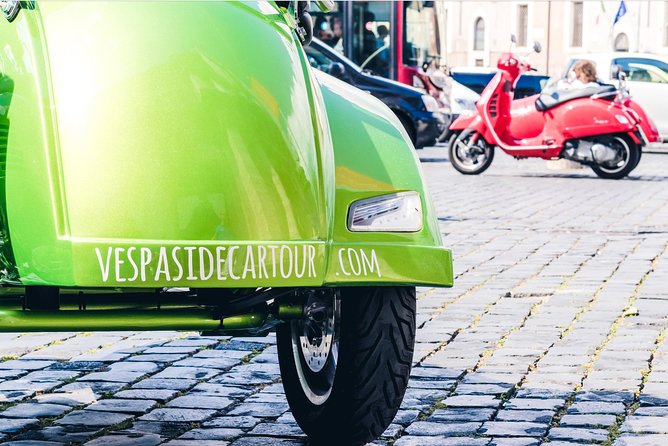
You start at Piazza della Repubblica (41) at 9:00 am, and the tour ends back where it begins. That matters more than it sounds, because Rome can eat time. Here, you avoid the scatter-you-across-the-city thing and get a clean loop.
Check in is straightforward with a mobile ticket, and the group size stays small (up to 12). You’re also told it’s in English, which helps if you’re trying to keep up without leaning on hand gestures.
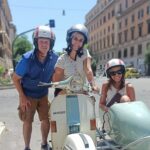
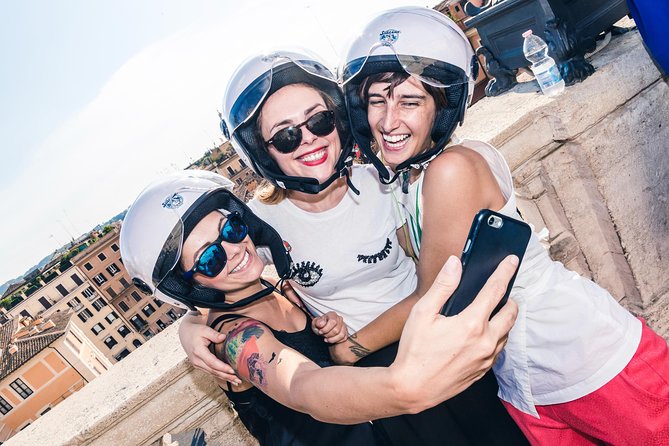
Then comes the safety and comfort routine: you get homologated CE helmets with sterilized disposable head covers. You’ll also get headsets so the guide’s narration is clear without you craning your neck or yelling over traffic. I like this approach because it keeps the tour feeling like guided sightseeing instead of just a ride.
Cappuccino and cornetto: the morning fuel that makes sense
This tour includes breakfast with a traditional cappuccino and cornetto. That’s not just a nice extra. It sets you up for the big walking moments that Rome always adds, even on a “quick sights” plan.
Morning coffee in Rome has a rhythm: it’s quick, simple, and meant to start your day. The tour builds that in, so you are not trying to hunt down a café while everyone else is already moving.
If you’re sensitive to morning caffeine, you might want to check with the booking form about dietary needs. The tour asks you to indicate special dietary requirements during booking, but it does not list alternatives here, so don’t assume replacements exist.
How the Vespa sidecar tour really works (and why it feels easy)
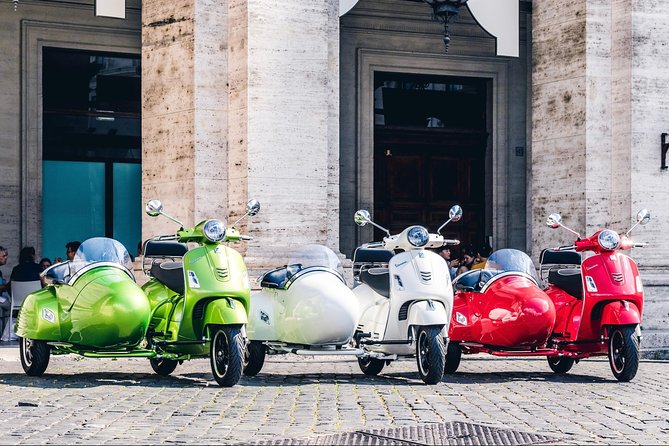
The whole point is that you don’t drive. You sit back while a professional driver handles narrow lanes, turns, and parking headaches. That is the biggest value for most first-time Rome visitors: you trade effort for access.
As you move between sites, you hear live narration through the headsets. So instead of stopping, starting, and guessing what you’re looking at, you get the story in real time. The guide also covers what you’re seeing as you pass it, which helps you spot details you’d normally miss from street level.
The tour also uses audio guidance all the way through, not just at one or two stops. In my experience, that’s what turns a “tour ride” into a real way to learn the city.
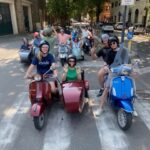
One more practical note: your seat situation may vary. If you booked one seat and the Vespa needs two riders, you will share the vehicle with another guest. The operator says you can swap seats during stops so everyone gets a turn in the sidecar.
Piazza della Repubblica and Quirinale: big Roman power, up close
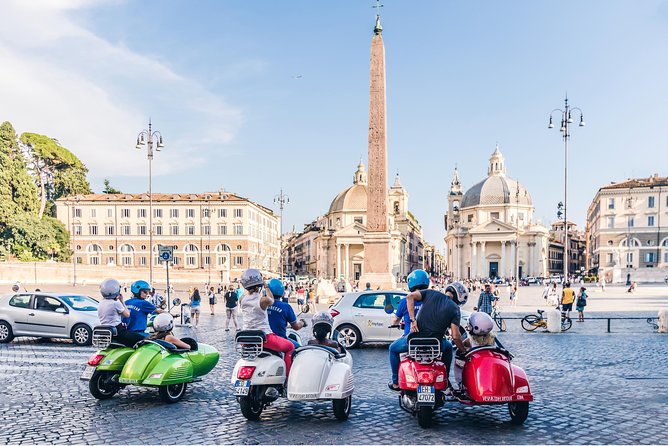
Stop one is Piazza della Repubblica, a striking square shaped by the redevelopment after Rome became Italy’s capital. The centerpiece is the roundabout with the Fontana delle Naiadi, set off by imposing buildings on one side and a more ruined-looking temple area on the other.
Why it’s worth your time: this is the kind of plaza that gives you scale fast. You see how Rome mixes eras—new civic design sitting next to older fragments—without needing a museum ticket.
Next you glide to Palazzo del Quirinale on Quirinal Hill. It’s not just famous for being presidential; it’s important because it’s part of the daily geography of power in modern Italy. The hill location (the highest of Rome’s seven hills) also makes the area feel commanding even when you’re not far from traffic.
If you like architecture, these early stops help you build a mental map before you hit the classic postcard scenes.
Trevi Fountain and the Pantheon stop that’s worth planning
Trevi Fountain is next, and yes, it’s famous for a reason. The guide frames it with the basics that make it click: it sits where the Aqua Virgo aqueduct ended, and the look you recognize took shape in the 18th century. You also get the meaning behind the name from Tre Vie, the three ways.
Here’s the practical advantage of this tour format: you’re not trying to reach Trevi while juggling directions, parking, and timing. You get there as part of a route, and you can use the allotted time to look closely and take photos without turning it into a full-day mission.
Then comes the Pantheon, and this is the big value hook. The admission ticket is included, and the Pantheon is one of the best-preserved ancient buildings in Rome. The oculus brings in natural light in a way that makes the interior feel alive even when it’s crowded.
What I’d do at this stop: slow down when you’re inside. Don’t race through the “wow” moment. Let your eyes adjust, then look back up. The roof and the light are the story here.
The tour also includes time to explore at a normal human pace, not a sprint.
Piazza Navona and St Peter’s Square: famous geometry, fast connections
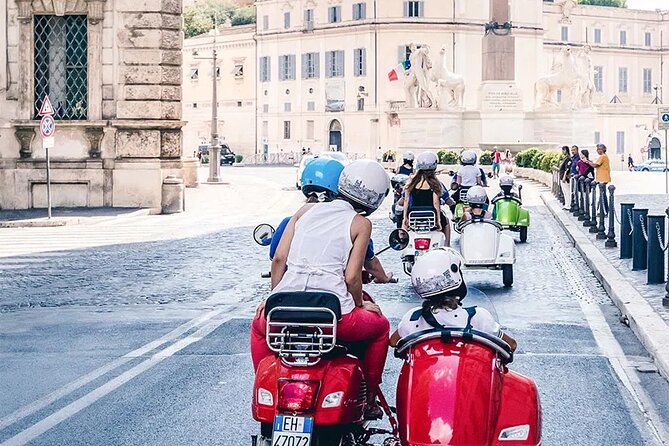
From central fountains and temple-classic architecture, the route keeps moving toward the Rome most visitors chase: Piazza Navona. This site sits on the footprint of an ancient stadium, and the Baroque layout is the giveaway. You’re in one of the most photogenic squares in Rome, with fountains like Bernini’s Four Rivers in view.
Then you shift to St Peter’s Square in Vatican City. Even if you’re not religious, the scale is the point. You’re in a space that can hold more than 300,000 people, and Bernini’s design does something subtle: it makes you feel guided toward the basilica.
On a Vespa, you don’t spend hours walking between these icons. You get the feel of each place quickly, then you can decide later if you want a deeper return visit.
Terrazza del Gianicolo: the view break Rome owes you
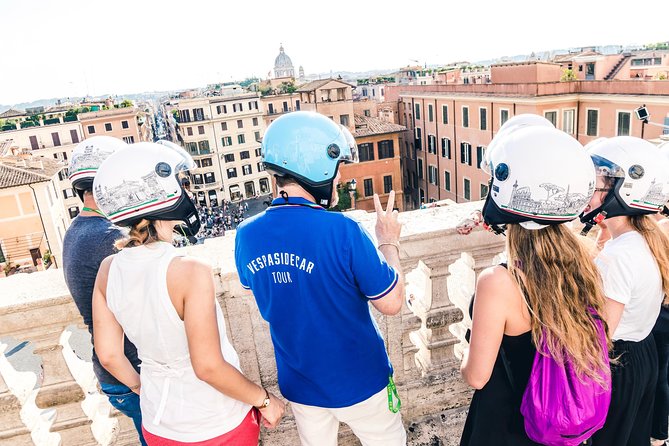
At some point, Rome traffic and crowds can wear you down. That’s why Terrazza del Gianicolo (Janiculum Hill) is smart in a morning tour.
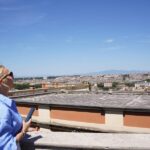
Janiculum is often called Rome’s eighth hill, and this stop functions like a pressure valve. The walk up and the viewpoints give you space to breathe. You also get historical context while looking outward, including the hill’s role in defenses and the presence of sculptures honoring figures like Garibaldi.
This is one of those moments where the tour’s “ride then pause” rhythm works. You don’t just look at Rome; you see how the city spreads.
If you’re prone to motion discomfort, this is also a good place to stand still, straighten up, and reset.
Altare della Patria and the Colosseum: monument time with real momentum
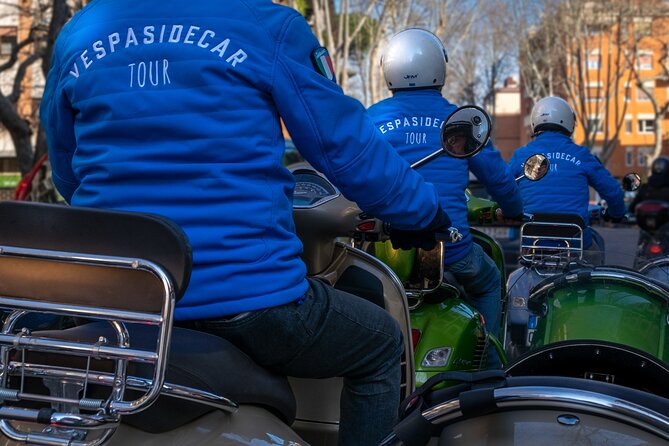
Next, the tour takes you to Monumento Nazionale a Vittorio Emanuele II, also called Altare della Patria, in Piazza Venezia. It’s massive, and it’s built to project authority across the city. The guide connects it to the unification era and points out that inside are museums tied to the Risorgimento, plus the tomb of the unknown soldier with an eternal flame.
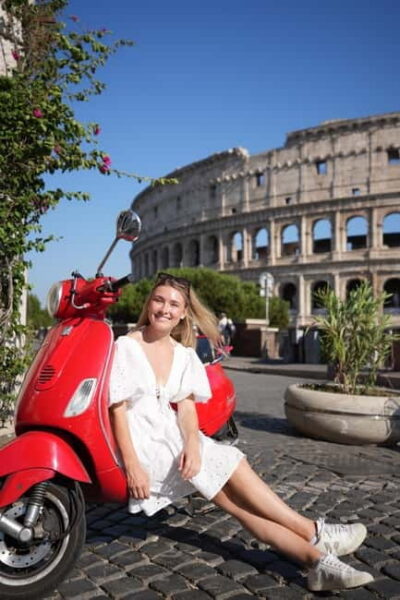
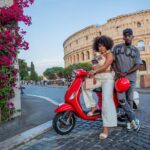
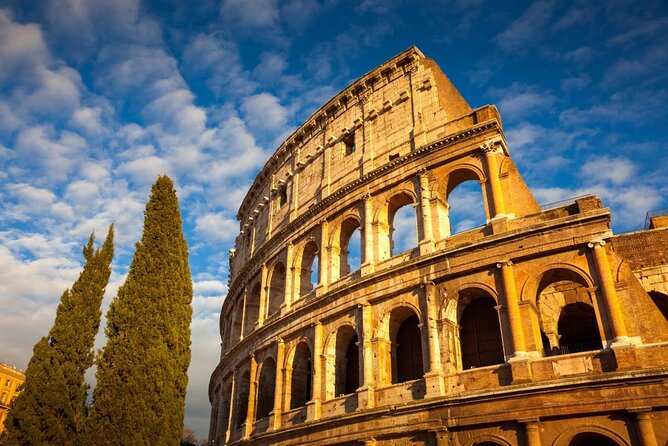
From there, you head to the Colosseum. This stop is the big “Rome has arrived” moment for many people. The Colosseum is the city’s main symbol, and its scale makes it hard to keep your brain in modern mode.
A tip: don’t try to take every photo at one angle. Move a little, find a spot where you can see it with a slice of street context, then take a few shots. Your brain will remember the shape better.
You also get the satisfaction of seeing it within the same three-hour loop as the Pantheon and Trevi, which is hard to do if you’re piecing the day together yourself.
Santa Maria Maggiore: finishing with an ancient church that still matters
The tour ends with a pass by Basilica di Santa Maria Maggiore, one of Rome’s four major basilicas and the largest Catholic church dedicated to the Virgin Mary. Even if you’re not chasing religious architecture specifically, it’s a good closing stop because it adds another layer to the city beyond ruins and fountains.
You finish back at Piazza della Repubblica, so you can hop onto your next plan without needing to regroup with maps and transit tickets.
Price and value: what $163.26 buys you in real terms
At $163.26 per person for around three hours, the price isn’t “cheap,” but it often makes sense when you price the experience correctly.
You’re paying for:
- Drivers who handle the hard part: narrow streets, turns, and parking chaos.
- Audio headsets and live narration the whole time.
- Breakfast with cappuccino and cornetto.
- Pantheon admission included (a key entry that many visitors have to manage on their own).
- Helmet and hygiene setup (CE helmets plus disposable head covers).
- A small group capped at 12, which keeps the experience personal enough to feel guided.
If you were to recreate this yourself, you’d spend time organizing entry tickets, timing your walking stops, and fighting traffic logic. Here, the route is planned so you can focus on seeing.
For many people, that trade is the whole point.
Who should book this Vespa sidecar morning tour
This tour is a strong match if you:
- Want a fast first introduction to Rome without exhausting your feet.
- Like guided storytelling while you move, not only at set stops.
- Appreciate included access, especially the Pantheon ticket.
- Enjoy the “we’re actually moving” feel of scooters through the streets.
It’s also a better fit when you have limited time. Three hours is enough to hit major highlights and still leave you energy for dinner.
Who should think twice
If you are pregnant, the tour says it’s not permitted. Also, there are weight and height constraints for riding comfort and safety:
- Sidecar capacity is listed as up to 110 kg / 242 pounds and a maximum height of 1.90 m.
- The maximum weight for the person riding behind the driver is 118 kg / 260 pounds.
- Children must be at least 5 years old, and if they are not tall enough (150 cm) they cannot sit behind the driver.
If any of those apply to you, it’s worth asking questions before booking so you’re not surprised on the day.
Practical tips for a smoother ride
Rome scooters are fun, but you’ll enjoy it more with a little prep.
Wear shoes you can walk in quickly, because your best photos often happen when you step out for a short moment. Also consider a light layer. Mornings can start cool, and you’ll be on the move.
Bring sunglasses and keep your phone secure. You’ll want photos at Trevi, the Pantheon exterior, and especially the Colosseum, but you also don’t want to fumble every time the route stops.
Finally, lean into the headset. The tour is designed around that narration. When you listen, the city stops being a set of landmarks and starts feeling like a connected story.
Should you book this morning Vespa tour?
If you want a Rome day that starts fast, feels safe, and hits the big names without making you plan like an engineer, I think this is a great pick. The combination of cappuccino and cornetto, headsets with live commentary, and Pantheon entry included is a strong mix of comfort and value for the money.
Book it especially if it’s your first time in Rome or if you’re trying to see the highlights without spending hours negotiating lines and logistics.
Just do two things before you confirm: check the weather outlook for your date, and review the child and weight/height riding rules. Once that’s clear, this is one of those “I’m glad we did it” tours that makes Rome feel close.
FAQ
What’s included in the morning tour?
The tour includes breakfast with traditional cappuccino and cornetto, a professional licensed guide with live narration through headphones, professional drivers (you do not drive), headsets, CE helmets with sterilized disposable head covers, and an entrance ticket to the Pantheon.
How long is the Vespa sidecar tour?
It runs for approximately 3 hours.
Is the tour offered in English?
Yes, it is offered in English.
Where do we meet, and where does it end?
You meet at Piazza della Repubblica, 41, 00185 Roma RM, Italy. The tour ends back at the meeting point.
Do I need to buy a ticket for the Pantheon?
No. Pantheon admission is included in the tour.
Do children get to ride too?
Children must be accompanied by an adult. The minimum age is 5 years old. Seat placement depends on height: if they are taller than 150 cm, they can sit behind the driver; otherwise they must sit in the sidecar.
Are there weight and height limits for the riders?
Yes. The sidecar can hold up to 110 kg / 242 pounds, with a maximum height of 1.90 m. The maximum weight for the person riding behind the driver is 118 kg / 260 pounds.
Is this tour weather-dependent?
Yes. It requires good weather. If it’s canceled due to poor weather, you’ll be offered a different date or a full refund.