REVIEW · ROME
Vespa Tour with driver Rome By Night 3 hours
Book on Viator →Operated by Eco Move Rent - Vespa Tours · Bookable on Viator
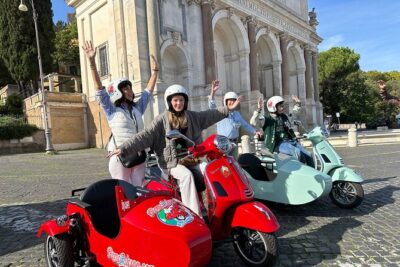
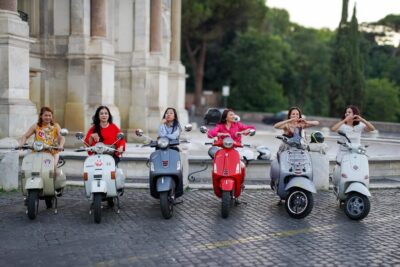
Rome at night feels faster. This driver-guided Vespa tour turns the city lights into a practical sightseeing plan, with stops that line up sights like Caracalla, the Pyramid, and the orange-garden viewpoint. I like that the pace stays manageable—short stops, clear context, and plenty of chances to grab photos without waiting in long lines. I also like the convenience factor: round-trip transfer options mean you spend less time figuring out routes and more time seeing Rome.
The main thing to keep in mind is that some experiences are stop-based rather than ticket-based. The Colosseum is a quick viewing stop and admission is not included, and you may also need to bring ID since entry to the Colosseum and Roman Forum requires a valid document tied to your booking name.
In This Review
- Key Highlights You’ll Actually Feel on the Road
- Price and What You’re Paying For in 3 Hours
- Meeting Up at Eco Move Rent and Getting Rolling Fast
- Safety Setup: Helmets, Hair Nets, and Night Riding Confidence
- The Night Route: How the Stops Add Up
- Terme di Caracalla: A Big Roman Name in a Short Visit
- Piramide Cestia: A Quick Landmark That Changes the View
- Giardino degli Aranci: The View Stop That Feels Like a Reset
- Colosseum Viewing: Quick, Historic, and ID-Sensitive
- Piazza Navona: A Baroque Square With Legs-Friendly Timing
- Piazza di Spagna: Where You Start to Feel the Rome You’ve Seen in Photos
- Piazza Venezia Hub: Why This Last Stretch Matters
- Coffee and Gelato: The Pit Stop That Makes This Feel Like Night Life
- The Most Important Practical Tip: Bring Your ID for the Colosseum Rule
- Jubilee Repairs and Detours: Why Rome May Look Slightly Different
- Who This Vespa Tour Fits Best
- Should You Book the Rome by Night Vespa Tour?
Key Highlights You’ll Actually Feel on the Road
- Private, driver-guided route through central Rome, with just your group
- Helmets and hair nets provided for safety and hygiene
- Coffee and gelato pit stop built right into the ride
- A tight itinerary (about 3 hours) that hits major viewpoints without feeling rushed
- Free admission for multiple stops like Terme di Caracalla, Piramide Cestia, Giardino degli Aranci, Piazza Navona, and Piazza di Spagna
Price and What You’re Paying For in 3 Hours
At $260.24 per person for about 3 hours, you’re not buying a museum ticket. You’re paying for access to three things that matter in Rome: time, transportation, and someone else handling the flow.
In practice, this is a smart use of money if you want to:
- See a lot of Rome without walking every step in heat or traffic stress
- Get night views that are harder to piece together on your own
- Have a driver who knows where to pause for photos and quick look-ins
Could you do Rome by bus or on foot for less? Sure. But you’ll spend that savings in lost time—especially at night when transfers, parking, and “Where do we stop?” become your problem. Here, the tour does that thinking for you.
Also, since it’s a private tour, you won’t be squeezed into a shared schedule with strangers. That tends to make the experience feel smoother, especially when you’re hopping on and off the Vespa at multiple points.
Meeting Up at Eco Move Rent and Getting Rolling Fast
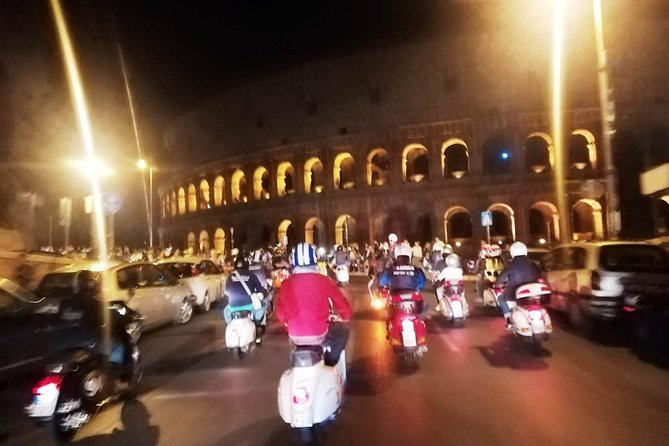
The tour starts and ends at Eco Move Rent, Via dei Mille, 8, 00185 Roma. You’re also told you can be dropped off inside the city center or at your hotel, which is a big deal in Rome. If your hotel is convenient, the tour basically turns into a door-to-door night outing.
It’s also listed as being near public transportation, which can help if you want to position yourself nearby instead of waiting at your hotel. Just plan to arrive with a little extra buffer. In tight city areas, meeting on time can be more chaotic than it should be.
You’ll also get a mobile ticket, so you’re not juggling paper. That matters when you’re wearing a helmet and trying to keep your phone safe and secure.
Safety Setup: Helmets, Hair Nets, and Night Riding Confidence
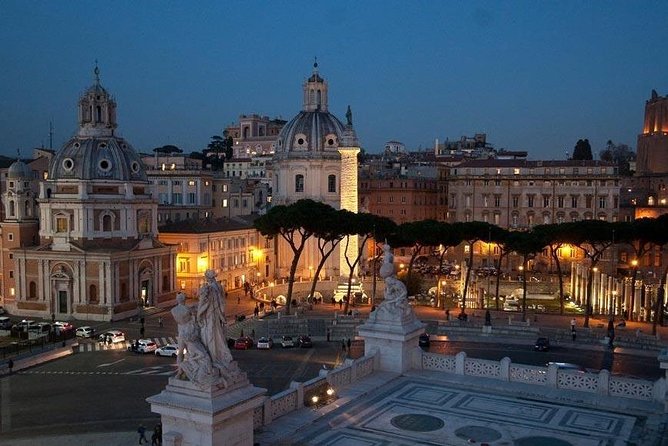
This is a Vespa tour, so safety setup is a real part of the value—not a footnote.
You’ll be provided helmets and hair nets, which helps with hygiene and makes the ride feel more “ready-to-go.” It’s especially reassuring at night when you’re focused on staying calm, holding on, and enjoying the scenery rather than wondering what gear is missing.
If you’re the kind of person who likes structure (even on vacation), you’ll probably appreciate that the tour is driver-led, not you navigating and finding places to pull over. The driver handles the line of travel, and you handle looking up.
The Night Route: How the Stops Add Up
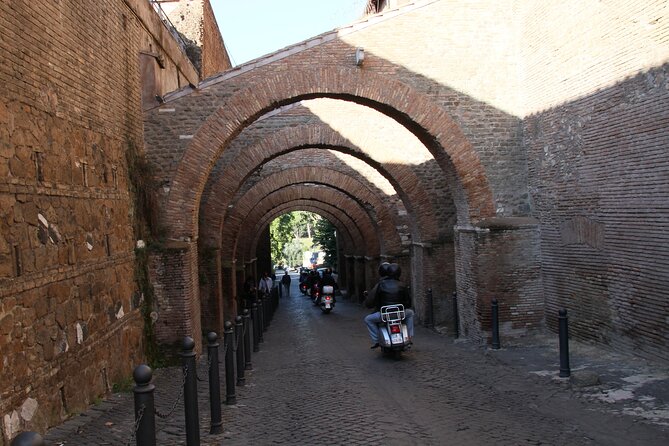
The itinerary is built like a greatest-hits reel, with quick hit stops spaced across Rome’s classic areas. You’re not stuck in one place for hours. Instead, you move through the city with short sightseeing windows so you can see the shape of Rome, not just a single monument.
Here’s what to expect, stop by stop, and where each one shines or has limitations.
Terme di Caracalla: A Big Roman Name in a Short Visit
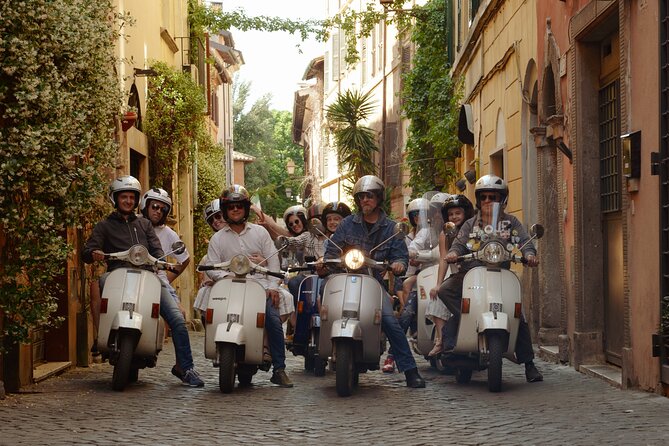
First up: Terme di Caracalla, the Roman thermal bath complex.
You get about 20 minutes, and the admission ticket is free. In that timeframe, you’re not trying to do a deep dive of every arch and room. You’re doing something more useful: getting your bearings in one of Rome’s massive historical spaces.
What I like about this stop: it gives you an anchor early. When you see Caracalla, Rome’s scale becomes real. It’s not just streets and fountains—this city built infrastructure.
Possible consideration: 20 minutes is not enough for a long, ticketed stroll through everything. Think of it as a “see it, feel it, move on” moment.
Piramide Cestia: A Quick Landmark That Changes the View
Next: Piramide Cestia, Rome’s pyramid.
You’ll get about 10 minutes, with free admission. This is the kind of stop that works well on a night tour: it’s compact, visually distinct, and easy to understand fast.
Why it matters: the pyramid is one of those weirdly memorable Rome landmarks. It breaks the usual pattern you might expect from Roman ruins and churches. It also sets you up for photos because it has a strong shape against Rome’s darker streetscape.
Drawback: at just 10 minutes, you’ll want to be ready to move right after you see it. This is not a lingering stop.
Giardino degli Aranci: The View Stop That Feels Like a Reset
Then comes Giardino degli Aranci, often called an orange-garden viewpoint.
You’ll spend about 20 minutes, and it’s also free admission. This stop is one of the most “touristic” in the best way: it’s designed for standing still, looking out, and letting the city land in your brain.
What makes it special: you’re riding through Rome, then you arrive at a spot where you can slow down. From a viewpoint garden, Rome’s rooftops and landmarks become a single picture, not a list.
Possible consideration: if it’s crowded, you may have less space to linger exactly where you want. The time is still enough to soak in the view, but you should expect a bit of movement around you.
Colosseum Viewing: Quick, Historic, and ID-Sensitive
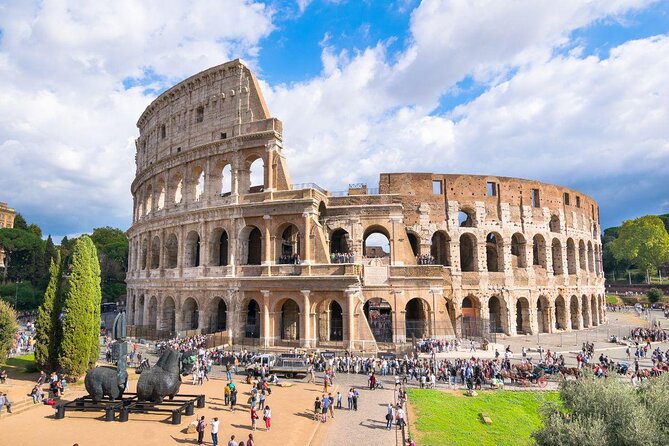
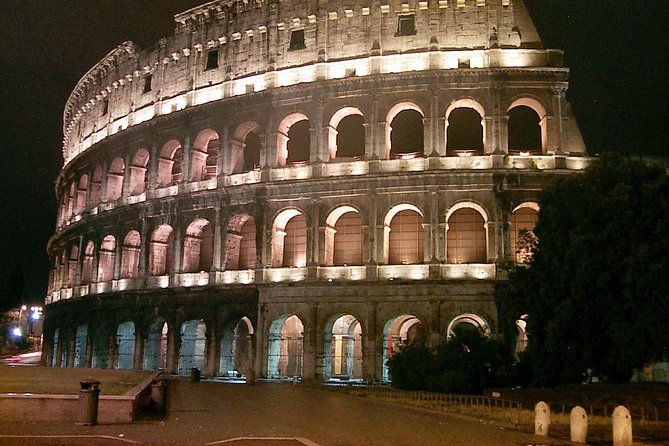
After the garden viewpoint, you hit St. Peters Basilica as a listed stop, then the tour includes Colosseum as the next major anchor.
The Colosseum stop is about 15 minutes, and admission is not included. That’s important. You’re not buying Colosseum entry through this tour fee, so plan accordingly if your goal is inside-the-arena time.
Also, there’s a clear rule you should take seriously: for successful entry to the Colosseum and Roman Forum, you must present a valid ID card/document matching the name used at booking.
Even if your Colosseum time is only viewing-based on this tour schedule, I’d still treat this ID requirement as real. It’s the kind of rule that can derail your plans if you show up without the right documents.
What I like about the Colosseum portion: it’s strategically timed for recognition. You see it, you understand where you are in the city, and you can decide if you want to return later for a longer ticketed visit.
Possible drawback: 15 minutes is short. If you want a full entry experience, you’ll need extra planning outside this ride.
Piazza Navona: A Baroque Square With Legs-Friendly Timing
Next is Piazza Navona, one of Rome’s most recognizable squares.
You’ll have about 10 minutes, with free admission. The square’s biggest strength is that it’s easy to read quickly: you can see the layout, clock the main focal points, and get a photo without needing a long walking route.
Why it works on a Vespa tour: you’re not stuck in a line. You get in, look, and keep moving. It helps keep the energy up, especially since the tour is only about 3 hours total.
Possible consideration: with only 10 minutes, don’t plan on browsing details. If something catches your eye, take the photo and decide fast.
Piazza di Spagna: Where You Start to Feel the Rome You’ve Seen in Photos
Then you roll into Piazza Di Spagna, with about 15 minutes and free admission.
You’re told about its name and its link to the Palazzo di Spagna, seat of Spain’s embassy to the Holy See. That little bit of context helps you appreciate why the square is where it is—this isn’t random scenery, it’s tied to Rome’s political and diplomatic geography.
What I like here: the timing is good. After Navona and the Colosseum area, Spagna gives you a different Rome mood—more street-level energy and iconic central-city architecture.
Possible consideration: 15 minutes passes fast in an area like this. If you want a relaxed pause, set a quick goal: one photo angle, then look around.
Piazza Venezia Hub: Why This Last Stretch Matters
The tour notes that Piazza Venezia is considered the hub of the city. Even if your time there is not spelled out as a numbered stop with a fixed minute count, it’s still a meaningful part of the logic.
A hub stop usually means:
- Easier navigation for the next leg
- Better access to major streets
- More chances for photos where multiple views converge
In a 3-hour plan, that hub logic helps you avoid the feeling of being constantly “in transit.” You’re not just riding—you’re being guided through Rome’s structure.
Coffee and Gelato: The Pit Stop That Makes This Feel Like Night Life
One of the highlights is a stop for coffee and gelato along the way, in a way that matches how Romans often take breaks.
This is more than a snack. It helps you shift gears. On a Vespa tour, your body is working to stay balanced and alert. A coffee-and-gelato moment gives you a human rhythm break, not just a sightseeing break.
There’s also a strong note from a guide experience: Valentino took care of the gelato moment the rider wanted to try and even treated them with ice cream. That kind of flexibility is where a guided tour can feel like a small local connection, not just a checklist.
The Most Important Practical Tip: Bring Your ID for the Colosseum Rule
The tour explicitly requires a valid ID card/document matching your booking name for entry to the Colosseum and Roman Forum.
So do this now, before you go:
- Make sure your document matches the spelling used in your booking
- Bring the physical ID, not just a digital copy
- If you’re traveling with multiple people, check each name carefully
Even if your plan is only a quick Colosseum viewing, it’s still wise to be ready in case the route and timing allow or your mindset changes once you see the monument up close.
Jubilee Repairs and Detours: Why Rome May Look Slightly Different
You’re also warned that due to the Jubilee, some monuments may be undergoing restoration and some routes may be diverted.
That means you should avoid expecting the route to match an exact Google Maps path. Instead, think of this as a flexible evening ride built to keep the experience moving even if roads or sights are under construction.
This is also why the driver matters. In a city like Rome, detours are normal. The difference is whether you’re stuck rerouting on your own or whether your guide adjusts the plan without breaking the flow.
Who This Vespa Tour Fits Best
This tour is a great match if you:
- Want big-name Rome sights in a short window
- Prefer a guided plan over self-navigation at night
- Like photo stops with time built in
- Value comfort and convenience through transfer options
It’s also a strong option for:
- First-timers who want to build a mental map fast
- People who don’t want to commit to ticket-heavy museum hours
It may be less ideal if you want only long stays at fewer sites. This tour is designed for seeing lots, not lingering all day.
Should You Book the Rome by Night Vespa Tour?
I’d book it if your goal is a fun, efficient night overview of central Rome with real guide leadership and built-in breaks. The biggest wins are the combination of night views, a driver who keeps things light and organized, and the built-in coffee-and-gelato moment.
Hold off or plan something extra if your priority is spending a long time inside the Colosseum. Since admission is not included and the stop is brief, you may want this as the “wow, I’m here” ride and then follow up with a separate ticketed visit.
If you’re deciding between doing Rome at random versus doing Rome on purpose, this is the on-purpose choice—especially when you want the city to feel magical without turning your trip into a logistics puzzle.