REVIEW · ROME
Rome Private Tour in a Vintage Vespa Sidecar Style for 90 Minutes
Book on Viator →Operated by Rome in golf cart · Bookable on Viator
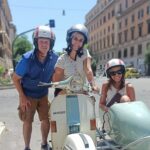
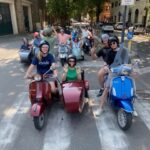
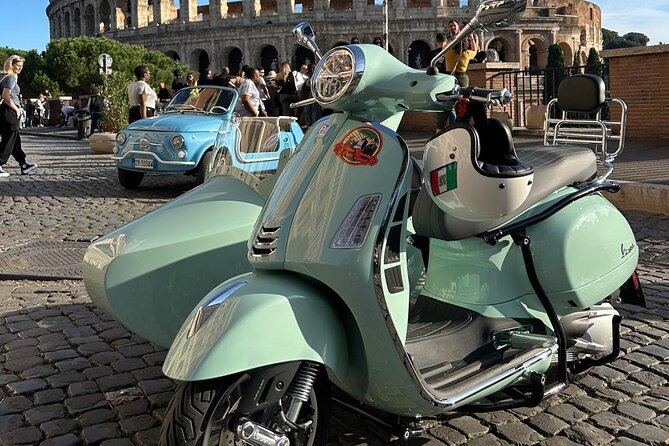
Rome on a sidecar makes sense. In 90 minutes, you zip past major sights and also get access to tight lanes that normal cars can’t handle, with live guide commentary through earphones so you don’t miss a word. I especially like the private format, which means you can ask questions during the stops instead of waiting your turn in a crowd. One thing to consider: it’s a fast route with mostly short photo moments and no long inside visits, so if you want museum-level time, this is not that kind of tour.
What surprised me most is how quickly the city starts to feel readable. You begin with a major “gateway” square, then you move through fountain landmarks, major monuments seen from the outside, and a couple of art-and-legend stops that help you connect what you’re seeing with what you’re hearing.
In This Review
- Key Highlights You’ll Actually Feel During the Ride
- Why This Vintage Vespa Sidecar Tour Works in Rome
- Meeting at Piazza della Trinità dei Monti (and Getting Rolling Fast)
- Safety and Comfort: Helmets, Earphones, and Weather Gear
- How the Guide Experience Changes the Whole Trip
- Stop 1: Piazza del Popolo as Your Roman Starting Line
- Piazza Navona: Seeing a Classic From the Moving Window
- Trevi Fountain Photo Stop (Plus the Coin Tradition)
- Pantheon Exterior Peek: Ancient Engineering Without the Wait
- Colosseum Exterior Photos: The Big Wow Moment
- Circus Maximus: Where Chariot Racing Lives in Plain Sight
- Chiesa di Sant’Ignazio di Loyola: Ceiling Frescoes Without a Long Detour
- Via Giulia: A Renaissance Street Moment
- Palatine Hill View: Ruins, Vistas, and the Origins Feeling
- Bocca della Verità: The Legend Stop You Can Actually Play
- Price and Value: Is $197.55 a Good Deal?
- Who This Tour Fits Best (and Who Might Skip It)
- Should You Book This 90-Minute Vespa Sidecar Tour?
- FAQ
- How long is the Rome private Vespa sidecar tour?
- What is the starting point for the tour?
- Where does the tour end?
- Is the tour private?
- What language is the tour offered in?
- Is food or drink included?
- Are helmets and earphones provided?
- What weather conditions are required?
- Will monuments be affected by the Jubilee?
- What if there aren’t enough travelers booked?
- Is free cancellation available?
Key Highlights You’ll Actually Feel During the Ride
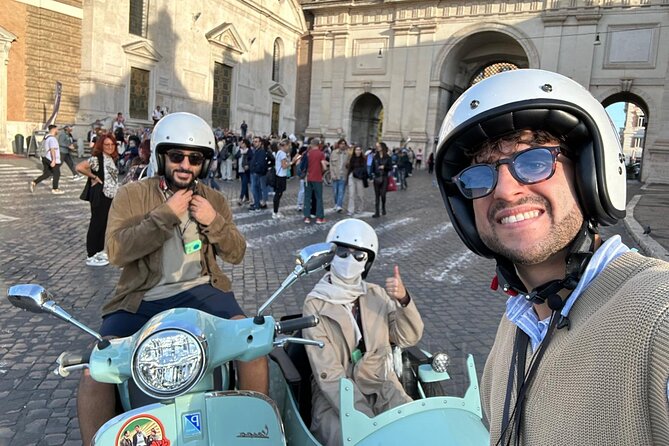
- Vintage sidecar access on narrow streets where cars often can’t go
- Earphones for clear, live narration from the driver guide
- Short, focused stops that keep the route moving without feeling rushed
- Chiesa di Sant’Ignazio ceiling art seen from street level (no long detour, but memorable)
- The Mouth of Truth legend where you can test the playful story at Bocca della Verità
- A private guide you can pepper with questions during photo breaks
Why This Vintage Vespa Sidecar Tour Works in Rome
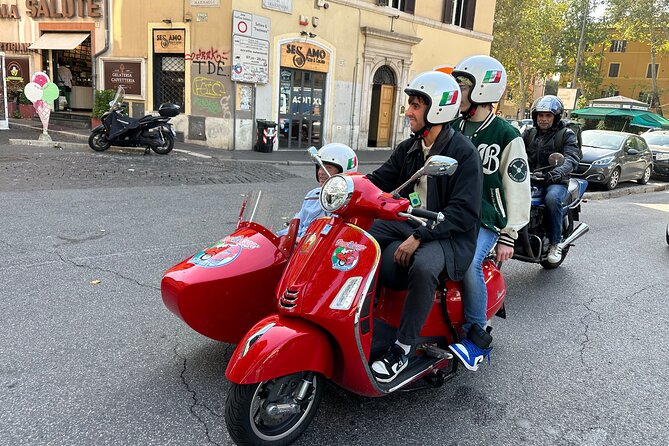
Rome is not built for big vehicles squeezing into every corner. That’s why this style of ride is such a good match: it’s designed for the reality of narrow streets and busy traffic. You get to see more of the city’s shape and rhythm than you would from a standard car route.
The other big win is the earphone setup. Rome is loud—engines, scooters, street chatter, and sudden turns. With live narration delivered through earphones, you stay connected to the story without craning your neck or playing guess-the-sign.
And it’s not just “look, photo, move on.” Because it’s private, the guide can adjust the pace slightly and answer your questions while you’re stopped at viewpoints and landmarks.
Meeting at Piazza della Trinità dei Monti (and Getting Rolling Fast)
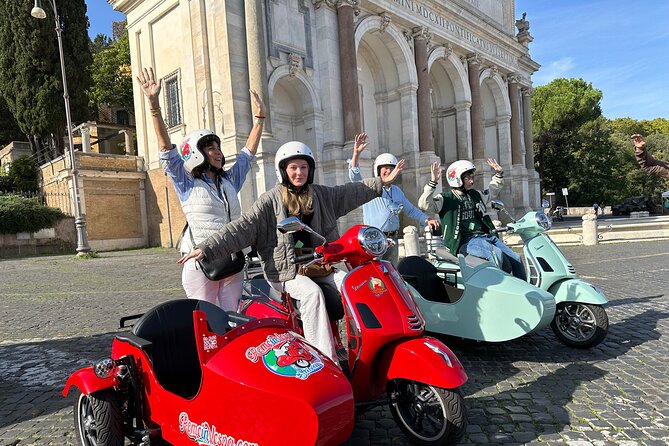
You start and finish back at Piazza della Trinità dei Monti (00187 Roma RM). That matters more than it sounds. You don’t need to plan extra time to get across town at the end, and you can build the rest of your day with confidence.
The tour also says it’s near public transportation, so you’re not locked into a taxi-only plan. If you’re already in the area, it’s an easy slot into a sightseeing morning or early afternoon.
Safety and Comfort: Helmets, Earphones, and Weather Gear
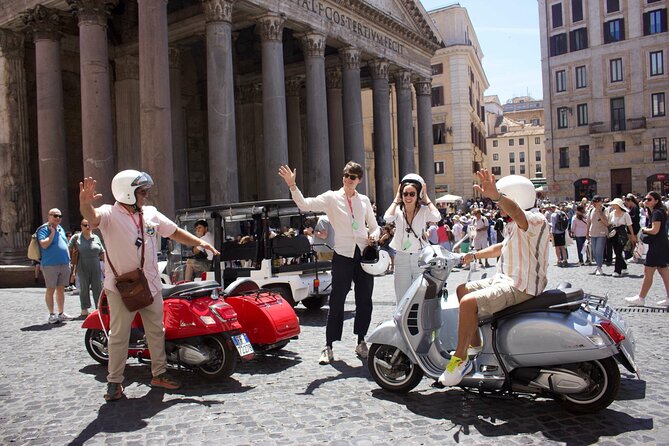
This tour includes homologated CE helmets plus sterilized disposable head covers. That’s a simple comfort detail that helps you feel secure without turning the ride into a big safety lecture.
They also include waterproof equipment if necessary. Rome weather can change quickly, and this is one of those tours where a light rain could otherwise ruin the plan. If conditions aren’t right, the operator notes the experience requires good weather, and they may offer a different date or a refund.
How the Guide Experience Changes the Whole Trip
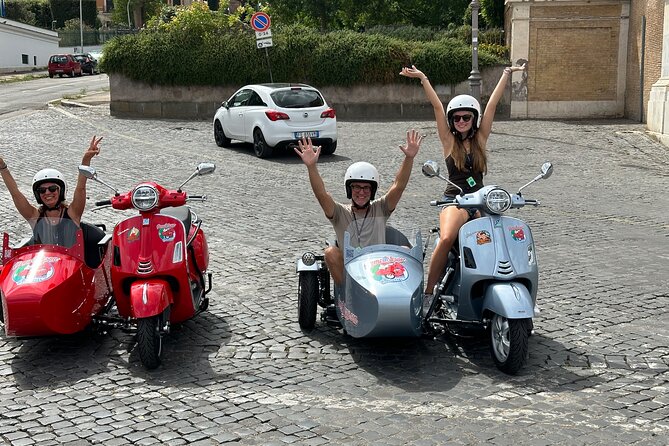
You’re traveling with an in-person guide who provides live commentary to your earphones, plus an audio guide component. That layered approach is practical. When you’re moving through the city, you can catch the essentials from the live narration, and the audio helps reinforce the key facts at the moments you’re actually looking at something.
The one guide name that stood out from a top review is Valerie. The praise was clear: the guide made the whole experience feel easy and worth it. Even if you don’t get Valerie, the format matters—this isn’t a silent drive with occasional pointers.
Stop 1: Piazza del Popolo as Your Roman Starting Line
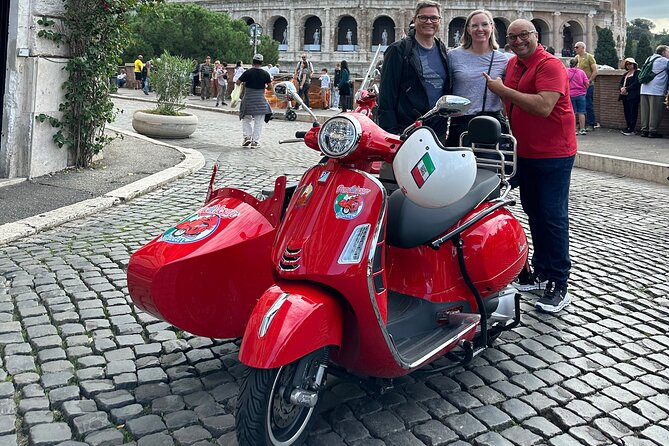
You begin at Piazza del Popolo, one of Rome’s grand gateways. It’s the kind of place where your eyes automatically start mapping symmetry: twin churches, a tall ancient obelisk, and fountains that anchor the square visually.
It’s also a lively meeting point for the city’s street life, so you’ll quickly feel Rome’s human scale. Even if you’re arriving from a quieter hotel area, this square jolts you into the real rhythm of the city.
Time note: you get about 10 minutes here, so I’d use it for quick orientation—look around, locate the direction you’ll continue, and snap one or two establishing photos.
Piazza Navona: Seeing a Classic From the Moving Window
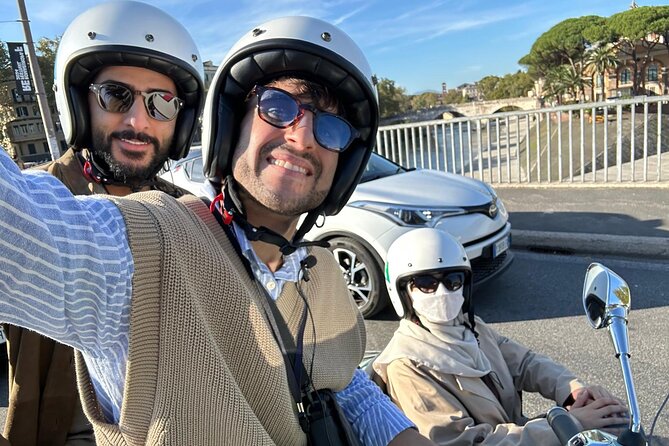
Next you pass Piazza Navona. This is one of Rome’s most iconic squares, built on the site of an ancient stadium. That’s exactly the kind of detail a good guide helps you “see” while you’re walking past—suddenly the shape of the square makes sense.
They don’t promise a long stop, and that’s fine. The value here is the quick reset: you get energy and atmosphere without spending the entire morning trapped in the busiest square.
Trevi Fountain Photo Stop (Plus the Coin Tradition)
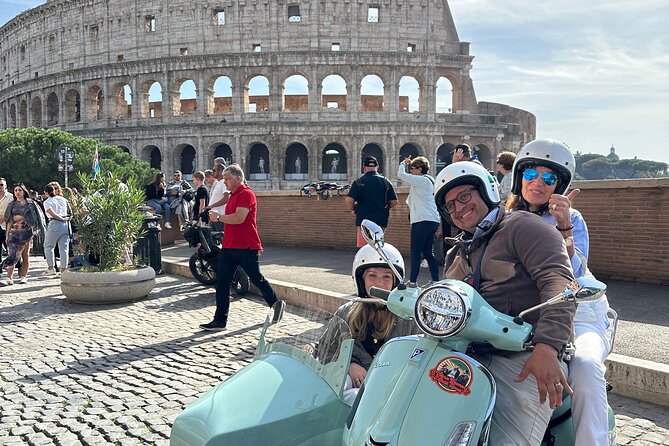
Then comes Trevi Fountain, the famous piece of sculpture and architecture that people still love for the simple reason that it’s beautiful in motion and in close-up photos. Legend says tossing a coin ensures your return to Rome, and during the stop you’ll have time to take pictures—plus, yes, you can toss a coin if that’s your thing.
Time note: about 15 minutes is provided. That’s usually enough for a few good shots and a calm moment to look before the crowd flow pushes you onward.
Practical tip: aim to photograph Trevi at a slight angle from where people gather most heavily. You’ll often get a cleaner view of the fountain’s full composition.
Pantheon Exterior Peek: Ancient Engineering Without the Wait
You’ll also pass the Pantheon. Even from the outside, it’s one of those buildings you understand instantly: the dome, the scale, the sense that ancient Rome engineered with confidence.
This stop is described as a pass-by moment—so you’re not relying on ticket timing or long lines. That makes it a smart choice inside a 90-minute schedule. You can still appreciate the grand portico and then move on.
If you want to go inside later, this tour doesn’t replace that plan—it simply gives you a fast “first look” so you’ll know why the Pantheon is a big deal when you return.
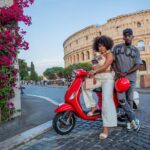
Colosseum Exterior Photos: The Big Wow Moment
The Colosseum is next, with a stop for exterior photos. Even when you’ve seen images before, standing near the structure is different. It’s not just a monument; it’s a sense of scale that’s hard to replicate in a picture.
The guide framing here is helpful. You’re prompted to imagine the scene—roaring crowds, gladiators, and emperors—without pretending you’re in the exact historical moment. It’s more like mental scaffolding: the facts give your eye something to hold onto.
Time note: it’s not positioned as a full visit, so treat it as a “see it now” stop. If you want a guided interior visit later, you’ll already have the landmark anchored in your mind.
Circus Maximus: Where Chariot Racing Lives in Plain Sight
You pass Circus Maximus, once a massive chariot-racing stadium. Today it reads as a green space, which can feel surprising until you remember what it used to be. This is where a quick ride tour shines: you get an instant historical translation.
Even with a short time window (about 10 minutes), the guide can help you visualize how the space functioned. That makes the walk through modern Rome more than just scenery.
Chiesa di Sant’Ignazio di Loyola: Ceiling Frescoes Without a Long Detour
One of the more artsy stops is Chiesa di Sant’Ignazio di Loyola. You won’t enter, but you get a quick look at why it’s famous: ceiling frescoes designed to create an illusion of towering domes and heavenly scenes.
This works well on a short tour. You’re not spending time on ticket lines or a full church visit, but you still get that “wait—how did they do that?” moment. It’s exactly the kind of street-level art experience that makes Rome feel different from other cities.
Via Giulia: A Renaissance Street Moment
Then you head toward Via Giulia, described as a peaceful street lined with Renaissance palaces and old stone walls. It’s a nice counterbalance to the big monument hits earlier.
You get about 10 minutes to pass through and take in the elegant atmosphere. If Rome felt like rush and spectacle up to this point, Via Giulia helps you shift gears.
Also, the guide notes it was designed by Bramante, which adds extra meaning to what you’re seeing—architecture that doesn’t just look old, but was built with intent.
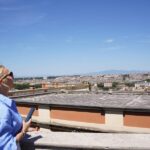
Palatine Hill View: Ruins, Vistas, and the Origins Feeling
Next is Palatine Hill. The tour positions it as a place where you can enjoy a view of ruins and feel Rome’s origins more directly.
This stop is likely quick, but it can still land because Palatine isn’t about one single object. It’s a mood: broken stone, wide sightlines, and the sense of a city built in layers.
Practical expectation: this is about looking and photo time, not a deep archaeological tour.
Bocca della Verità: The Legend Stop You Can Actually Play
The ride concludes with Bocca della Verità (Mouth of Truth), near Santa Maria in Cosmedin. The tradition is simple and goofy in the best way: you place your hand in the stone carving’s mouth and test the legend that it will “bite” anyone who tells a lie.
The appeal here is that it’s interactive. It also breaks the pattern of fountains and monuments. You get a Roman story you can participate in, not just observe.
Time note: it’s included as a stop, but keep expectations realistic—this is a short tour, so it’s more about one memorable moment than lingering.
Price and Value: Is $197.55 a Good Deal?
At $197.55 per person for about 90 minutes, this tour is priced for quality-of-experience: private guiding, specialty access, and the gear package.
Here’s why it can be worth it:
- You’re paying for private time with a guide who can answer questions during stops.
- You’re paying for earphones and live narration, which upgrades how much you absorb on the move.
- You’re paying for the ride format that can reach areas normal vehicles can’t.
And because many stops are free to access as photo/view points, you’re not layering ticket costs on top of the tour price. Still, it’s not a “do everything” price. If you want long museum time or guided interior entry tickets, you’ll likely add those separately.
If you’re traveling in a small group and want a low-stress way to see the classics plus a few legends and art moments, it’s a strong match.
Who This Tour Fits Best (and Who Might Skip It)
This is a great choice if:
- you want big Rome landmarks plus a couple of iconic side stops
- you like learning through narration while walking past key sites
- you’d rather ride-and-stop than spend your day navigating traffic
It might not be ideal if:
- you want long inside visits, guided museum time, or multiple hours in one neighborhood
- you’re traveling on a very tight schedule that can’t handle weather-related changes
Should You Book This 90-Minute Vespa Sidecar Tour?
I think you should book it if you want an efficient, story-led route that still feels personal. The earphone narration, the private format, and the way the ride helps you access tighter streets are the big reasons this works.
It’s also a smart first Rome tour. You’ll come away knowing where the major landmarks are, what they mean, and which places you might want to return to on your own. If you’re okay trading depth for speed, this is a very good way to get your bearings fast.
FAQ
How long is the Rome private Vespa sidecar tour?
The tour lasts about 1 hour 30 minutes.
What is the starting point for the tour?
The tour starts at Piazza della Trinità dei Monti, 00187 Roma RM, Italy.
Where does the tour end?
The tour ends back at the meeting point.
Is the tour private?
Yes. It’s a private tour/activity, and only your group participates.
What language is the tour offered in?
The tour is offered in English.
Is food or drink included?
No. Food and drink are not included.
Are helmets and earphones provided?
Yes. You get CE helmets with sterilized disposable head covers, and you also use earphones for live commentary from your driver guide.
What weather conditions are required?
The experience requires good weather. If it’s canceled due to poor weather, you’ll be offered a different date or a full refund.
Will monuments be affected by the Jubilee?
Yes. Due to the Jubilee, some monuments may be under restoration, and you should watch for messages about potential changes.
What if there aren’t enough travelers booked?
The tour has a minimum number of travelers. If canceled because the minimum isn’t met, you’ll be offered a different experience or a full refund.
Is free cancellation available?
Yes. You can cancel for a full refund up to 24 hours in advance of the experience start time.