REVIEW · ROME
Rome: Vespa Sidecar Tour with Hotel Transfers & Gelato
Book on GetYourGuide →Operated by Vesparella · Bookable on GetYourGuide
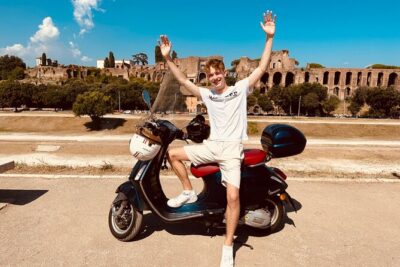
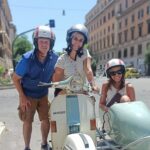
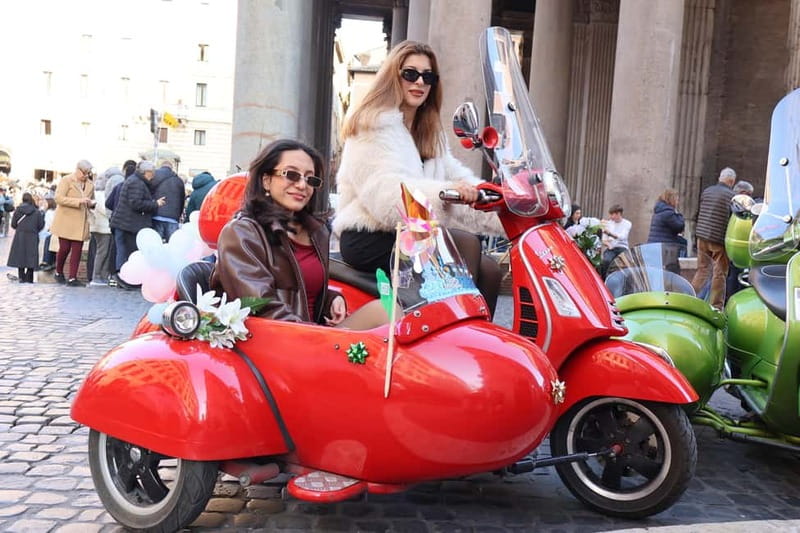
Rome by Vespa feels like a movie scene. I love the Vespa sidecar speed and the wind—Rome’s big landmarks suddenly feel close-up. I also like the hotel pickup and drop-off, which saves you from wrestling with transit.
The guide energy is the other half. With guides like Sam, Alihan, or Cuma sharing the quick, useful context as you go, you’re not stuck with a lecture. You also get a gelato break near the Pantheon, so the tour ends with something sweet.
Do note the ride is outdoors and on moving streets, so if weather turns or you hate wind and noise, this may feel more adrenaline than classic slow sightseeing. It’s also not suitable for children under 5, pregnant women, or people over 95.
In This Review
- Key things to know before you ride this Rome Vespa sidecar tour
- Why a Vespa sidecar is the fastest way to see Rome’s highlights
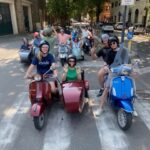
- Pickup, drop-off, and the small-group vibe (up to 10 riders)
- Safety and comfort: helmets, seating, and the wind factor
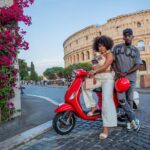
- Colosseum first: a 15-minute look at Rome’s grandest roar
- Piazza Venezia and the Victor Emmanuel II Monument moment
- Pantheon break and gelato near the dome
- St. Peter’s Square and Castel Sant’Angelo: big Vatican energy in short bursts
- Hills and scenic stops: Janiculum and the view points around the center
- Il Fontanone finale: Fontana dell’Acqua Paola and wrap-up views
- Price and value: what $134.45 buys you in real terms
- Guide quality and photo help: what to look for during your stops
- Who should book this Vespa sidecar tour (and who should skip it)
- Should you book this Rome Vespa sidecar tour with hotel transfers and gelato?
- FAQ
- How long is the Rome Vespa sidecar tour?
- What are the main stops during the tour?
- Is hotel pickup and drop-off included?
- What’s included in the tour price?
- How many people can ride per Vespa?
- Is gelato included, and where is it taken?
Key things to know before you ride this Rome Vespa sidecar tour
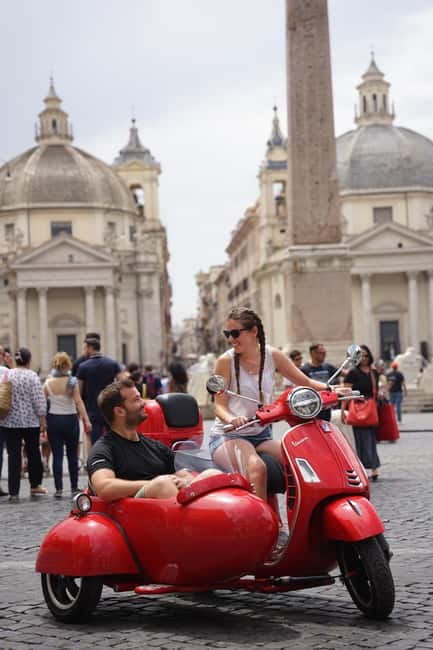
- Hotel transfers from 1,000+ hotels mean door-to-door convenience
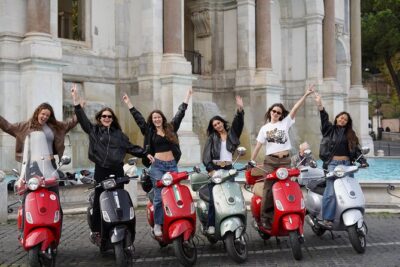
- Small group capped at 10 participants keeps it more personal
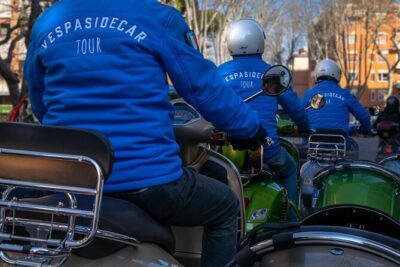
- Helmet + hairnet included, and the guide controls the safety rhythm
- Two-seat setup: one passenger in the sidecar, the other behind the driver
- Gelato experience near the Pantheon built into the route
- Icon stops in a tight loop: Colosseum, Piazza Venezia, Pantheon area, St. Peter’s Square, and Il Fontanone
Why a Vespa sidecar is the fastest way to see Rome’s highlights
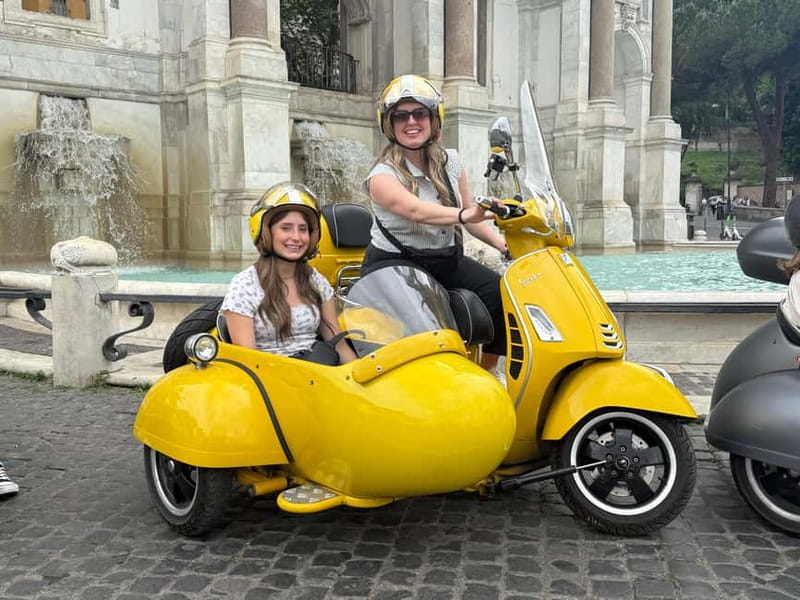
This tour is basically Rome in motion. In three hours, you hop between the Colosseum, the Pantheon area, Vatican sights, and some of the best city viewpoints—without spending your whole day waiting on buses or fighting for walking time.
I like that it’s not just a drive-by. You get guided stops with short windows that are perfect for photos, quick looks, and a few story beats to connect the dots. It’s a good fit if you’re on a tight schedule but still want more than a photo scavenger hunt.
And yes, you’ll feel it. The wind-in-your-hair factor is real. One big plus: you’ll get a totally different perspective than you would standing in a crowd, staring at stone that’s been there for two thousand years.
Pickup, drop-off, and the small-group vibe (up to 10 riders)
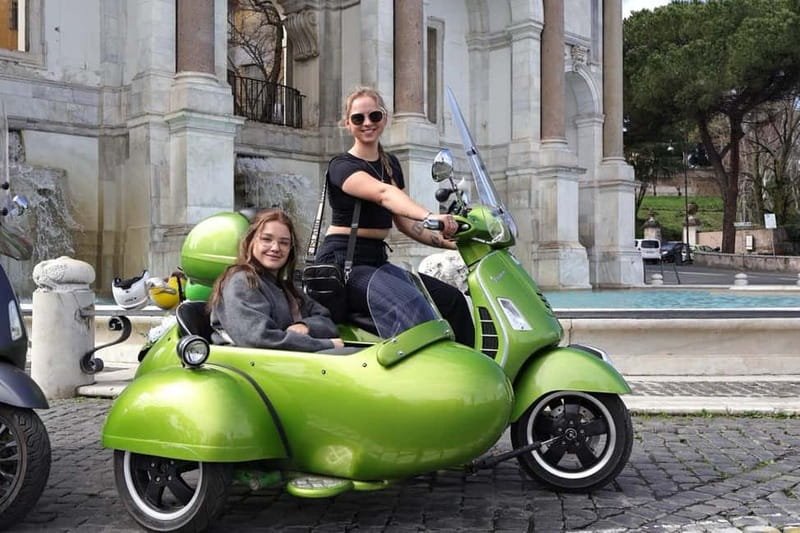
The logistics are unusually smooth for Rome. Your Vespa sidecar setup comes to you for hotel pickup, and you’re brought back at the end. That matters in a city where walking can eat hours—especially if you’re trying to see sights plus eat, shop, and not end up exhausted.
The group size is capped at 10 participants, which tends to mean less chaos at stops and more time for the guide to keep everyone together. From the way guides like Sam and Daniel are described, the pacing is friendly and the vibe is more outing than drill.
You should still show up ready to move. Short stops work best when you’re not asking for long detours. Think of it as a guided sprint with breaks—not a museum day.
Safety and comfort: helmets, seating, and the wind factor
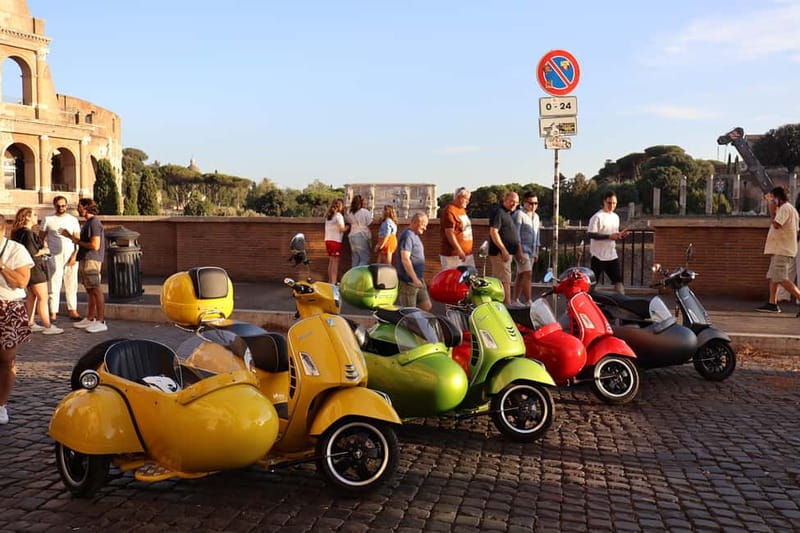
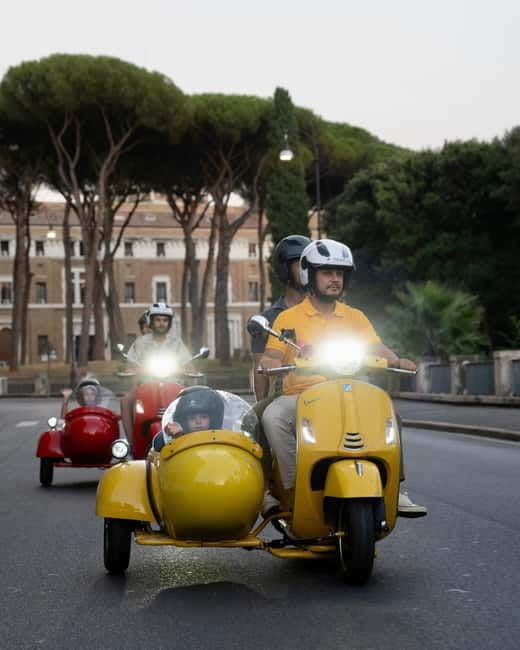
You get a helmet and a hairnet (they’re included). The guide also gives instructions for staying safe and moving on and off the bike setup smoothly.
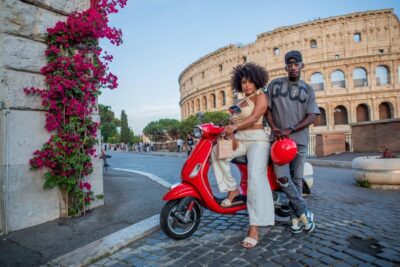
Seating is simple but important to know. The Vespa can carry two passengers: one sits in the sidecar, and the second sits behind the driver. If you’re the passenger behind the driver, you’ll feel more wind and movement. It’s thrilling for many people, but if you’re sensitive to motion, plan for that reality.
The tour is also not suitable for certain folks: children under 5, pregnant women, and people over 95. If any of those apply, skip it for safety.
Colosseum first: a 15-minute look at Rome’s grandest roar
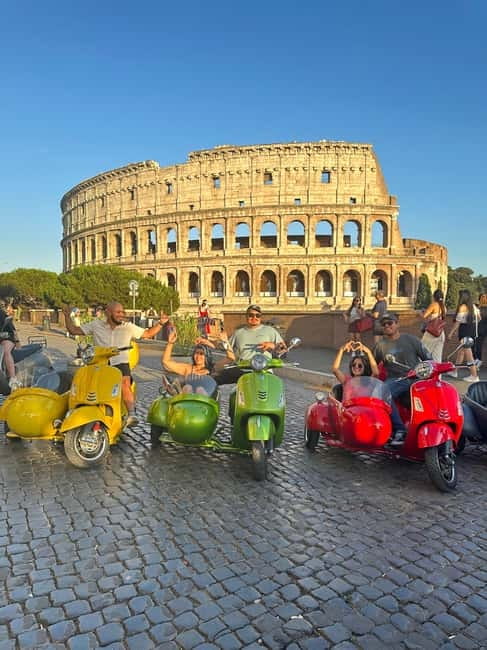
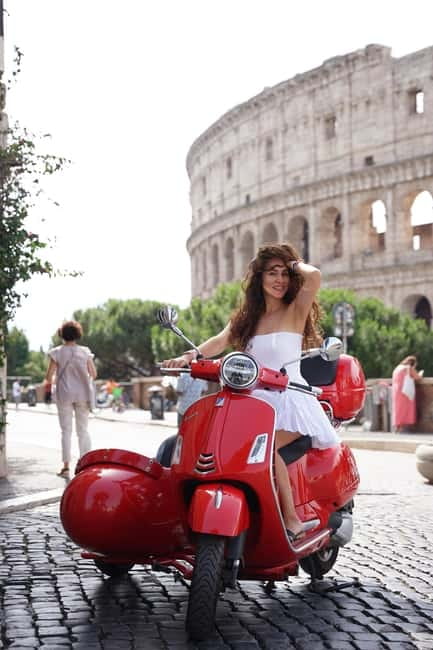
The tour opener is the Colosseum. You spend about 15 minutes here while your guide shares the key story points—gladiatorial games, Roman engineering, and why this site looks the way it does.
This is the stop that often surprises people, because it doesn’t feel like a long walk to a landmark. You’re arriving on a Vespa sidecar, then getting your brief time to take photos and get oriented. It’s a memorable first viewing angle, and it sets the tone for the rest of the loop.
What I’d do with your 15 minutes: take a couple of wide shots first, then switch to details. You’ll want one photo that shows the whole structure and another that catches the texture and arches up close.
A possible drawback: 15 minutes can feel short if you’re the type who likes reading every plaque. If that’s you, use this stop for photos and the main story, then plan extra time later on your own.
Piazza Venezia and the Victor Emmanuel II Monument moment
Next comes Piazza Venezia, where you’ll see the imposing Victor Emmanuel II Monument. You get about 15 minutes with guided context about the square and what it means in both historic and modern Italian life.
This stop is valuable because it connects the ancient Rome you’re seeing with the Italy that came later. It helps you stop thinking of Rome as just one era layered on top of another. You start to see it as a city where power and identity kept changing hands.
You might find this segment a nice mental reset. After the Colosseum’s ancient scale, the monument’s different style feels like a new chapter, not just another stop.
Pantheon break and gelato near the dome
The Pantheon stop is longer than most of the others: about 20 minutes. That extra time matters here because the building is all about shape, light, and detail. Your guide gives the background as you look around, and you get time to actually enjoy the view.
The best part for a lot of people is the built-in gelato experience near the Pantheon. If you’re mapping your day, this is a smart move. You’re getting a sweet break that fits the sightseeing rhythm, not a random hunt for dessert later.
Timing-wise, the gelato tends to land toward the end of the tour loop based on how guides pace the final stops. Either way, it’s a good strategy: save your energy for the viewpoints, then finish with something fun.
If you’re picky about gelato flavors, be ready to decide quickly once you’re at the serving point. Short stops mean your best bet is to commit when your turn comes.
St. Peter’s Square and Castel Sant’Angelo: big Vatican energy in short bursts
The Vatican segment gets you the photo-friendly moment most first-time visitors crave. You’ll stop at St. Peter’s Square for about 15 minutes, with guidance on the architecture and the Vatican’s broader story.
Then you add Castel Sant’Angelo, another short guided stop at about 15 minutes. This towering cylindrical building has worn several hats over the centuries, and the guide explains what role it played—mausoleum to fortress—plus you get views over the Tiber River.
This pairing works because it gives you two different angles of the Vatican area: the open grandeur of the square, then the more dramatic, river-crossing perspective from Castel Sant’Angelo.
For practical use of your time: at St. Peter’s Square, focus on your wide shots first. At Castel Sant’Angelo, spend a few minutes turning slowly for river views before you line up for photos.
Hills and scenic stops: Janiculum and the view points around the center
The itinerary includes Janiculum Hill with a 15-minute stop and guided context. This is a classic Rome move for a reason: from the hills, you see how the city spreads and how the landmarks sit within it.
It also includes a Pincio Gardens stop (with guided time and a ride segment of about 15 minutes). Pincio is a viewpoint-style experience, so your guide’s job here is less about long narration and more about pointing you toward what to look at while you’re standing in the right spot.
Depending on timing, you may also get the Spanish Steps stop described as a 15-minute break. Either way, these middle-of-the-tour stops are the places where you can breathe, take photos, and reset your legs.
If you’re trying to do Rome with less walking, these viewpoint segments are your friend. They let you get skyline and landmark “relationship” shots without long hikes.
Il Fontanone finale: Fontana dell’Acqua Paola and wrap-up views
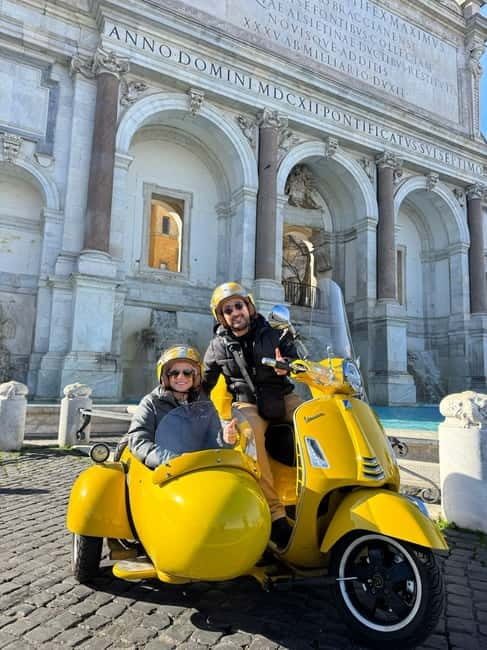
The tour ends with Fontana dell’Acqua Paola, also called Il Fontanone. This is the kind of location that works as a final punctuation mark: Baroque style, big visual presence, and views over Rome.
You’re closing with the “wow” element. After the ancient architecture, the Pantheon dome, and the Vatican energy, this stop gives you a wider sense of the city. It also tends to be where you get your last round of photos before you head back.
If you care about photos, this is a good moment to slow down. Take at least one shot where you include the fountain and one shot where you aim for the city view angle behind it. Then you’re done.
Price and value: what $134.45 buys you in real terms
At $134.45 per person for a 3-hour guided Vespa sidecar tour with hotel transfers, you’re paying for three main things:
First, you’re paying for time saved. Pickup and drop-off matter in Rome, where getting across town can be slow.
Second, you’re paying for transport that doubles as an attraction. This isn’t a bus ride where you stare out a window. You’re actively experiencing the streets with wind, views, and that unmistakable Vespa energy.
Third, you’re paying for guide work that compresses key context into short stops. You don’t need hours of reading when a guide can connect Colosseum, Pantheon, and Vatican landmarks into one flow.
Is it budget-friendly? Not really. But it’s also not just a pricey ride. You’re getting a structured route with stops, helmets, and a gelato finish, plus a small-group pacing that makes the whole thing feel worth the premium.
If you’re the kind of person who hates planning and wants a clear, efficient day, this price can make sense fast.
Guide quality and photo help: what to look for during your stops
A consistent theme is how guides act like part guide, part hype person, part photographer. People mention guides helping with the best photo spots and taking photos using phones from smart angles in front of monuments and the Vespa setup itself.
Names that came up include Sam, Daniel, Alihan, Cuma, Armando, and Sim. The common thread: they keep explanations clear and keep the pace friendly, with time to actually take pictures rather than rushing everyone past the view.
Here’s your advantage as a rider: you’re not guessing. The guide points out what matters at each stop, then gives you time to act on it.
Who should book this Vespa sidecar tour (and who should skip it)
You should book if you:
- Want a fast first pass at Rome’s biggest icons without doing everything on foot
- Like the energy of being on a motorbike while getting guided context
- Appreciate hotel pickup and want less transit stress
You might skip if you:
- Don’t enjoy wind, noise, or moving streets
- Need very long, unhurried museum-style visits at each monument
- Fall into the tour’s limits: children under 5, pregnant women, or people over 95
Should you book this Rome Vespa sidecar tour with hotel transfers and gelato?
If your goal is to see major Rome landmarks in one efficient morning or afternoon, this tour is an easy yes. The door-to-door transfers, tight stop windows, and built-in gelato by the Pantheon make it feel like a complete experience rather than just transportation.
I’d call it a strong match for first-timers and for people who want that iconic Rome photo set without spending your day in transit lines. Just go in with realistic expectations: it’s short stops, not a slow wander—and the wind is part of the deal.
FAQ
How long is the Rome Vespa sidecar tour?
The tour lasts about 3 hours.
What are the main stops during the tour?
You’ll visit stops such as the Colosseum, Pantheon, Piazza Venezia, St. Peter’s Square, Castel Sant’Angelo, Janiculum Hill, Pincio Gardens, and Fontana dell’Acqua Paola (Il Fontanone). A Spanish Steps stop is also described as part of the experience.
Is hotel pickup and drop-off included?
Yes. Hotel pickup and drop-off are included, with pickup available from over 1,000 hotels in the area.
What’s included in the tour price?
Included items are the 3-hour Vespa tour, a live guide, helmet, hairnet, and hotel pickup and drop-off.
How many people can ride per Vespa?
The Vespa can carry two passengers: one in the sidecar and the second behind the driver.
Is gelato included, and where is it taken?
Gelato is included as a unique experience by the Pantheon.