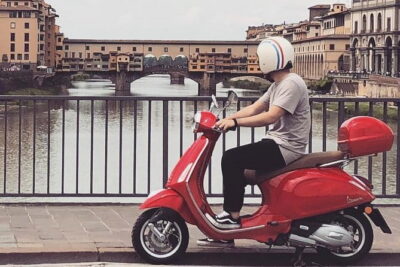
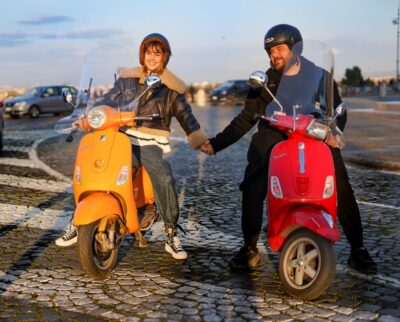
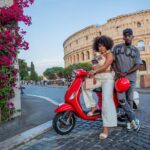
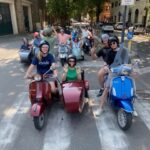
Rome changes fast when you move on a Vespa. This 3-hour loop starts near the Colosseum and mixes drive-by ancient sights with two short neighborhood breaks that help you see Rome from real street level.
Two things I’d prioritize here are the Giardino degli Aranci viewpoint stop (15 minutes, free) and the time in Trastevere (15 minutes, free) to soak up the classic Roman feel. One thing to watch: you’ll need a valid passport or ID that matches the name used at booking for successful entry to the Colosseum and Roman Forum area.
In This Review
- Key things to know before you go
- Rome on a Vespa: what the 3-hour ride is really like
- Meeting at Centro Moto Colosseo: where to start and what matters
- Outside the Colosseum: first impressions without the full day commitment
- Circus Maximus and the Pyramid of Cestius: ancient landmarks seen from the road
- Urban district time: why a typical neighborhood stop is part of the point
- Giardino degli Aranci: 15 minutes for one of Rome’s best views
- Trastevere: your 15-minute taste of the classic Roman neighborhood
- Guides like Alisso and Ferrucho: why the human touch matters
- Price and value: is $131.54 worth it?
- Who should book this Vespa tour (and who might not love it)
- Should you book: Vespa Tour Rome – Experience like a Roman?
- FAQ
- How long is the Vespa Tour Rome experience?
- How much does the tour cost?
- Where does the tour start?
- Where does the tour end?
- What stops are included during the ride?
- What languages is the tour offered in?
- Do I need a passport or ID?
- What is the cancellation policy?
Key things to know before you go
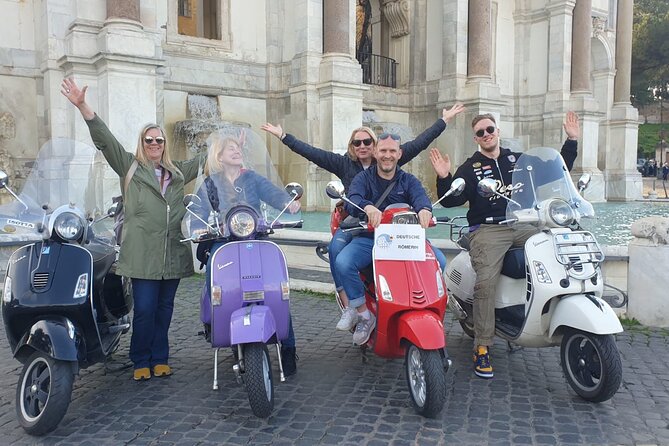
- Small group size (max 10): easier photo moments and a calmer ride.
- Prime start near Colosseo: quick access to the most photographed bits of Rome.
- Photo-friendly stops: Giardino degli Aranci and Trastevere give you real time to look and shoot.
- Drive-by ancient landmarks: Circus Maximus and the Pyramid of Cestius are both seen from the road.
- Mobile ticket: less fuss once you’re there.
- Guides you’ll remember: Alisso and Ferrucho are highlighted for energy, help, and photography.
Rome on a Vespa: what the 3-hour ride is really like
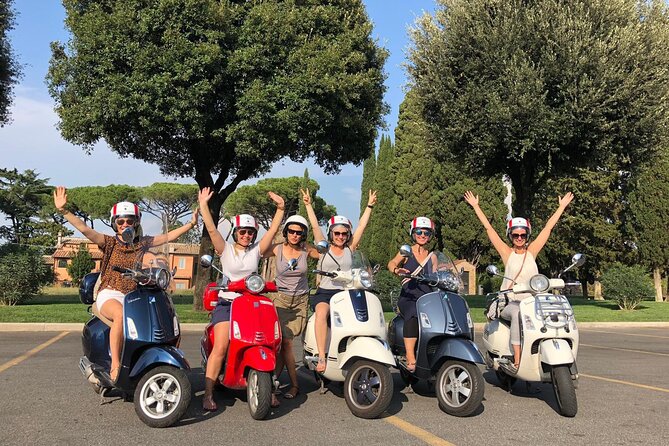
A Vespa tour in Rome is a simple idea: cover ground quickly, then pause at the spots that are worth your feet. In about three hours, you’ll get the rhythm of the city—one part motion, one part walking—without turning the day into a marathon.
The real win is variety. You’re not spending the whole time staring at a single monument. You’re seeing the Colosseum area first, then traveling toward other iconic shapes and layers of the city—ancient Rome, a quick Egyptian-style detour, and then a more local, everyday neighborhood vibe.
And yes, this is exactly the kind of outing that feels like the title suggests. It’s not a museum day. It’s a Rome day.
Meeting at Centro Moto Colosseo: where to start and what matters
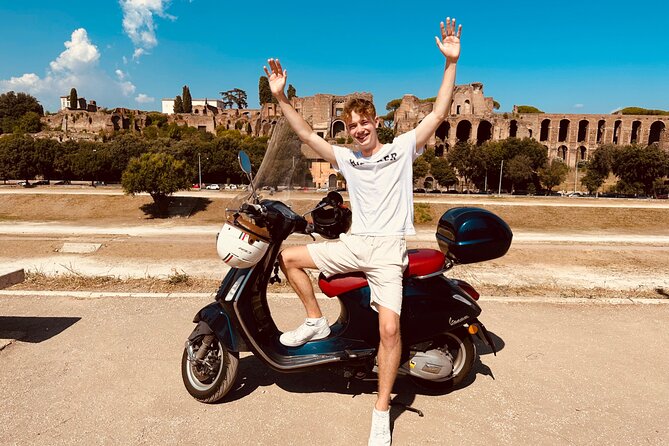
You start at Centro Moto Colosseo, in front of the Colosseum on Via dei SS. Quattro, 46 (00184 Roma RM). The endpoint is back at the meeting point, so you’re not trying to stitch together transportation afterward.
This matters because Rome can be chaotic on your own schedule. A fixed start location near the Colosseum keeps you oriented fast. And since the meeting point is near public transportation, it’s easier to get there without a long stress walk.
Before you go, do one boring but important thing: confirm the ID you’ll bring. The tour data specifically calls out that each traveler must have a valid passport or ID document matching the name provided at booking for entry to the Colosseum and Roman Forum area. If your document name and booking name don’t line up, you’re the one who has to handle it.
Outside the Colosseum: first impressions without the full day commitment
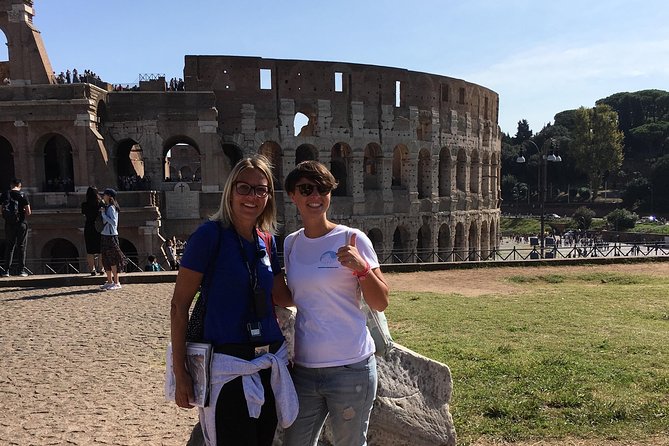
The tour kicks off near the Colosseo, where you admire the “most seen highlights of Rome” from the outside. This is a smart approach if you want the iconic visual impact early, without spending your whole tour waiting.
Even if you’ve seen photos, the Colosseum hits different in person because of scale. From the street, it also gives you a sense of where you are in the city grid. That matters later, because the rest of the route connects big landmarks with how Rome actually feels when you drive through it.
A quick note: the tour information mentions the Colosseum and Roman Forum area in relation to required ID, so don’t treat this as purely a drive-by sightseeing loop. Plan for entry-related rules to matter.
Circus Maximus and the Pyramid of Cestius: ancient landmarks seen from the road
One of my favorite parts of Rome by vehicle is how quickly the city changes. The route drives past the Circus Maximus, letting you see its size. It’s one of those places that makes you do a mental recalculation: it’s not just “a ruin,” it’s an arena-level space that once shaped public life.
Then you pass the Piramide Cestia. This is a fun kind of contrast: Roman streets with an Egyptian touch in the center of the Eternal City. If you’re the type who likes when Rome surprises you, this stop gives you that. You might not spend long at it, but you’ll at least understand why it’s talked about.
These drive-by segments are also practical. You get big landmark exposure while keeping your total time efficient. If you have limited days in Rome, that efficiency is value, not compromise.
Urban district time: why a typical neighborhood stop is part of the point
After the major monuments, the route moves into a more typical urban district. This is where the tour becomes about context, not just coordinates.
Roman neighborhoods are layered. Even a short transition helps you notice things like street width, building rhythm, and how people move through the day. It’s not “tourist Rome,” at least not only. It’s Rome as a place you’d actually navigate.
And since this tour caps time on each stop, you’re not stuck in one setting. Instead, you’re learning the city’s pulse in short segments.
Giardino degli Aranci: 15 minutes for one of Rome’s best views
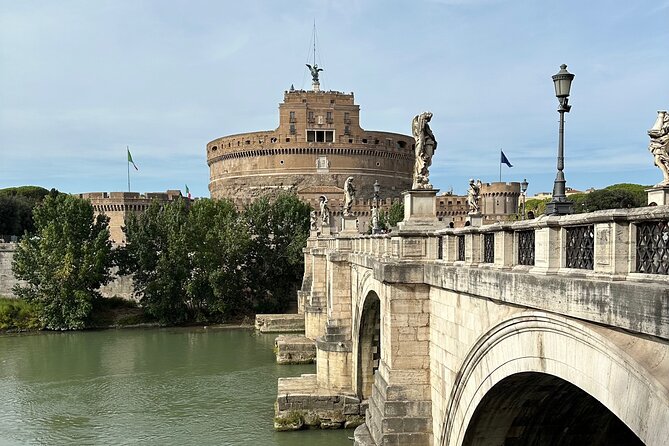
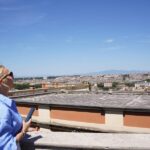
Then comes Giardino degli Aranci, with an admission ticket listed as free and a time window of about 15 minutes. That’s not a lot of time on paper, but it can be enough for what matters: get to a viewpoint, take photos, and absorb the horizon without feeling rushed.
Why this stop works: it’s the kind of viewpoint that helps you “read” Rome. You can see multiple layers at once, and you start connecting what you saw on the road with what sits right behind it. It’s also a good break from the motion of the Vespa ride.
Practical advice: wear comfortable walking shoes for the short stretch, and plan your photos early. Viewpoints fill with people quickly, and you don’t want to waste your 15 minutes searching.
Trastevere: your 15-minute taste of the classic Roman neighborhood
Next is Trastevere, the famous and beautiful typical district of Rome. You get another 15 minutes, and admission is listed as free. This is a quick taste, not a long wandering session, but that can be a plus if you want the flavor without losing the rest of your day to decision-making.
Trastevere is ideal for this kind of stop because it’s visually distinct and easy to understand right away. Even without a formal museum moment, the streets help you feel what people mean when they say Rome has character beyond monuments.
Also, if you love photos, this part tends to deliver quickly. Curving streets, warm-toned stone, and street life make it easier to capture Rome as “a place,” not just “a photo spot.”
If you want to extend the experience after the tour ends, Trastevere is one of the easiest areas to keep going on your own, since the tour itself brings you there first.
Guides like Alisso and Ferrucho: why the human touch matters
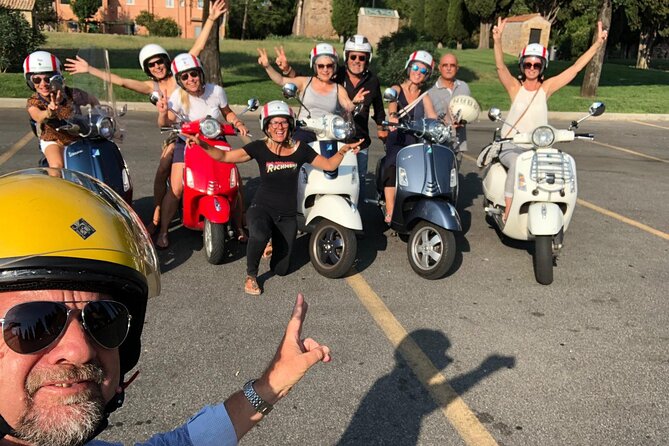
The guide team is a standout element here. Two names come up strongly: Alisso and Ferrucho. Alisso is noted for being a great photographer and for being social and helpful—exactly what you want during a scooter tour.
A good guide does two jobs at once:
1) Keeps the schedule sane (so you hit the right moments), and
2) Helps you look at things correctly (so you don’t just pass by and forget).
On a Vespa day, that human touch matters even more. You’re moving through traffic-adjacent streets, and you want someone who can explain what you’re seeing in a way that sticks. With guides who actively support you, you tend to get better photos and less confusion.
One small point to verify before you arrive: the tour information says offered in English, but the included section says guided tour in German. That’s worth confirming at booking so you’re not surprised on the day.
Price and value: is $131.54 worth it?
At $131.54 per person for about three hours, the price isn’t low. But it can be good value for a few reasons that matter in Rome:
- You’re getting transport and routing built in, not just a walking guide.
- You cover multiple major landmarks plus two short free stops (Giardino degli Aranci and Trastevere).
- It’s capped at a maximum of 10 people, which usually keeps the experience more personal and photo-friendly.
There are also hints of value-building perks: group discounts and a mobile ticket. If you’re traveling with more than one person, group discounts can make the cost feel more reasonable fast.
Is it “cheap”? No. Is it “efficient”? Yes. If your goal is to see a lot of Rome in a half-day without doing a strict museum marathon, this style of tour often makes sense.
Who should book this Vespa tour (and who might not love it)
This tour is a strong match for you if you want:
- A short, well-paced Rome introduction
- Classic sights outside the Colosseum area
- Two free time stops that are built around views and neighborhoods
- A small group setting (max 10) where you’re not just one more face in a crowd
You might want to think twice if:
- You’re very sensitive to time limits at each stop. With about 15 minutes at Giardino degli Aranci and Trastevere, you’re not meant to linger.
- Your schedule requires exact language expectations, because the data lists English while the included section mentions German. Confirm this before booking.
- You don’t want to deal with ID requirements tied to the Colosseum and Roman Forum area. Make sure your passport/ID matches the booking name.
Should you book: Vespa Tour Rome – Experience like a Roman?
If you’re choosing between a long day of monuments and a shorter way to get the feel of Rome, I’d lean toward booking this. You get the big visual hits near the Colosseum, a smart “drive-by” spread that includes Circus Maximus and the Pyramid of Cestius, and then two short stops that let you breathe and look around.
Just do two quick checks:
1) Confirm the tour language you’ll get (English vs German).
2) Bring passport/ID that matches the booking name for the Colosseum/Roman Forum entry requirement.
If those boxes are easy for you, this is the kind of Rome day that sticks because it mixes motion, views, and neighborhood atmosphere in a tight three-hour format.
FAQ
How long is the Vespa Tour Rome experience?
It lasts about 3 hours.
How much does the tour cost?
The price is $131.54 per person.
Where does the tour start?
It starts at Centro Moto Colosseo, in front of the Colosseum, Via dei SS. Quattro, 46, 00184 Roma RM, Italy.
Where does the tour end?
The tour ends back at the meeting point.
What stops are included during the ride?
You’ll start near the Colosseum, drive past Circus Maximus, pass the Pyramid of Cestius, and include stops at Giardino degli Aranci (15 minutes, free) and Trastevere (15 minutes, free), plus time in a typical urban district.
What languages is the tour offered in?
The information says offered in English, but it also lists the guided tour as German. Check the language details when booking.
Do I need a passport or ID?
Yes. Each traveler must present a valid passport or ID document that matches the name provided at the time of booking for successful entry to the Colosseum and Roman Forum.
What is the cancellation policy?
You can cancel up to 24 hours in advance for a full refund.