REVIEW · ROME
Rome in Style: Panoramic Vespa Experience with Licensed Driver
Book on Viator →Operated by Rome by Vespa · Bookable on Viator
Rome goes fast, and this keeps you in the story. A licensed guide like Francesco steers you through the key sights on a real scooter route, with safety handled and jokes included. I also like that you can ride as a passenger or (if you qualify) drive yourself on the automatic bikes. One heads-up: scooter rules can be strict, and you may also have a cash add-on for the driver option.
This is the kind of Rome experience that helps you cover a lot without feeling like you’re just queueing and waiting. You’ll get short, focused stops with commentary at each place, plus photo chances like a Vespa pic with the Colosseum backdrop and a coin toss at Trevi. If you want monument interiors, plan on doing that separately because this tour doesn’t include inside visits.
You’re looking at about 2.5 hours of guided riding, and in practice it can run a bit longer depending on traffic and how long you linger for views. The group is capped at 20, helmets are provided, and there’s basic injury insurance for passengers. If English is a must, you’ll want to confirm language at booking—there’s at least one report of mixed language delivery.
In This Review
- Key things to know before you go
- Licensed Vespa guide Francesco: safety and real Rome context
- Automatic Vespa riding: driver vs passenger mode (and what you truly need)
- Rione Monti to the Colosseum: hitting the Roman big league fast
- Spanish Steps and Piazza Navona: classic Rome scenes without the “stand in line” vibe
- Castel Sant’Angelo and the Vittorio Emanuele II area: Rome’s layers in motion
- Janiculum cannon shot at 12 and the Fontanone panoramic stop
- Trastevere on cobblestones: the neighborhood feeling you’ll remember
- Trevi Fountain finish: coin toss, big sculptures, and a final Rome moment
- Price and value: is $144.17 a smart use of your Rome time?
- Who should book this Vespa tour (and who should think twice)
- Should you book Rome in Style: Panoramic Vespa Experience?
- FAQ
- How long is the Rome Vespa tour?
- How much does the tour cost?
- Is the tour offered in English?
- What’s included in the price?
- Is entry into monuments included?
- Can I ride as a passenger or do I have to drive?
- What is the extra fee for the Vespa with driver option?
- Where does the tour start and end?
- How many people are in a group?
- Can I cancel for free?
Key things to know before you go
- Officially licensed guide Francesco leads the ride and gives on-the-spot history and local context.
- Automatic Vespas make the experience easier than classic gear scooters.
- Two riding modes: drive yourself if you qualify, or choose the option with an extra cash fee.
- Panoramic viewpoints include Janiculum’s view and the Fontanone over the city.
- Big-sight photo stops happen at places like the Colosseum and Trevi Fountain.
- Small group size (max 20) helps you move as a unit without feeling crowded.
Licensed Vespa guide Francesco: safety and real Rome context
This tour is built around one thing: you’re moving through Rome traffic on a small scooter, so the guide matters. You meet Francesco at Via della Madonna dei Monti, 57, and he stays responsible for the whole flow—from helmets to pacing. He’s also officially licensed as a tour guide, which gives a little peace of mind in a city where “just wing it” is a bad strategy.
The safety setup is practical, not theoretical. You get a helmet for each passenger, and there’s basic injury insurance for passengers. And in the way Francesco rides and positions the group, you’re not left guessing—think of it like a moving lesson where he keeps watch and helps you avoid the usual tourist chaos.
For me, the best part is the blend of humor plus guidance. One of the recurring themes here is that the ride stays fun while still hitting real details—so you’re not just collecting snapshots of stone and fountains. It’s a “hear it while you see it” format, and that’s exactly how Rome sticks.
Automatic Vespa riding: driver vs passenger mode (and what you truly need)
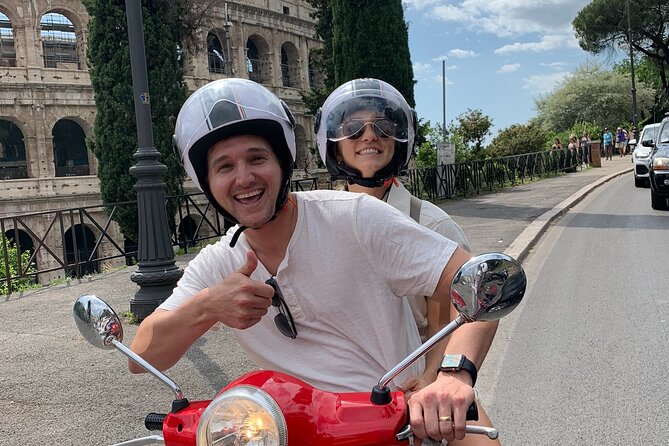
The biggest decision is whether you drive the Vespa yourself or ride as a passenger. The tour offers both, but the requirements for self-driving can be real. You’ll get a test drive if you choose self-drive, which helps you feel the machine before you’re in traffic.
Here’s what you should take seriously. If you plan to drive, one review specifically notes you need a motorcycle license endorsement, an International Drivers Permit from AAA, and some actual motorcycle experience. If you only ride a bicycle, don’t assume that’s enough. Scooters are forgiving in some ways, but Rome is not forgiving.
If you don’t want to deal with the driving side, you can choose the Vespa with driver option. That option has an extra €50 cash fee per passenger, paid in cash at check-in. The math is simple: if you’re unsure about riding qualifications, it can be worth paying to avoid stress and focus on the sights and photos.
Also, a helpful detail: the Vespas are automatic. That means no gear shifting, and it’s one less thing to manage while you’re learning the rhythm of the route.
Rione Monti to the Colosseum: hitting the Roman big league fast
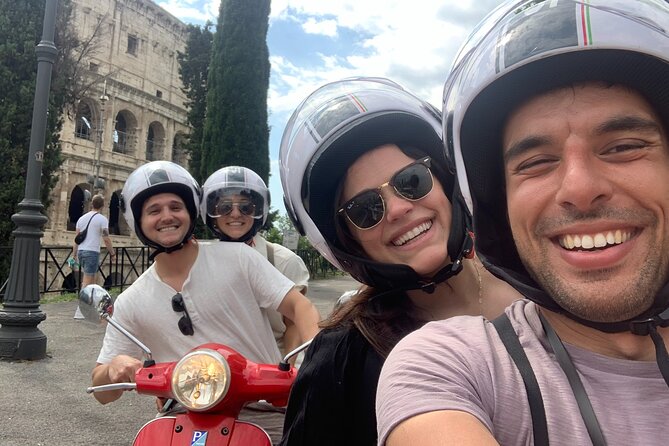
Rione Monti kicks off the experience, and it’s a smart first stop. Monti is central, with a lived-in feel and plenty of streets that make you realize Rome isn’t one big museum—it’s a working city.
Francesco gets you rolling from the meeting point with helmets on and Vespa ready. If you’re self-driving, the test run helps you get comfortable before the real sights start. This part matters because the tour is short on time; if you spend it struggling with the scooter, you won’t get the sightseeing payoff.
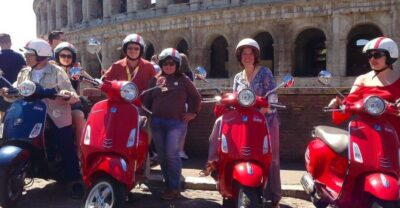
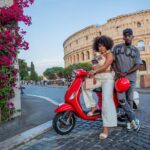
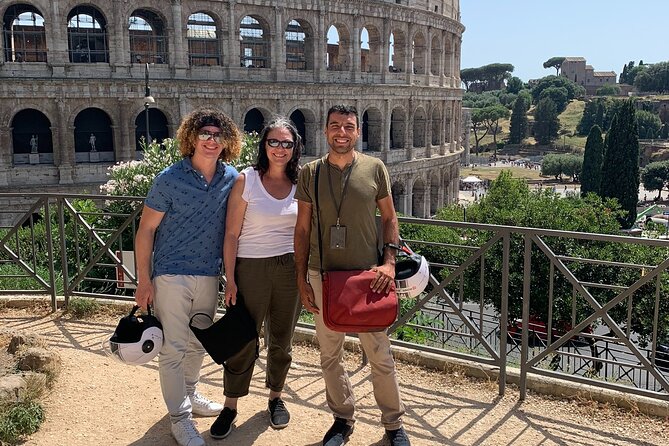
Then comes the Colosseum. You stop at one of the most famous monuments in the world, and Francesco gives a history lesson right there at the curb. You also get a photo moment with your Vespa against the Colosseum backdrop. That’s a nice twist, because most people take the same photo as everyone else from the same angle—here you’re building a visual memory of the journey, not just the landmark.
Note: admission or entry inside monuments isn’t included. So your Colosseum experience is mainly exterior viewing plus commentary, not a museum-style visit.
Spanish Steps and Piazza Navona: classic Rome scenes without the “stand in line” vibe
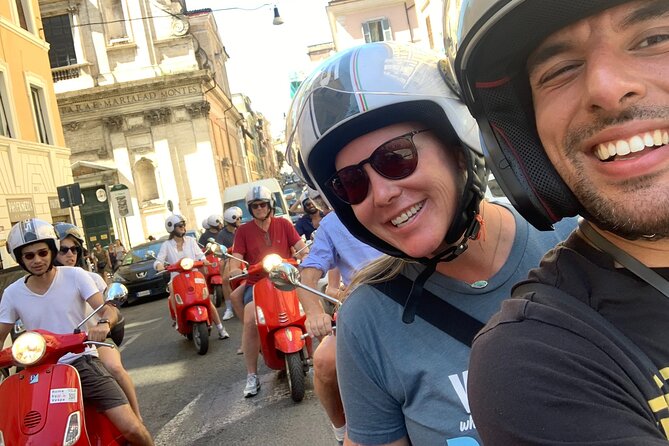
After the Colosseum, you’ll reach the Spanish Steps area. The Spanish Steps are iconic for a reason: the architecture looks good from pretty much every angle, and the top delivers a panoramic look back over the city. This stop is brief, but it’s paced like a photo-and-perspective break, not a long wandering session.
Next is Piazza Navona. You’ll arrive at one of Rome’s best-known squares, and the focus is the Fountain of the Four Rivers. This fountain sits in the center and is designed by Gian Lorenzo Bernini. Francesco explains the symbolism, including the four figures that represent major rivers: the Nile, the Danube, the Ganges, and the Rio de la Plata.
If you’re the type who likes to understand what you’re looking at, Navona is a highlight. Baroque art can be overwhelming if you’re not given a quick guide to the details. Here you get that context in time for the stop to feel meaningful, not rushed.
Castel Sant’Angelo and the Vittorio Emanuele II area: Rome’s layers in motion
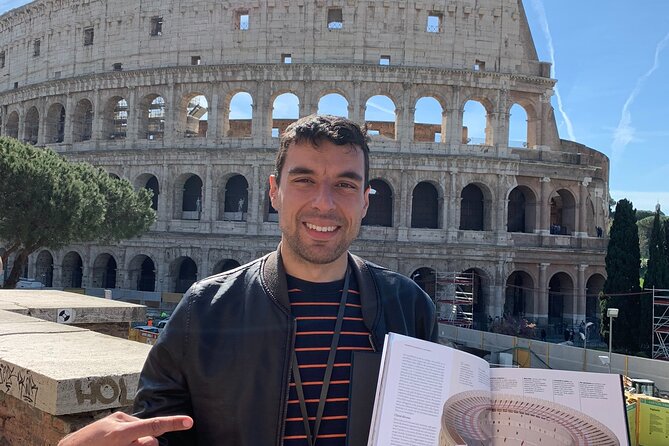
Your route includes Castel Sant’Angelo, and the explanation here adds a lot of weight to the exterior view. The building began as the tomb of Emperor Hadrian in 135 AD. Later, it became a military fortress that protected Rome through the Middle Ages. Eventually it served as a Papal Residence, acted as a prison during the Renaissance era, and today it’s a museum.
Even without entering, the story changes how you see the structure. You start noticing why it looks built like both monument and stronghold. And that’s what makes a scooter tour work: you’re learning while you’re moving, so Rome’s timeline stays in your head.
You’ll also pass through a square famous for the monument of King Vittorio Emanuele II. The data doesn’t list the square by name here, but the takeaway is clear: you’re seeing a major national monument area as part of the sightseeing sweep. This is one of those stops that helps you understand the “big picture” Rome, not only the ancient and the baroque.
Janiculum cannon shot at 12 and the Fontanone panoramic stop
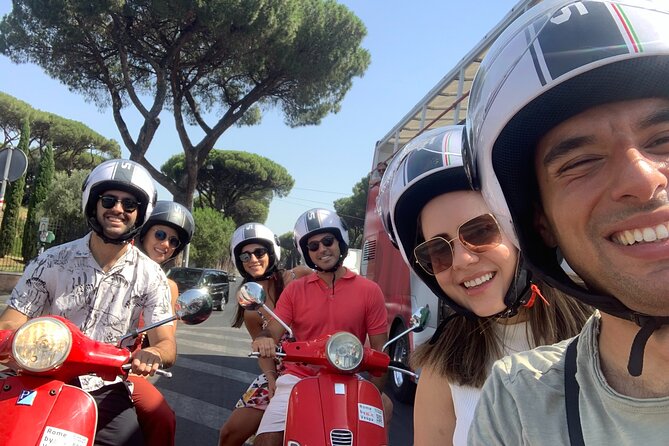
This is where the tour earns its panoramic label. At certain times—specifically noted for a morning tour at 12:00—Francesco takes you to the Terrazza del Gianicolo area to watch the cannon shot. This daily tradition dates back to the 19th century, originally used to synchronize the clocks of the city.
When the moment arrives, it’s a simple drama: you hear the boom, smoke clears, and then the city opens up behind it. From the Janiculum viewpoint, you can see major monuments in different directions, including the Colosseum, the Pantheon, and St. Peter’s Basilica. It’s the kind of viewpoint that makes you understand why Rome is so hard to fully cover on foot.
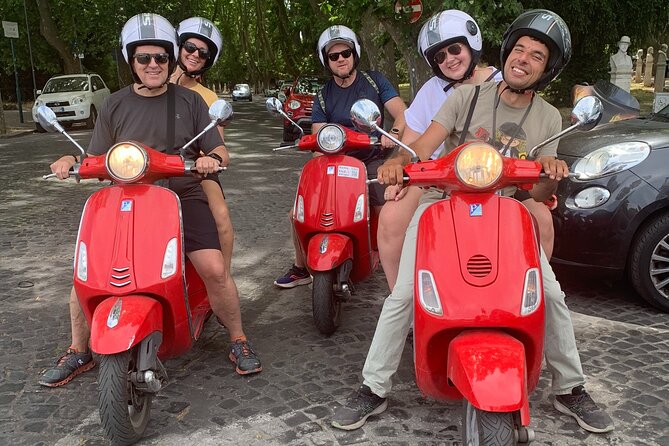
After that, the tour moves to the Fontanone, also described as Fontana dell’Acqua Paola. Francesco parks the red Vespa, and you get a short break to take in the view. The sightlines here matter: you can see the winding Tiber River, the dome of the Pantheon, and the Vittoriano in the distance. It’s a classic “stop and look around” moment, not just another quick photo.
Francesco also offers to take a picture of you with the red Vespa at the Fontanone. This is one of those small touches that makes the whole day feel like a curated experience rather than a self-guided loop.
Trastevere on cobblestones: the neighborhood feeling you’ll remember
Then you shift from monuments to atmosphere with Trastevere. This is a neighborhood cruise, with winding streets and a softer, more local vibe than the big landmark corridors. You move through areas where pastel-colored palaces and cobblestone streets make everything feel closer and more intimate.
The experience is also described with sensory details that matter for enjoyment: warm sun, flowers in bloom, and a breeze as you ride. Trastevere feels alive in a way that’s hard to recreate from inside a bus or tour van. And because the tour includes Francesco’s guidance, you’re not left guessing where to look or what to notice.
This is a great fit if you want your Rome day to include one stretch that feels like “real city time,” not only postcard viewing. The ride in Trastevere is short, but it does a good job of shifting your mood before you end the route.
Trevi Fountain finish: coin toss, big sculptures, and a final Rome moment
The ride ends with Trevi Fountain, which is a smart closer because everyone knows the name—but most people only experience it at a distance of crowds. Here, you get an approach into the fountain’s scale and carvings.
Trevi’s structure is massive, with sculptures showing the Roman god Oceanus and sea horses. Francesco explains the legend of throwing a coin over your shoulder for good luck and a promise you’ll return to Rome one day. You get a moment to toss the coin, then the tour winds down with you reflecting on the variety you’ve covered.
Since monument interiors aren’t included, Trevi is mainly a viewing and tradition stop. Still, it lands well as a finale because the day’s story comes full circle: ancient icon, baroque art, panoramic Rome, then a world-famous fountain.
Price and value: is $144.17 a smart use of your Rome time?
At $144.17 per person, this is not a budget activity. But it’s also not just renting a scooter and hoping for the best. You’re paying for a licensed guide (Francesco), helmet use for each passenger, and basic injury insurance. You’re also paying for structure: multiple short stops, commentary at each place, and help with the “how do I do this in Rome?” part.
The value hinges on one thing: your comfort level with scooters. If you qualify to drive yourself and want maximum thrill per dollar, it can feel like good value because you get the freedom of the Vespa plus the guided context. If you don’t want to ride yourself, the extra €50 cash for the driver option changes the price equation—but it can still be worthwhile if it removes risk and stress.
Time is also part of the equation. The tour is about 2.5 hours, capped at 20 people. That’s long enough to hit major sights without burning half your day. And because admission inside monuments isn’t included, you’re not locked into long waits inside museums—you’re using the time for Rome’s exterior storytelling and viewpoints.
Practical note: you’ll want comfortable shoes and an open mind about city traffic. This is Rome in motion.
Who should book this Vespa tour (and who should think twice)
This tour is best for you if you want:
- a guided way to cover big sights like the Colosseum and Trevi Fountain without turning your day into a bus stop shuffle
- a fun, lively guide style with history told in the moment
- panoramic Rome views from Janiculum and the Fontanone
- a small-group scooter ride that feels more like a “route” than a checklist
You might want to skip it (or choose the driver option) if:
- you’re not comfortable riding a scooter and you don’t meet the self-drive requirements like motorcycle license endorsement and an International Drivers Permit from AAA, plus motorcycle experience
- you strongly prefer to tour inside monuments, not just exterior stops with commentary
- language clarity is critical for you and you’re worried about guide communication style
If you’re pairing this with museum days, it works well. It gives you a quick, high-impact Rome overview and then you can choose which sites deserve a deeper interior visit later.
Should you book Rome in Style: Panoramic Vespa Experience?
My take: book it if you want Rome with movement and a guide who keeps things light while still teaching you what you’re seeing. The combination of licensed leadership, automatic Vespas, structured photo stops, and real viewpoints (Janiculum’s cannon-shot moment and the Fontanone panorama) makes it a standout format for many first-time visitors.
Hold off if scooter requirements sound intimidating, or if your priority is long, indoor monument time. In those cases, the extra driving mode stress—or the fact that this isn’t an inside-visits tour—may not match what you want from Rome.
If you’re ready to ride, this is a memorable way to see Rome as more than a map of stops.
FAQ
How long is the Rome Vespa tour?
It runs for about 2 hours 30 minutes, and it’s presented as a 2.5-hour guided experience.
How much does the tour cost?
The price is listed at $144.17 per person.
Is the tour offered in English?
Yes. The experience is offered in English.
What’s included in the price?
You get a 2.5-hour guided tour with Francesco, helmet use for each passenger, and basic injury insurance for passengers.
Is entry into monuments included?
No. Visit inside monuments is not included.
Can I ride as a passenger or do I have to drive?
You can choose either option. The tour offers a Vespa with driver option, or you can ride yourself if you meet the stated driving requirements.
What is the extra fee for the Vespa with driver option?
There is an extra €50 cash fee per passenger, paid at check-in.
Where does the tour start and end?
It starts at Via della Madonna dei Monti, 57, 00184 Rome, and ends back at the meeting point.
How many people are in a group?
This activity has a maximum of 20 travelers.
Can I cancel for free?
Yes. You can cancel up to 24 hours in advance for a full refund.