REVIEW · ROME
Rome: All In One Day by Vespa
Book on GetYourGuide →Operated by Vespasito · Bookable on GetYourGuide
Rome shifts gears when you’re on a Vespa. I love the way the Vespa ride keeps the day fun and moving, and I love the big-photo stops like the Orange Garden viewpoint. One consideration: you ride as a passenger, so you’ll want to feel comfortable with scooter traffic and a steady pace for a full 6 hours.
This is a private, local-guided day that strings together Rome’s top sights with calmer pauses for photos and stories. You’ll hit places like the Colosseum, the Vatican area, Trevi Fountain, Pantheon, Piazza Navona, plus panoramic viewpoints like Gianicolo Hill—then you finish with a sit-down Trastevere pasta meal.
In This Review
- Key things I’d plan for
- Why a one-day Vespa tour works so well in Rome
- Starting at Via del Colosseo and getting comfortable on the scooter
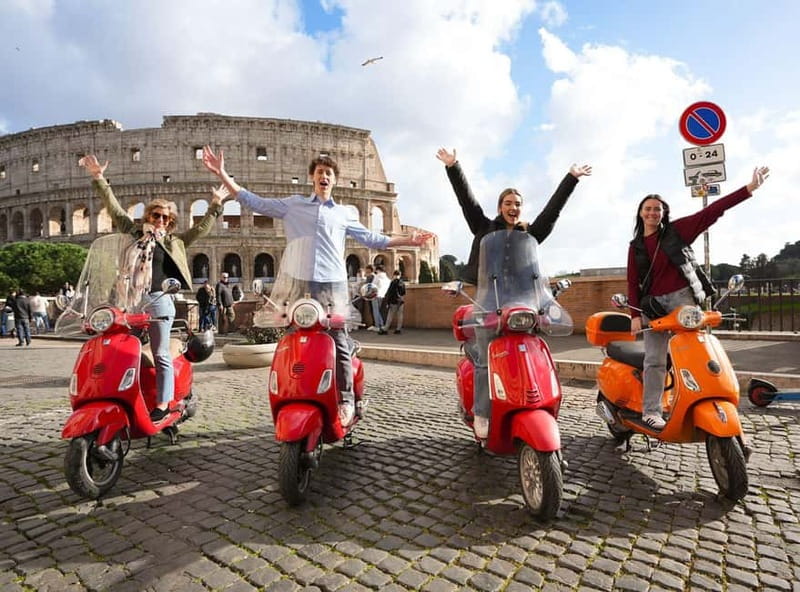
- Colosseum photo stop: big symbolism with a faster feel
- Circus Maximus to Aventine Hill: the softer side of Ancient Rome
- Gianicolo Hill viewpoints: where the city feels huge
- Passing the Vatican area: St. Peter’s Basilica from the road
- Piazza del Popolo and Piazza della Repubblica: gates and contrasts
- Trevi Fountain, Piazza Venezia, and the Pantheon walk-through feeling
- Piazza Navona: where the day gets more human
- Trastevere pasta lunch: why the ending matters
- Price and value: is $385.17 a good deal for this route?
- Who should book this Vespa tour
- Should you book the Rome All In One Day Vespa experience?
- FAQ
- FAQ
- How long is the Rome All In One Day Vespa tour?
- What is the price per person for this experience?
- Where do you meet for the tour?
- Where does the tour end?
- Is the tour private, and who will be guiding you?
- Will I ride the Vespa myself?
- What food is included during the tour?
- Is this tour suitable for larger passengers?
Key things I’d plan for
- Private group, paced like a ride, not a march: you get a full route in one day without constant ticket lines taking over your morning.
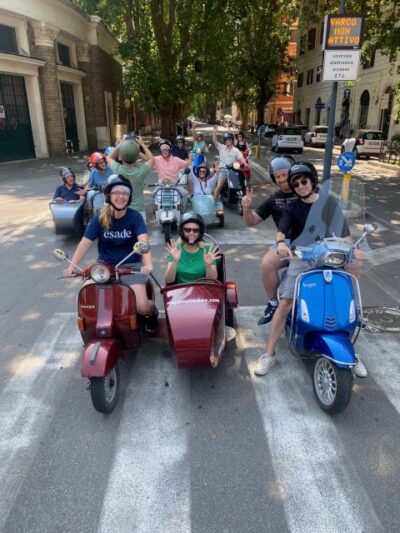
- Classic Vespa scooter rental, with helmets: safety gear is included, and your guide drives while you enjoy the ride.
- View stops that feel like a local shortcut: Orange Garden and Gianicolo Hill give you that postcard Rome perspective.
- Ancient icons plus everyday Roman streets: Colosseum photos, plus keyhole views, river-to-Vatican passes, and lively piazzas.
- Lunch in Trastevere with a set Roman menu: a traditional Roman pasta meal capped at €30 per person.
- A guide who keeps it understandable: the goal is explanations that feel easy, not like a lecture.
Why a one-day Vespa tour works so well in Rome

Rome can be overwhelming fast. On foot, it’s all hills, crowds, and “wait, where are we again?” With this tour, the scooter changes your rhythm. You’re not just seeing sights—you’re moving between them in a way that helps the city feel like one connected place instead of separate postcards.
The route is also designed for variety. You start in the Ancient Rome zone, swing toward the Vatican side, then work through the historic center’s famous squares and churches. That flow matters because Rome’s best memories often come from how one neighborhood leads into the next.
And yes, the Vespa part is the point. But the real value for me is that a local guide turns “I’ve seen this before in photos” into “I know why this spot matters.”
Starting at Via del Colosseo and getting comfortable on the scooter
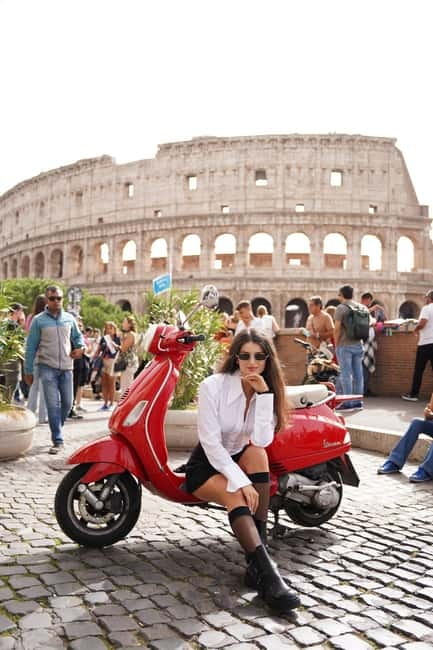
You’ll begin at Via del Colosseo 31, across from Caffe Roma, and you’ll look for a red Vespa. The experience also notes convenient hotel pickup, so depending on your stop, you may meet near your hotel first and then connect to the meet point.
A key detail: you ride as a passenger. Your guide drives, so you don’t need scooter skills. Still, you should expect a full day of sitting upright, wearing a helmet, and adjusting to city traffic sounds and motion. If you’re prone to motion sensitivity, this is the one thing to think through before booking.
The upside? You can focus on watching the route, spotting photo moments, and listening to explanations. It’s a different kind of sightseeing, more physical and more immediate than walking.
Colosseum photo stop: big symbolism with a faster feel

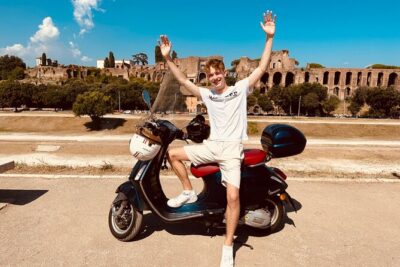
Your day kicks off with the Colosseum, and you’ll stop for photos at the mighty exterior. This is one of those places where photos never quite capture the scale, so having a timed stop helps—you get the moment without it swallowing the entire day.
What I like about this style of stop is that it sets your “Rome context” right away. Seeing the Colosseum early helps other stops click into place. Later when you pass other monuments and viewpoints, you start noticing how the city’s layout and power centers still shape your movement.
Potential drawback: it’s still a famous monument. Even with a guide’s pacing, it can feel busy at the viewpoint areas. I’d treat the Colosseum as a photo-and-orientation stop, not a long museum visit.
Circus Maximus to Aventine Hill: the softer side of Ancient Rome
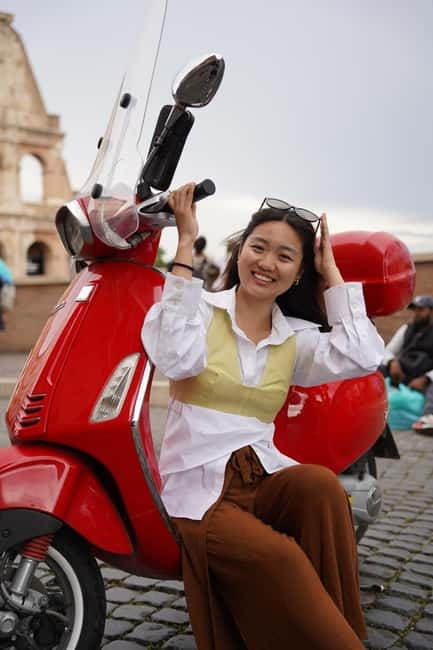
Next you head toward the Circus Maximus, once home to massive chariot races. Even if you’re not a sports-history person, the location helps you understand Rome’s love of crowds, spectacle, and scale. It also gives you a breath of open-air scenery after the densest parts of the ancient core.
Then the route climbs to Aventine Hill, where you’ll get the famous Keyhole peek. This is one of those silly-fun sights that somehow becomes emotional once you’re there. You’re looking for a specific view, and that turns the stop into an actual mini-game instead of another “look at a building” moment.
From Aventine, the tour includes Orange Garden—a major payoff. Expect a calmer pause with scenic views that feel like Rome exhaling. For me, this is where the day shifts from monument-hopping to atmosphere.
Gianicolo Hill viewpoints: where the city feels huge
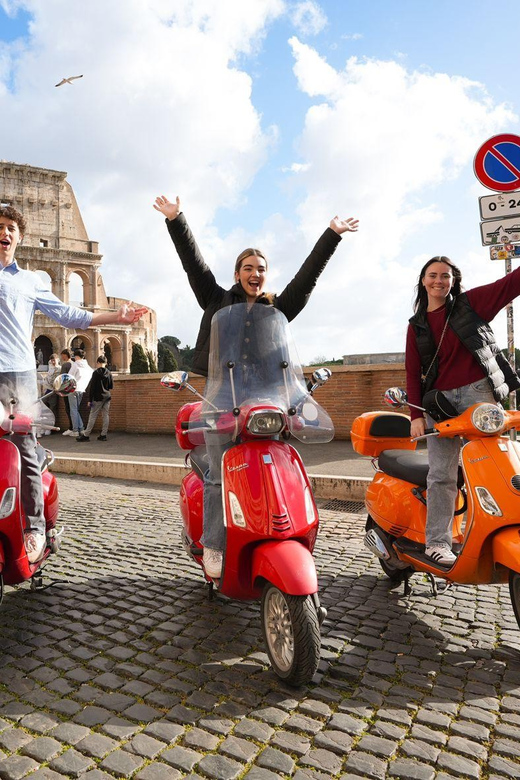
The highlights specifically call out panoramic cityscape views from Gianicolo Hill. This is the kind of stop that makes the whole route feel worth it, because you’re finally seeing Rome from above, with neighborhoods stretching out instead of stacked street scenes.
A panoramic viewpoint also changes how you remember your day. After Gianicolo, the next stops feel connected. You start recognizing the general geography, and the historic center stops reading like random stops on a list.
Practical note: viewpoints can mean walking a bit on uneven surfaces and standing to frame photos. Bring a mindset of short, steady effort, not a long hike day.
Passing the Vatican area: St. Peter’s Basilica from the road
As the ride moves along the river toward the Vatican, you’ll pass St. Peter’s Basilica and see the big presence of the Vatican area from the route. You won’t be taking a deep interior detour based on what’s outlined here, but you still get the grand exterior feeling that makes this part of Rome so recognizable.
You also get admiration for the world’s smallest country as part of the scenic passing moment. This works well on a Vespa because you’re not stuck in lines or long transfers—you’re seeing the city’s “power cluster” at street level.
The main consideration here is pace. A scooter route means the Vatican-adjacent feeling is more “passing through with story context” than “slow, linger, explore.” If you want detailed basilica time, you’ll want to plan that separately.
Piazza del Popolo and Piazza della Repubblica: gates and contrasts
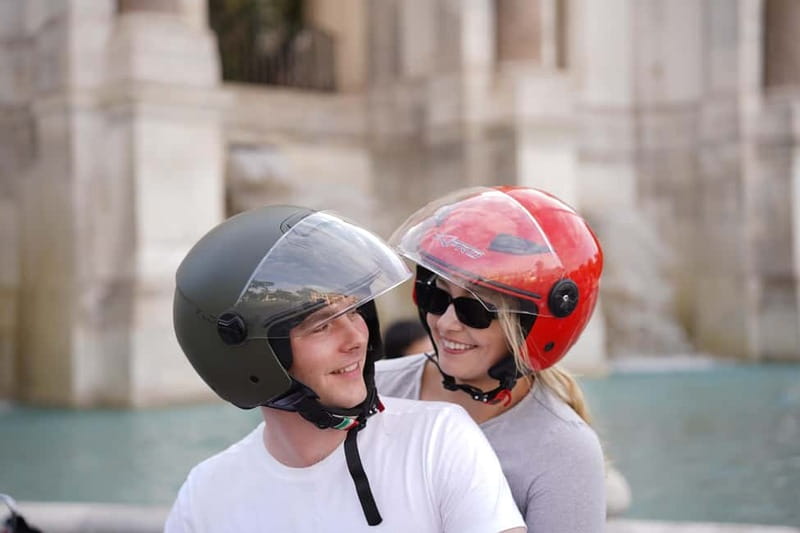
Your route includes Piazza del Popolo, described as Rome’s elegant northern gate. It’s a useful stop because it signals you’re moving between eras and districts, not just staying in one historic bubble.
Then you head to Piazza della Repubblica, where the tour frames the contrast between ancient and modern in one of Rome’s more open urban squares. This is helpful for first-time visitors. Rome’s not one style—it’s layers. And these squares help you “read” that layering while you move.
On a scooter, these open piazzas also function like breathing spaces. You can reset your eyes, look around, and let the day reorganize in your mind.
Trevi Fountain, Piazza Venezia, and the Pantheon walk-through feeling
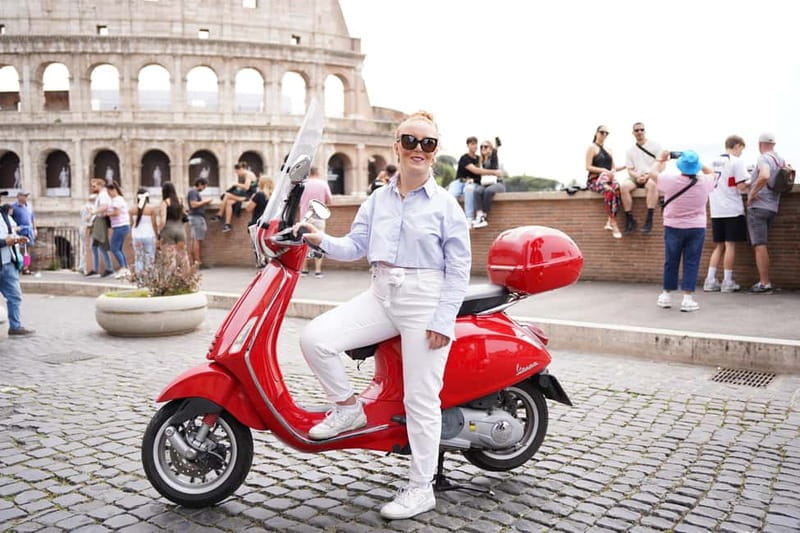
The historic center portion leans into Rome’s headline classics, but with a ride-and-pause strategy that keeps you from getting bogged down.
You’ll stop at Trevi Fountain with the traditional moment of tossing a coin. This is the kind of activity that’s famous for a reason: it’s quick, visual, and instantly iconic. Even if the area is crowded, you’re there for the essential experience, not hours of waiting.
From there, you’ll visit Piazza Venezia and admire the grandeur of the Vittoriano Monument. This stop helps the day feel less like a photo sprint and more like an urban tour where monuments tie to national identity and public memory.
And then you walk through the Pantheon pillars area for that classic “how can this be real?” architectural effect. The Pantheon is one of Rome’s easiest places to fall quiet in your head, even if you’re just moving through the space on this tour.
One small reality check: with so many icons in one day, you’re not getting deep museum time at each stop. You’re getting Rome’s signature outlines, plus guide-led context that helps you know what you’re looking at.
Piazza Navona: where the day gets more human
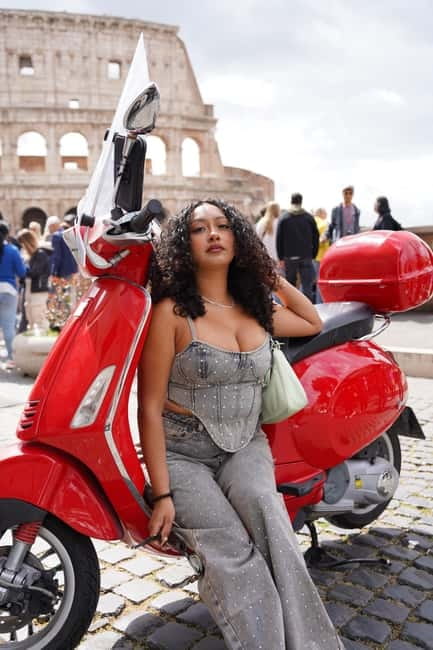
You’ll spend time around Piazza Navona, with fountains, artists, and that very Roman sense of outdoor theater. This stop tends to be a favorite because it’s not just architecture; it’s people doing people things in a space that’s designed for lingering.
The tour description keeps the tone fun and practical: you take scenic stops for storytelling and photos, and you keep your energy steady through the day. Piazza Navona is where that balance starts to feel natural.
If you’re sensitive to crowds, do give yourself a moment to step back and watch. You’ll see the rhythm. Then you can frame your photos without forcing yourself into the center of everything.
Trastevere pasta lunch: why the ending matters
The tour ends in Trastevere, one of Rome’s most character-filled neighborhoods. You’ll enjoy a sit-down meal at a local trattoria, with a traditional Roman pasta meal and a toast to finish the day.
Lunch here is smart for two reasons. First, it’s a palate reset after nonstop sightseeing. Second, it places your last hours where Rome feels most like everyday life rather than just landmark viewing.
The meal is described as a set menu up to €30 per person. That’s a good value structure because it keeps expectations clear. If you have dietary needs, you’ll want to check directly with the provider before you go, since the set-menu structure could be limiting.
Also remember: the Vespa rides can make you hungry. This ending is designed to land at just the right time.
Price and value: is $385.17 a good deal for this route?
At $385.17 per person for a 6-hour private experience, you’re paying for three things: a guided route with context, the classic Vespa scooter rental, and your lunch included up to a set value.
If you tried to recreate this on your own, the math gets messy quickly:
- You’d need transport that can actually move you between areas efficiently.
- You’d still be buying a meal plus paying for parking, tickets, and time.
- And you’d miss the “why this place, why that angle, why that story” component that a local guide brings.
So the value isn’t just the scooter. It’s the coordination. You get a structured day that hits major sights and still makes time for quieter views like Orange Garden and Gianicolo Hill, which are hard to fit smoothly without planning.
The only reason the price might feel steep is if you mainly want long, slow museum time. This tour is built for one-day orientation and memorable highlights, not exhaustive interior sightseeing.
Who should book this Vespa tour
This is a great fit if you:
- Want a first-timer-friendly Rome overview without feeling trapped in a rigid walking schedule.
- Like photo stops paired with short, clear stories instead of long museum pacing.
- Enjoy moving through neighborhoods and want the city to feel alive, not just viewed.
It might not be ideal if you:
- Strongly prefer to drive the scooter yourself (you ride as a passenger).
- Need lots of rest breaks built into the schedule.
- Are over 220 lbs (100 kg), since that’s listed as not suitable.
If you’re traveling with limited time, this one-day format is especially useful. It gives you enough of the big-name sites to orient your future plans.
Should you book the Rome All In One Day Vespa experience?
If your goal is to feel Rome fast—icons plus viewpoints plus a real ending with Trastevere pasta—then yes, I’d book it. The combination of a local guide, classic Vespa transport, and a well-timed finish makes the price feel more like “organized freedom” than a standard sightseeing package.
But if you’re the type who wants to spend hours inside major sights or you get uneasy with traffic motion, consider adding a different style of Rome day plan. This one is about movement, views, and big moments.
FAQ
FAQ
How long is the Rome All In One Day Vespa tour?
The duration is 6 hours, with starting times depending on availability.
What is the price per person for this experience?
The price listed is $385.17 per person.
Where do you meet for the tour?
You meet at Via del Colosseo 31, across from Caffe Roma, and look for the red Vespa.
Where does the tour end?
The tour ends back at the meeting point.
Is the tour private, and who will be guiding you?
Yes, it’s a private group with a live tour guide. The guide is available in English, Russian, and Turkish.
Will I ride the Vespa myself?
No. You ride as a passenger while the Vespa is driven by your guide.
What food is included during the tour?
A traditional Roman lunch is included, with a set menu valued up to €30 per person.
Is this tour suitable for larger passengers?
No, it is not suitable for people over 220 lbs (100 kg).