REVIEW · ROME
Vespa Sidecar Tour: Highlights of Rome
Book on Viator →Operated by Luxurbe · Bookable on Viator
Rome in motion beats Rome on foot.
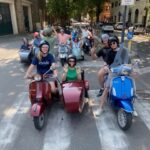
This Vespa sidecar tour strings together the city’s biggest hits in about 3 hours, with an expert driver/guide and earphones so you can actually hear the stories while you’re riding. You’ll get photo stops at iconic spots, plus a route that works like a fast, fun orientation to central Rome.
What I really like is the small-group feel. With a maximum of 10 travelers, guides like Matteo and Dan (and others) have room to keep things friendly and answer questions without turning you into a moving crowd. I also like that the tour is built for comfort: helmets, insurance, and photo stops are part of the package, not an afterthought.
One thing to consider: comfort and timing depend on the ride. Even with helmets and the usual safety gear, one guest flagged feeling unsure because they couldn’t hold on well, and there can be real-world traffic delays. If you’re sensitive about safety or you need very strict scheduling, plan your day with extra wiggle room.
In This Review
- Key highlights at a glance
- Why a Vespa sidecar works for a first Rome sprint
- Getting set up: helmets, earphones, and the real comfort checklist
- Piazza del Popolo, the obelisk, and the Pincio view cue
- Trevi Fountain and the coin toss ritual
- The Pantheon: dome, oculus, and why it feels different
- Piazza Navona: three fountains and that Rome-at-work energy
- Monument to Vittorio Emanuele II and the Colosseum approach
- The Roman Ghetto and Synagogue-area atmosphere
- Colle del Gianicolo: Garibaldi battles and the noon cannon
- Vatican City quick hit and Trastevere’s real-life lanes
- Pacing and photo stops: how to get the most out of 3 hours
- Price and value: is $114.12 worth it?
- Who should book this Vespa sidecar tour (and who should think twice)
- Should you book it?
- FAQ
- How long is the Vespa Sidecar Tour: Highlights of Rome?
- Where does the tour start and end?
- Is the tour offered in English?
- Does the price include tickets for the Colosseum and Vatican?
- Are there any stops with free admission?
- Is hotel pickup included?
- Can I drive the Vespa?
- What happens if the weather is poor?
Key highlights at a glance
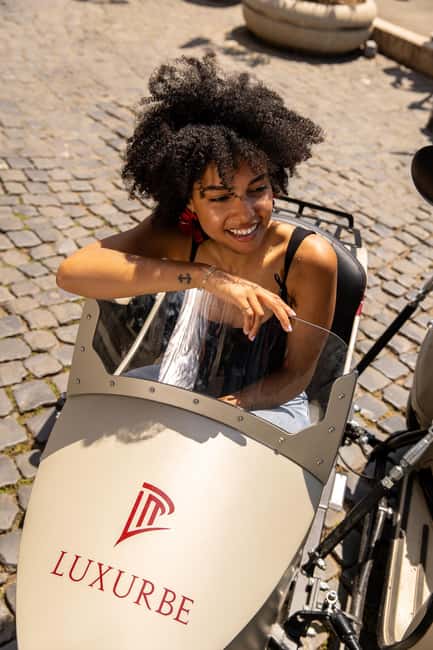
- Expert storytelling from the driver/guide, with humor and clear historical context
- Earphones so you can follow the tour without shouting over traffic
- Photo stops at major landmarks, including night-friendly scenery if your time slot runs later
- Small group (max 10), which usually means less rushing and more attention
- Big landmarks with practical ticket guidance, with Colosseum and Vatican not included
- Rome’s “bookend” neighborhoods like Trastevere plus classic central squares
Why a Vespa sidecar works for a first Rome sprint
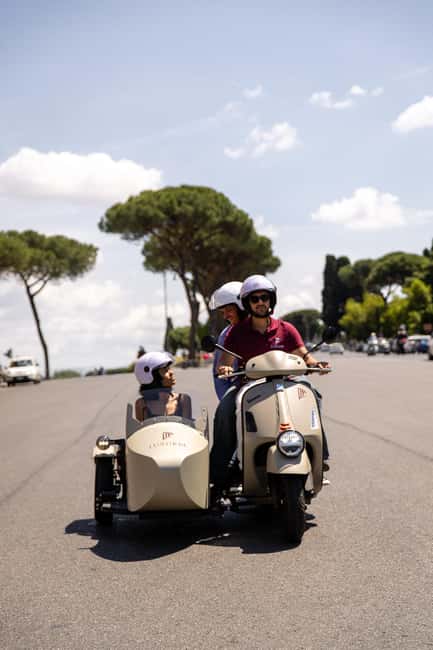
Walking Rome is great, but it takes time to connect the dots. This tour gives you that “I get the layout” moment fast. You’re not just seeing postcards—you’re moving between areas so you start understanding where Rome’s major sights sit in relation to each other.
The sidecar format is also a smart compromise. You get the thrill of riding on a Vespa without the stress of driving, plus a seat that feels steadier than some city tour vans where you can’t see past people. And because the guide talks through earphones, the tour isn’t reduced to sign-reading and silence.
If you’re the type who likes to hit the highlights early and then return later for deeper exploring, this is a strong fit. You’ll also leave with a sense of what’s worth a second visit—especially once you see the Pantheon’s dome interior vibe and the Colosseum’s scale from up close.
Getting set up: helmets, earphones, and the real comfort checklist
This is not a DIY scooter rental. The driver is an employee of the company, and you won’t drive. You show up, get fitted, and ride.
Here’s what’s included that matters on the day:
- Helmets approved for maximum safety (and you’ll receive helmet certificates)
- Earphones so you can hear the guide/driver clearly
- Insurance for passengers
- Photo stops at the most iconic points
I like the included earphones because Rome can be noisy—traffic, engines, crowds. Without them, tours often become a blur. With them, you can catch the names and stories: why the Egyptian obelisk is there, what the Trevi coin tradition is really about, and why certain streets matter historically.
Also, the tour is offered in English, and the company limits it to up to 10 travelers. That smaller size usually makes the experience feel more personal, and it helps when a guide—like Matteo—adapts stops to what you want to prioritize.
Piazza del Popolo, the obelisk, and the Pincio view cue
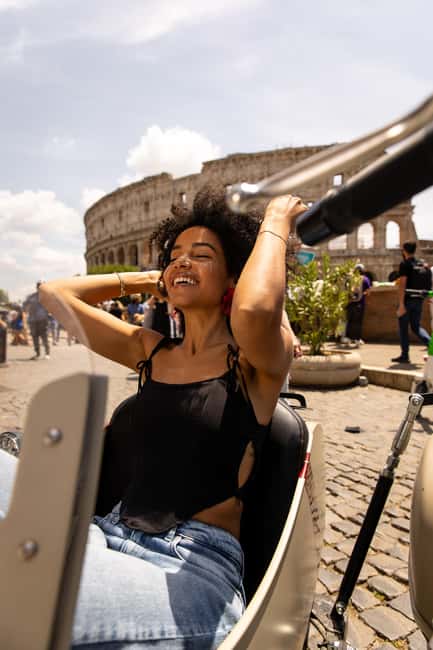
You’ll start at Piazza del Popolo and ride from one of the city’s most historically “main gate” squares. The scene is instantly recognizable: twin churches flank the square, and in the middle stands an ancient Egyptian obelisk brought to Rome by Emperor Augustus.
This stop is a good kickoff because it teaches you how to look at Rome. It’s not random beauty. It’s planning: symmetry, power, and perspective. The guide also points out the Pincio viewpoint nearby, which helps you understand why people always want to look back over the city at the end—or in this case, at the beginning.
Practical note: this is one of those spots where you can quickly decide your camera settings. If you’re aiming for postcard symmetry, arrive ready and let the guide position the group for photos.
Trevi Fountain and the coin toss ritual
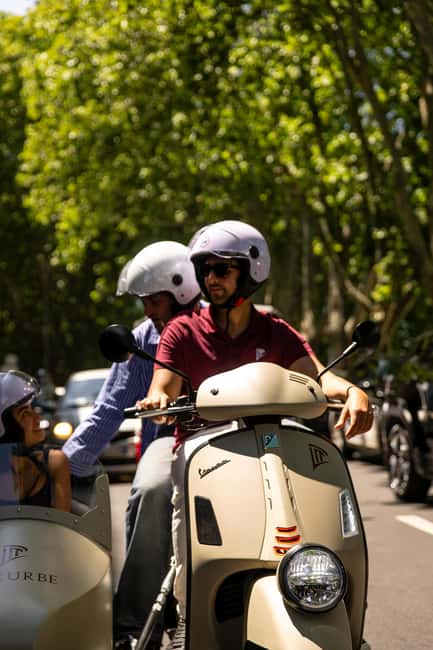
From Piazza del Popolo, the tour heads to Trevi Fountain, one of the most famous fountains in the world and a Baroque masterpiece designed by Nicola Salvi in the 18th century. You’ll see the sculptural storytelling: Ocean on a shell-shaped cart, pulled by sea horses.
The classic tradition comes up here too: toss a coin with your right hand over your left shoulder to help ensure your return to Rome. It’s a simple ritual, but it’s also part of the experience. This is one of the few places in Rome where the crowd energy is basically the point.
One drawback to keep in mind: Trevi is popular, and photo time can feel competitive. The upside is that your guide controls the timing and uses photo stops so you’re not just fighting for a spot in the busiest bottleneck.
The Pantheon: dome, oculus, and why it feels different
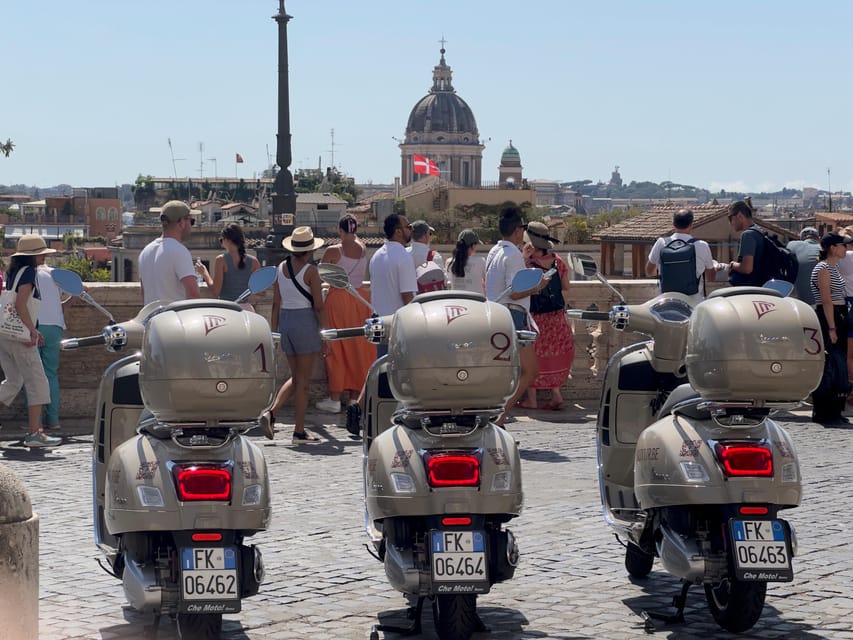
Next is the Pantheon, built over 2,000 years ago and among the best-preserved monuments from ancient Rome. It started as a temple dedicated to all gods, and today it functions as a church—so you get two layers of meaning in one building.
The standout feature is the massive dome and the open oculus at its center. Natural light filters in from above, and that shift in brightness changes the whole mood inside. Even on a quick stop, it’s the kind of place where you immediately understand why ancient engineering still feels modern.
If you’re thinking about tickets and timing: the tour indicates admission is free for some stops, while Colosseum and Vatican are not included. The Pantheon stop is presented as a shorter “hit it and look” moment, so you’ll likely spend more time noticing than buying.
Piazza Navona: three fountains and that Rome-at-work energy
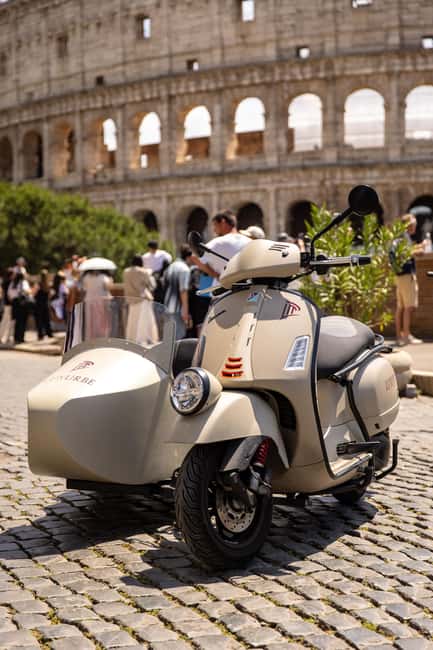
Piazza Navona is one of Rome’s most beautiful squares, built over the ancient Stadium of Domitian. Here you’ll focus on the fountains, including the Fountain of the Four Rivers by Gian Lorenzo Bernini—a dramatic set of figures tied to four great rivers known at the time.
This stop is valuable because it gives you “city texture.” The square isn’t just a monument; it’s a social stage. Cafes, street life, and baroque palaces around it all reinforce what Rome looks like when it’s lived in, not just photographed.
The only consideration: expect crowds. Your guide’s earphones help because you’ll still be able to listen and learn even while you’re squeezed in with everyone else.
Monument to Vittorio Emanuele II and the Colosseum approach
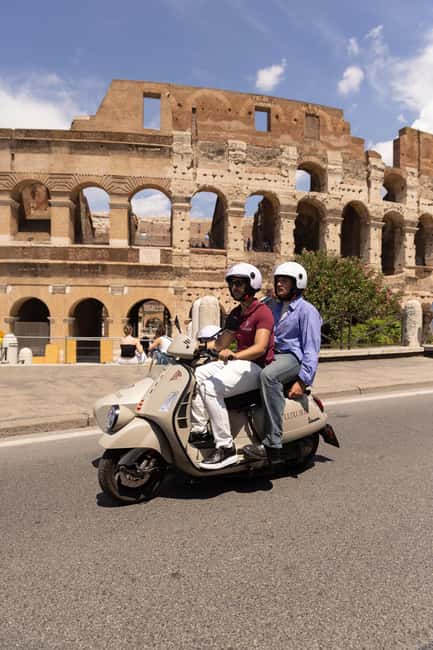
The next major transition is toward one of Rome’s most important crossroads, dominated by the imposing Monument to Vittorio Emanuele II (often called the Altar of the Fatherland). You’ll also hear how the area connects modern Rome to the ancient core—and you might notice history layered in the buildings around you, including Palazzo Venezia, which later served as Mussolini’s headquarters during WWII.
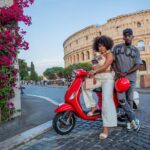
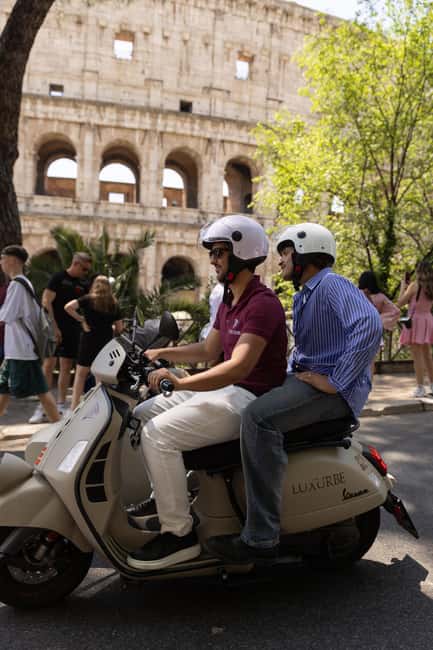
Then you roll to the Colosseum, the iconic symbol of ancient Rome and a huge amphitheater built in the first century AD. It once held over 50,000 spectators for gladiator fights, animal hunts, and public performances.
Important for planning: Colosseum admission is not included. That doesn’t mean you can’t enjoy the stop—it just means you may need to handle your own entry/ticket if you want to go inside. If you’d rather keep the day simple, you can still get a lot from the exterior and the guide’s context.
The Roman Ghetto and Synagogue-area atmosphere
This part of the ride shifts tone into a neighborhood with deep layers of Jewish and Roman history. You’ll pass through the Ghetto, known for ancient Roman remains, traditional shops, and the impressive synagogue area associated with the Roman Jewish community.
What I like here is pacing. After the monumental scale of big national sites, this neighborhood offers smaller details—texture, storefront life, and a sense of lived history that feels closer to daily Rome. It’s one of the stops that helps your brain stop treating everything like a museum display.
This stop is marked as free admission for the time you spend there, which makes it easier to enjoy without ticket planning.
Colle del Gianicolo: Garibaldi battles and the noon cannon
Next comes one of Rome’s best “look over the city” moments: Colle del Gianicolo. From here, you get sweeping views that put the city into perspective—especially useful after all the architectural eye candy.
This hill isn’t only scenic. It also connects to the Unification of Italy, tied to battles led by Giuseppe Garibaldi. And there’s a memorable tradition: every day at noon, a cannon fire marks the exact time for the whole city—a ritual that’s been around since 1847.
If you’re sensitive to time windows, this stop is listed as a short look—so go for the view first, then the story. You can’t control the crowd, but your guide can help you position for photos before the group moves on.
Vatican City quick hit and Trastevere’s real-life lanes
The tour finishes with two very different vibes. First, you’ll reach Città del Vaticano and St. Peter’s Basilica area. The basilica is described as the heart of Catholicism and a Renaissance masterpiece, with Vatican Museums also noted for major religious and artistic treasures.
Here’s the key practical point: admission is not included. So if you want indoor time beyond what the tour provides on the route, you’ll need to plan separately.
Then you’ll end with Trastevere, one of Rome’s most authentic-feeling neighborhoods. Expect cobbled streets, lively squares, and that “wander without a plan” sensation. This is where Rome stops being a highlight reel and starts being a place you could live for a day.
The tour marks admission as free for this stop, so it’s mostly about the walking-and-looking rhythm.
Pacing and photo stops: how to get the most out of 3 hours
A 3-hour tour sounds short because it is short. The trick is understanding the goal: you’re getting orientation plus a story for each stop, with photo opportunities timed to keep the group moving.
If you want maximum value, think like this:
- Prioritize what you want to revisit later (the Pantheon? a longer Colosseum interior visit? Vatican Museums?)
- Use the photo stops to capture wide-angle context, not just selfies
- Listen for the “why” behind each sight, not only the names
The tour is designed for comfort and audio clarity with earphones, and some guides—like Matteo and Dan—are praised for making it feel like you’re touring with someone who actually cares. One guest also described guides taking photos without needing to ask, which is a nice touch if you’d rather not play photographer for your whole group.
Still, a balanced note: one experience included dissatisfaction due to ride safety and another mentioned organization and delays that shortened the tour. Those are outliers, but they’re worth factoring in if you’re the type who needs predictable timing.
Price and value: is $114.12 worth it?
At $114.12 per person for roughly 3 hours, you’re paying for speed, logistics, and guided interpretation—plus the included safety and audio gear.
You’re not just buying entry fees. You’re getting:
- An expert driver/guide in English
- Earphones, helmets, and insurance
- Photo stops at major landmarks
- A route that hits multiple core areas in a single outing
- A small group size (up to 10)
If you’re trying to cover Trevi, Pantheon, major crossroads, Colosseum area, and Vatican-side highlights in one day, you’d normally spend a lot more time coordinating transit and waiting. This tour reduces that friction. And since some key sights are marked as free (like Trevi, Piazza Navona, the Ghetto area, Gianicolo, and Trastevere), your extra spending is mainly where it’s stated as not included—Colosseum and Vatican.
So the value depends on your travel style: if you want an efficient highlights arc with an informed guide and you’re okay with short stop times, it’s a fair deal.
Who should book this Vespa sidecar tour (and who should think twice)
This tour is a good fit if you:
- Want a first-time Rome overview without spending half your day on buses
- Like history explained in plain language while you’re moving
- Appreciate photo stops and hate missing the obvious landmarks
- Travel in a small group and want a guide who can adapt to your preferences (Matteo is specifically praised for customized stops)
Think twice if you:
- Are uncomfortable holding onto a ride setup for short bursts at a time
- Have a hard appointment right after your tour (traffic and timing can affect the schedule)
- Want deep, long interior visits at Colosseum or Vatican on this same outing (admission isn’t included, and stops are time-limited)
Families can work too. One positive note involved a guide who handled the tour well with a grandson, which suggests guides may be comfortable adjusting pacing for real-world needs.
Should you book it?
I’d book this tour if you want the easiest way to “get bearings fast” and you’re happy using it as your highlight framework. The mix of legendary sights (Trevi, Pantheon, Colosseum area), viewpoint time (Gianicolo), and neighborhood flavor (Trastevere) gives you a well-rounded first pass through Rome.
I’d skip or look for an alternative if safety comfort is a big concern for you, or if your schedule is extremely tight. In that case, the ride + city traffic reality can be stressful.
FAQ
How long is the Vespa Sidecar Tour: Highlights of Rome?
It’s about 3 hours.
Where does the tour start and end?
It starts at Piazza del Popolo, 11, 00187 Roma RM, Italy, and ends back at the meeting point.
Is the tour offered in English?
Yes, it’s offered in English.
Does the price include tickets for the Colosseum and Vatican?
No. Admission is not included for the Colosseum and for the Vatican area (St. Peter’s Basilica/Vatican Museums).
Are there any stops with free admission?
Yes. Trevi Fountain, Piazza Navona, the Ghetto area, Colle del Gianicolo, and Trastevere are listed with free admission.
Is hotel pickup included?
Hotel pickup and drop-off are not included by default, but they are available on request with a supplement. If pickup is arranged, you wait outside your hotel at street level.
Can I drive the Vespa?
No. The driver is an employee of the company, and you can’t drive.
What happens if the weather is poor?
The tour requires good weather. If it’s canceled due to poor weather, you’ll be offered a different date or a full refund.