REVIEW · ROME
Vespa Sidecar Tour: Highlights of Rome
Book on GetYourGuide →Operated by Luxurbe · Bookable on GetYourGuide
Rome looks different at speed.
This Vespa sidecar tour turns iconic Rome into a smooth, small-group ride, with you gliding past places like Piazza del Popolo, Trevi Fountain, and the Pantheon while a guide talks you through what you’re seeing. I especially like that you get earphones, so the stories stay clear even when you’re moving through busy streets.
One more thing I really value is the human touch from the guide. One standout example: Matteo felt welcoming right away and even adjusted the tour to match what the group needed. The main drawback is also the most Rome thing: timing and the exact flow can shift with traffic and weather, and if you choose hotel pickup, you could wait up to 20 minutes getting connected to the group.
In This Review
- Key highlights to know before you ride
- Why a Vespa Sidecar tour is a great Rome starter
- Largo Carlo Goldoni to Piazza del Popolo: your first orientation ride
- Trevi Fountain coin toss (with real guided time)
- Pantheon pass-by: seeing a giant without losing your whole day
- Piazza Navona and Piazza Venezia: fountains, power, and quick stories
- Colosseum guided time: a compact look at an enormous stage
- Jewish Ghetto to Janiculum Hill: the calm between big sights
- Vatican City and St. Peter’s Square: impressive even in a brief stop
- Trastevere connection: a final taste of Rome’s everyday streets
- What makes the experience feel stress-free (and what to watch)
- Price ($113.27) and the real value of what’s included
- Who should book this Vespa sidecar tour of Rome?
- Quick practical tips before you meet the driver
- Should you book the Vespa Sidecar Tour: Highlights of Rome?
- FAQ
- How long is the Vespa Sidecar Tour: Highlights of Rome?
- Where does the tour start?
- Where does the tour end?
- How big is the group?
- What’s included in the tour?
- Is hotel pickup and drop-off included?
- What languages are the guides available in?
- Is the tour suitable for all ages?
Key highlights to know before you ride

- Small group (up to 10): a more personal pace than big bus tours, especially during the guided stops.
- Earphones + helmets: clear audio for stories and certified safety gear for comfort.
- Iconic photo moments: photo stops at major landmarks without dragging the day out.
- Trevi coin tradition + Pantheon focus: you get brief guided time at the places most people sprint past.
- Janiculum Hill panoramas: a top viewpoint finish with photo energy and city-rooftop views.
- Rome’s grand mix in 3 hours: Vatican area, center landmarks, Jewish Ghetto area, and Trastevere connections.
Why a Vespa Sidecar tour is a great Rome starter
If it’s your first trip, Rome can feel like you’re always running to catch up. This tour is built for getting your bearings fast—by the time you’re done, you’ve physically “mapped” the city’s biggest sights in a few concentrated hours.
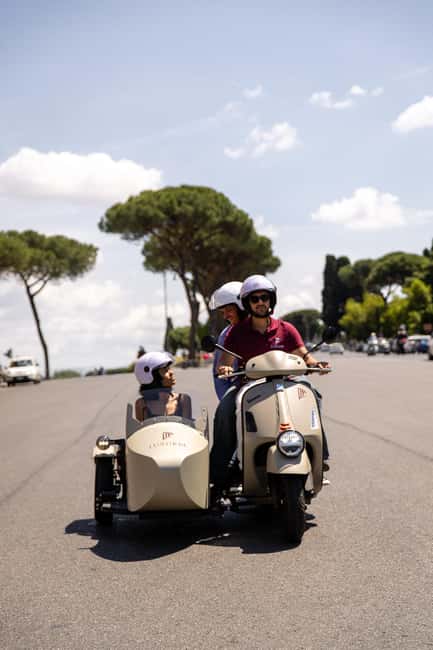
The sidecar format also changes the vibe. You’re not stuck in a seat behind glass or fighting the slow shuffle of a group line. You get movement, wind, and quick stops that still come with a guide’s context. That matters, because Rome’s landmarks are famous—but the guide helps you understand what you’re actually looking at.
At the same time, you should know the tour is short. You’ll see a lot, but not every place is a long, slow visit. If you want museum-style time, you may still need a separate plan later.
Largo Carlo Goldoni to Piazza del Popolo: your first orientation ride
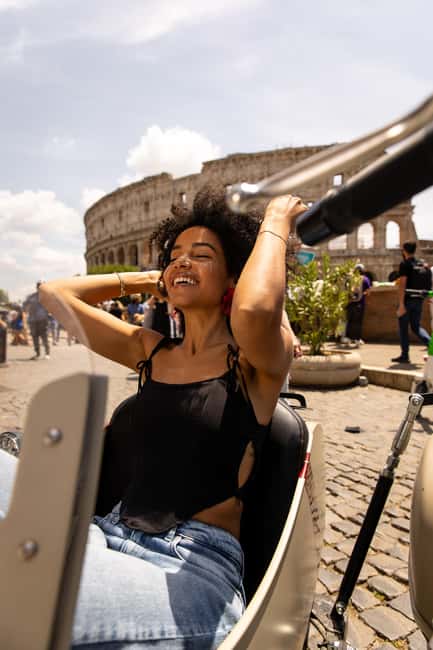
The tour starts at Largo Goldoni, where you meet the driver outside on the signature LUXURBE Vespa-sidecar. This is one of those practical touches that keeps stress low: you’re not searching for a van inside a maze of streets. After you’re paired up, you head out right away.
The first landmark moment is Piazza del Popolo, which you pass by for about 10 minutes. The payoff here isn’t lingering; it’s context. Piazza del Popolo acts like a “grand doorway” into Rome. You’ll see the obelisk and the twin churches that frame this entry square, which helps your brain connect the city’s layout with the landmarks you’ll hit next.
If you’re the kind of traveler who likes to understand a route, this early pass is useful. Even if you only catch glimpses through the ride, you’ll recognize it again later as you explore on your own.
Trevi Fountain coin toss (with real guided time)
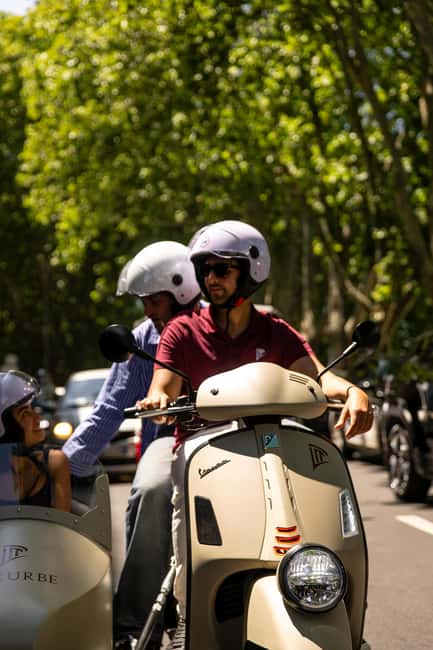
Trevi Fountain is where most people expect crowds and chaos. You still get that atmosphere, but you get a guided window—about 10 minutes for the guided tour stop.
You can also do the age-old tradition of tossing a coin and making a wish. More importantly, the guide’s job is to help you look beyond the postcard. With a quick stop, you won’t “learn everything,” but you will know what you’re seeing and why it’s positioned the way it is.
One practical note: because the stop is short, don’t plan on long photo setups. Use the earphones, let the guide do the talking, and then use the remaining minutes for photos and a calm coin moment.
Pantheon pass-by: seeing a giant without losing your whole day
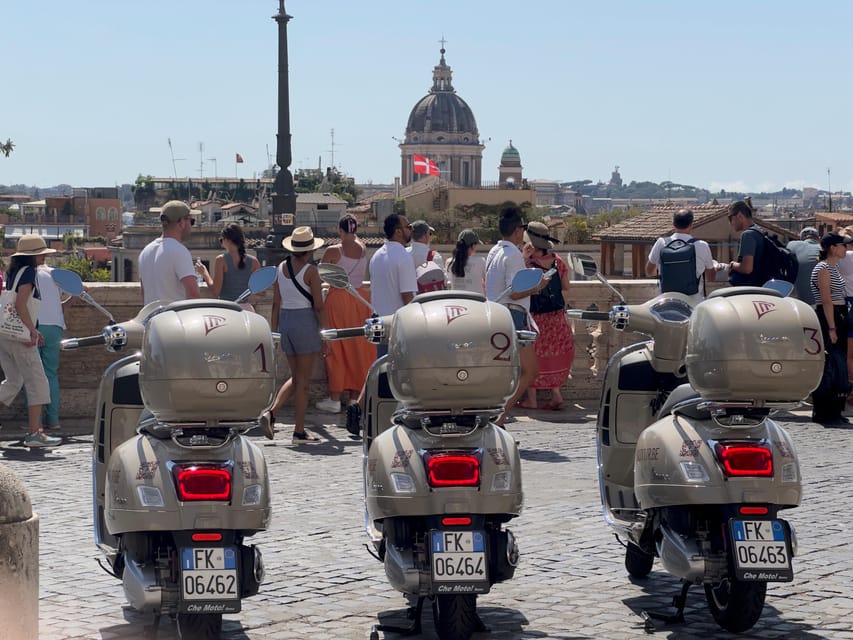
Next comes the Pantheon, passed by for about 15 minutes. This is a big deal even without a long internal visit, because the Pantheon is one of those structures you can’t really “get” unless you’re looking at it from the right angle and understanding what made it so revolutionary.
Since this is a pass-by stop, your best move is to be ready. Turn your body so you can view the façade and the surroundings as you roll past. Then, when your guide cues what to notice, you’ll actually catch it.
If you crave inside time, you’d likely need a separate ticket-based plan. But as a ride-through highlight with guide context, this works well—especially for a first day in Rome.
Piazza Navona and Piazza Venezia: fountains, power, and quick stories
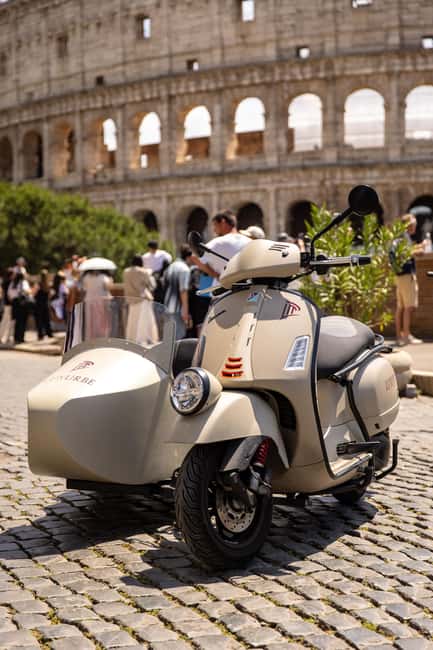
Your ride continues to Piazza Navona for about 15 minutes of guided time. This is one of the best squares in central Rome for people-watching, and the focus here is Bernini’s Fountain of the Four Rivers—a detail you can’t ignore once you’re there.
A short guided stop is perfect for Navona because the square rewards attention. The guide’s stories help you decode the fountain’s symbols and the way the square functions as a social stage.
From there, you’ll move to Piazza Venezia for about 10 minutes, with guided time. This area is known for the imposing Altar of the Fatherland. Even if you’re not the type who loves monuments, it helps to see it as part of Rome’s bigger layers—Roman-era grandeur evolving into later national identity.
This pair of stops (Navona + Venezia) gives you a nice emotional range: playful fountain energy, then a heavy monument mood.
Colosseum guided time: a compact look at an enormous stage
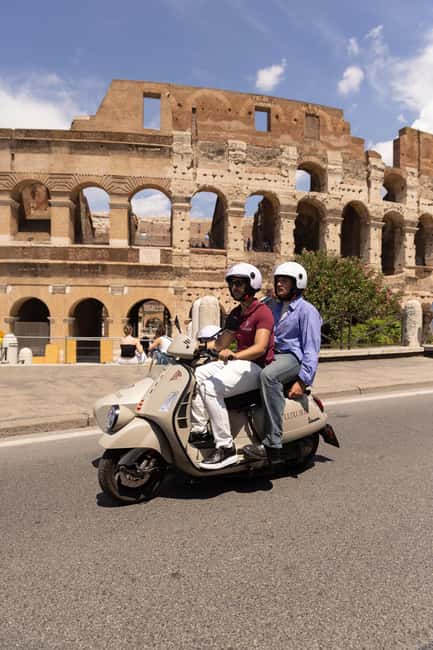
The tour ends with another major centerpiece at the Colosseum, with about 15 minutes guided time. This is where the whole idea of a short, focused highlights tour clicks.
You’re not doing a long deep-dive here. Instead, you get an expert guide’s stories that put the Colosseum into context—how it functioned as a stage for spectacle, and why the structure is still such a draw today.
If you want to get the most out of these 15 minutes, treat it like a “first meeting.” Look at the scale, listen for the history points your guide emphasizes, then use your photos as reminders for the deeper exploration you’ll do later.
Jewish Ghetto to Janiculum Hill: the calm between big sights
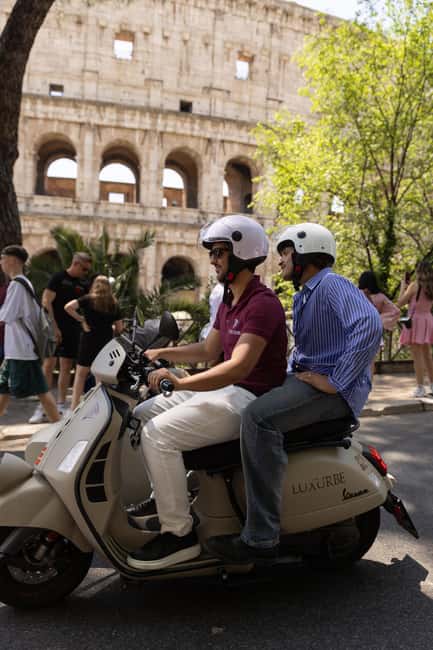
After the Colosseum, the tour includes a guided stop in the Jewish Ghetto area for about 15 minutes. In a time-boxed tour, this kind of stop matters. It adds texture beyond the most obvious tourist circuit and helps you see Rome as a lived city, not only a collection of monuments.
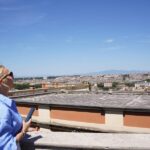
Next comes Janiculum Hill (Gianicolo Hill) with about 10 minutes guided time. This is one of Rome’s best panoramic terraces, and the viewpoint is the moment you’ll feel most strongly. You can see rooftops stretching out, with the city layered underneath.
One rider noted a special extra depending on timing: the 12:00 cannon moment linked with the hill. If your schedule aligns, it can add a memorable punctuation to the view. Either way, the panorama itself is the point.
Vatican City and St. Peter’s Square: impressive even in a brief stop
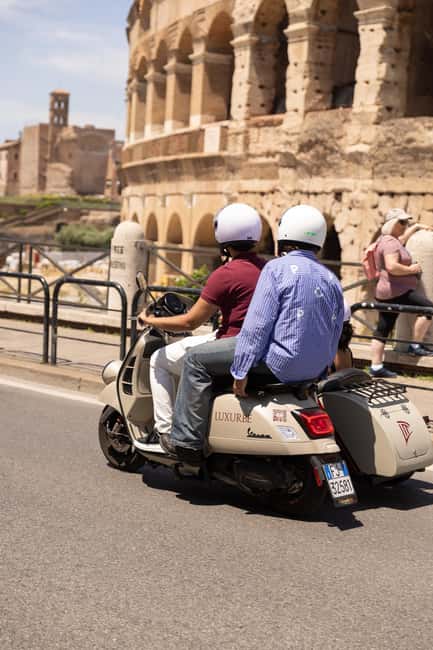
Then the tour heads to Vatican City with about 15 minutes guided time. You’ll focus on St. Peter’s Square, the ceremonial heart of the Vatican.
The best way to enjoy a short stop here is to let the guide set the scene. When you see St. Peter’s Square in motion, it can feel like an “open stage” designed for crowds and scale. Even with limited time, the guide’s explanation helps you understand the why behind the spectacle.
This isn’t the moment for a slow wandering loop. It’s more like a strong orientation stop—one you’ll likely want to revisit later on your own for longer viewing.
Trastevere connection: a final taste of Rome’s everyday streets
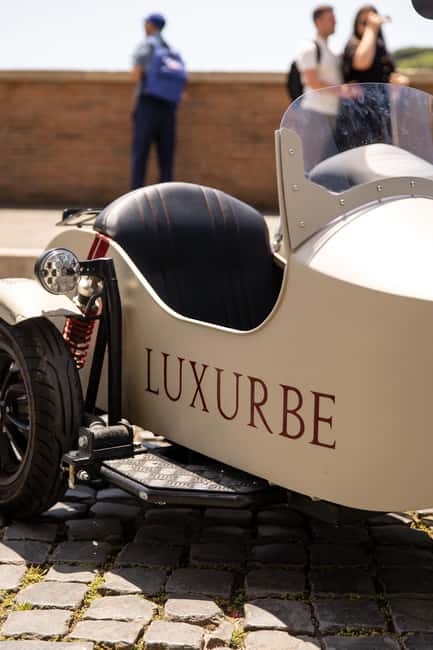
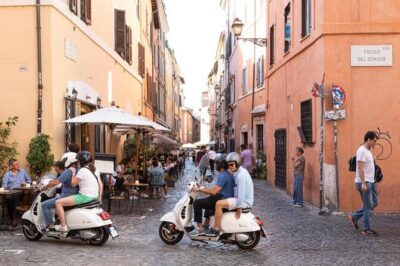
Your last guided stop is Trastevere for about 10 minutes. In a tour that otherwise focuses on big monuments, this is a smart way to end. Trastevere tends to feel more lived-in, with narrower streets and a different neighborhood rhythm.
Think of this as your preview. In a short tour like this, you don’t want to burn time where you already get the most obvious photos. You want a last dose of atmosphere to carry into the rest of your trip—and Trastevere helps you do that.
Then you finish with two drop-off locations, ending back at Largo Goldoni. If you want to keep exploring right after, you’ll have a familiar starting point to orient from.
What makes the experience feel stress-free (and what to watch)
This tour is built around the reality that Rome is busy. A few details make a real difference in how smooth it feels:
- The driver handles the navigating, so you don’t have to fight traffic and turns while also reading street signs.
- Earphones keep the guide’s explanations clear as you pass through key areas.
- Photo stops are timed so you can get landmark shots without turning the day into constant halts.
- Certified helmets and passenger insurance add confidence for a sidecar ride.
Now the tradeoffs. The itinerary is packed, so you should expect brief guided windows at each major stop. Also, traffic and weather can shift the exact timing and sequence, which is normal in Rome and clearly part of the operating plan.
If you’re someone who gets motion-sensitive, you’ll want to judge your comfort. The sidecar ride is part of the charm—but you should go in knowing it’s not a slow, gentle stroll.
Price ($113.27) and the real value of what’s included
At $113.27 per person for a 3-hour tour, you’re paying for more than sightseeing. You’re buying a fast, high-impact route through central Rome, plus a guide, safety gear, and audio support.
Here’s what you get that tends to justify the price for this specific format:
- Expert driver and local guide
- Earphones so you don’t miss the story while moving
- Certified helmets
- Passenger insurance included
- Photo stops at major landmarks
What’s not included is also simple: food and beverages. So if you’re doing this earlier in your trip, plan to grab lunch afterward rather than expecting the tour to cover it.
If you’re comparing options, the strongest value is for travelers who want structure and interpretation in a short time—especially if you’re balancing a tight first-day schedule.
Who should book this Vespa sidecar tour of Rome?
This tour is ideal for you if:
- You want a fun, iconic, intimate highlights route.
- You’d rather get guided context than wander without a plan.
- You’re okay with short guided stops in exchange for seeing a lot.
You might want to skip or think twice if:
- You need long visits at each monument (this is built for motion + brief stops).
- You prefer a quieter, slower walking pace the whole time.
Also, note the tour isn’t listed for children under 2, and it’s not suitable for people over 95. If you’re in that age range, you’ll need a different option.
Quick practical tips before you meet the driver
A few small things can make the ride smoother:
- Arrive a few minutes early at Largo Goldoni so the group can connect quickly.
- Wear something wind-friendly. You’ll feel movement and air more than in a covered vehicle.
- Keep your phone handy for photos, but give the guide a chance to do the cueing first—those quick 10–15 minute moments pass fast.
- If you’re using hotel pickup, keep your expectations flexible. The plan notes waiting time of up to 20 minutes due to Rome traffic.
Should you book the Vespa Sidecar Tour: Highlights of Rome?
If you’re asking whether this is worth it, I’d say yes—especially if you want a first-day view that stitches landmarks together with stories. The combination of small group size, earphones, and safety gear makes the ride comfortable enough to focus on the sightseeing. And the guide factor matters: Matteo’s style of welcoming, adapting the tour to needs, is exactly the kind of service that turns a checklist day into a day you actually remember.
Book it if you like moving through cities, short guided stops, and panoramic payoff points like Janiculum Hill. Skip it if you want slow, lingering monument time. For most first-timers, this is a smart, efficient way to start Rome with a grin.
FAQ
How long is the Vespa Sidecar Tour: Highlights of Rome?
The tour lasts about 3 hours.
Where does the tour start?
You meet the driver in Largo Goldoni.
Where does the tour end?
The tour ends back at Largo Goldoni, with the ride concluding at the meeting point.
How big is the group?
The group is limited to a maximum of 10 participants.
What’s included in the tour?
Included are the Vespa sidecar tour with an expert driver, a local guide, earphones, certified helmets, photo stops at iconic landmarks, and passenger insurance.
Is hotel pickup and drop-off included?
Hotel pickup and drop-off is not automatically included, but it is available upon request with an additional charge. If you choose the option, waiting up to 20 minutes is possible due to traffic.
What languages are the guides available in?
The live guide is offered in Italian, English, and Spanish.
Is the tour suitable for all ages?
It is not suitable for children under 2 years, and it is also not suitable for people over 95 years.