REVIEW · ROME
Vespa Sidecar Tour: Highlights of Rome
Book on GetYourGuide →Operated by Luxurbe · Bookable on GetYourGuide
Sidecar views in Rome beat any bus stop. This 3-hour ride mixes big-name sights with small-street charm, with a guide calling out what you’re looking at as you roll past. I like how it feels fun and intimate at the same time, not a choreographed stampede.
I also like the audio setup. You get earphones/headsets so you can actually hear stories over traffic, which makes the tour feel less like sightseeing from a distance and more like understanding what you’re seeing.
One thing to consider: it’s a panoramic tour, so you won’t do interior visits or get entrance tickets into monuments. If you’re craving long museum time, this isn’t that.
In This Review
- Key highlights to know before you go
- Why a Vespa Sidecar is such a good match for Rome
- The ride setup: seats, safety gear, and what comfort really means here
- The route from Piazza del Popolo to the Colosseum (in plain language)
- Piazza del Popolo: the grand opening to the day
- Trevi Fountain: coin toss time and a quick guided stop
- Pantheon area: why a pass-by can still feel meaningful
- Piazza Navona: Bernini’s Four Rivers and street-level energy
- Piazza Venezia: the Altar of the Fatherland area
- Jewish Ghetto area: a guided pause with real texture
- Janiculum Hill: one of Rome’s best rooftop viewpoints
- Vatican City and St. Peter’s Square: big views from a short stop
- Trastevere: the lighter-feeling end of the loop
- Ending at the Colosseum: iconic views without entry tickets
- Value check: is this $82 per group deal actually worth it?
- Who should book this Vespa sidecar tour
- Practical tips so your start doesn’t get messy
- Should you book this tour?
- FAQ
- How long is the Vespa Sidecar tour?
- Where do I meet the guide and vehicle?
- Does this tour include entrance tickets to monuments?
- What languages are the guide and audio support available in?
- How many people are in the group?
- Is safety gear provided?
- Can I bring luggage or food?
Key highlights to know before you go
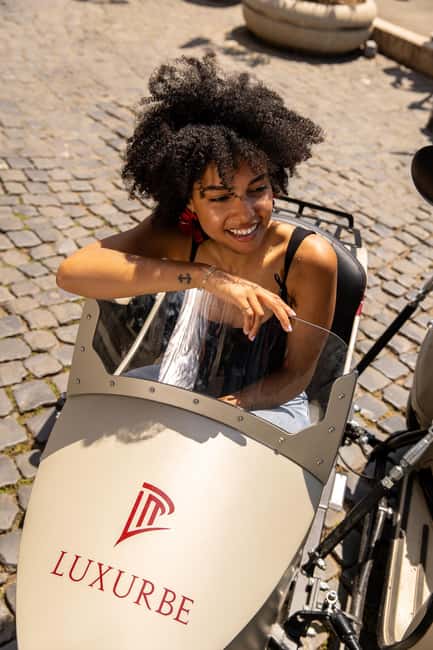
- Piazza del Popolo start and finish: you’re picked up near Piazza del Popolo 11 and you return there.
- A tight route with real variety: Popolo, Trevi, Pantheon area, Piazza Navona, Piazza Venezia, Jewish Ghetto area, Janiculum Hill, Vatican City area, Trastevere, then the Colosseum.
- Guided stops plus pass-by moments: some places are quick views, others get a short guided explanation.
- Safety and sound are built in: certified helmets, passenger insurance, and headsets/earphones for clear narration.
- You may get a seat swap: one of the best parts is the chance to switch between sitting behind the driver and in the sidecar area.
- Guides with strong energy: in past tours, guides have included Max and Daniel, Matteo, and Iman, and they focus on feeling safe while keeping the stories flowing.
Why a Vespa Sidecar is such a good match for Rome
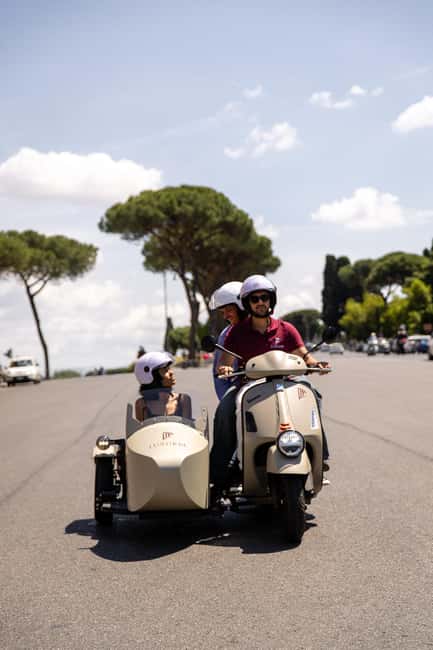
Rome is a city where things can take longer than you expect. Cobblestones slow you down. Lines kill momentum. Traffic can turn a normal outing into a half-day shuffle.
A Vespa sidecar tour solves a lot of that. You glide through historic alleys and wide piazzas without the “wait, walk, wait” rhythm. The freedom part is real: you’re not stuck with a bus schedule, and you can enjoy the ride as much as the stops.
The other big win is the storytelling pace. You’re not doing one long museum segment after another. Instead, you get short bursts of guided context, then you move. That mix helps you keep Rome straight in your head—what’s where, and why it mattered.
The ride setup: seats, safety gear, and what comfort really means here
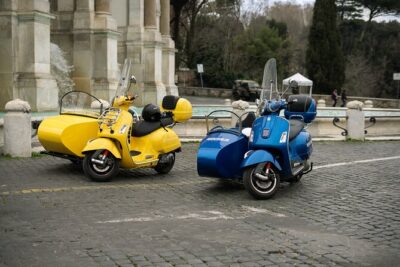
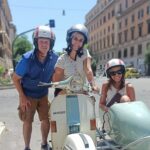
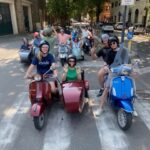
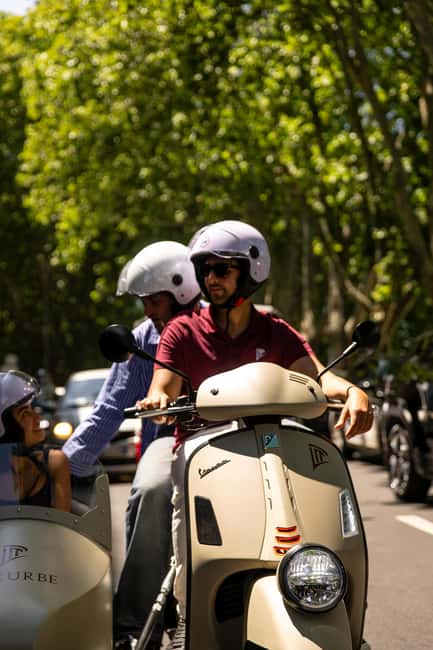
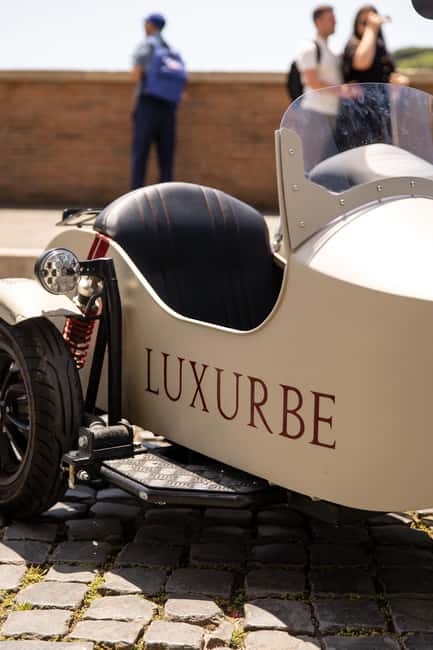
This is a small group experience, limited to 10 participants. Each Vespa sidecar carries the driver plus up to 2 passengers, so you’re not packed in like sardines.
Safety is handled the practical way: you’re given certified helmets and included passenger insurance. The driver is the qualified professional, and self-driving isn’t permitted—good news if you just want to sit back and enjoy the route.
Sound is also taken care of. You’ll use earphones/headsets so you can hear the guide clearly during the tour. If you need audio support, audio guides are available in multiple languages (English, Italian, Spanish).
Comfort-wise, dress for movement. You’ll want comfortable shoes and clothes, because you’ll be getting on and off and walking a little at stops. And remember: no luggage or large bags, and no smoking in the vehicle.
The route from Piazza del Popolo to the Colosseum (in plain language)
You start near Piazza del Popolo 11, in front of the Leonardo da Vinci Museum. If you choose hotel pickup, you’ll meet the driver outside your hotel at street level, within a 10-minute waiting window of the scheduled time.
Then the tour flows like this: you head through central Rome, hitting a sequence of iconic places, plus a couple of stops that feel more local and less postcard-only. After the panoramic viewpoints and the Vatican area, the final stretch ends with the Colosseum area, before you circle back to Piazza del Popolo.
Even when the order can shift due to traffic, weather, or special events, the structure stays the same: big sights, short guided moments, and plenty of photo chances—without long interior lines.
Piazza del Popolo: the grand opening to the day
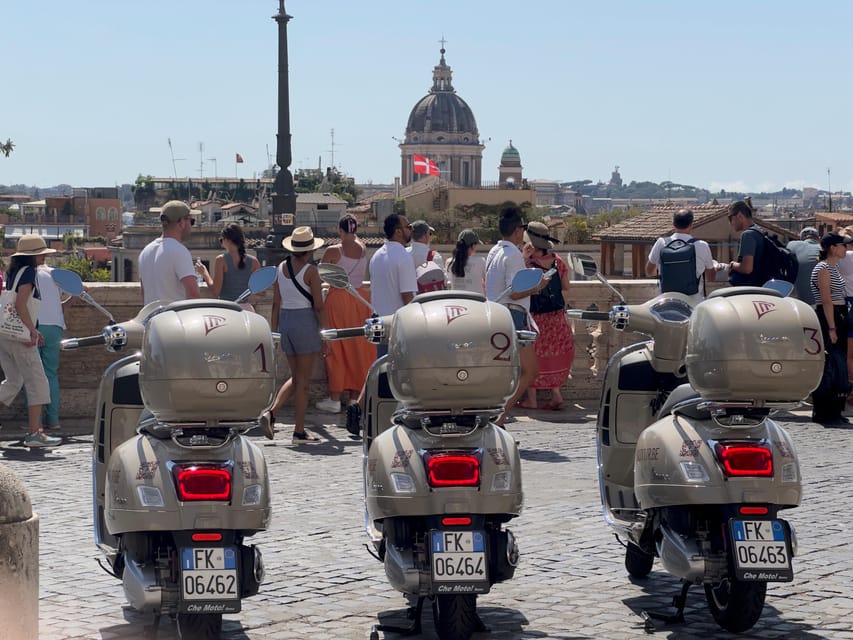
Piazza del Popolo is your launch pad. You’ll pass by for about 10 minutes, which is just enough time to take in the setting and let the guide frame what you’re about to see.
This stop is useful because it’s at the “front door” feeling of Rome. You’re looking at the majestic obelisk and the twin churches that define the square’s symmetry. It’s the kind of visual that helps you orient yourself for the rest of the ride.
If you’re the type who likes to understand a city before you zoom into details, this early orientation helps a lot. And it sets the tone: the tour isn’t only about checkboxes.
Trevi Fountain: coin toss time and a quick guided stop
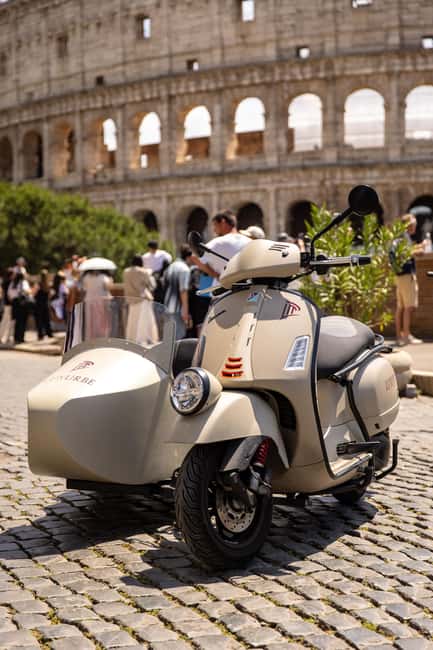
Trevi Fountain is scheduled for a guided moment of about 10 minutes. You’ll stop so you can get the classic view and do the coin toss wish ritual.
What you get here is the combination of symbolism and practical timing. You’re not lingering long enough to get stuck in crowds for hours, but you still get the guide’s explanation and a real sense of the place.
Tip for your photo brain: keep your phone ready. This is one of the stops where lighting and angles change fast, and the time window is short.
Pantheon area: why a pass-by can still feel meaningful
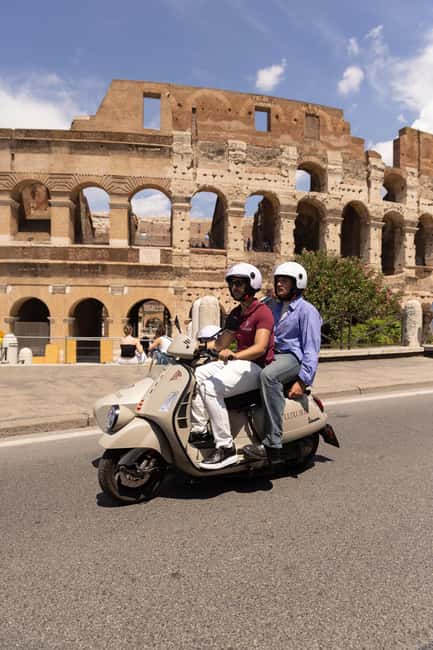
You’ll pass by the Pantheon area for about 15 minutes. Even though this is a panoramic format (no interior visit), it can still be a strong stop if you use it right.
When you’re on a Vespa sidecar, you get views from moving angles that walking tours often miss. The guide can point out what makes the Pantheon special—especially the fact that it’s still perfectly preserved—so you’re not just staring at a landmark, you’re connecting it to the idea behind it.
This is the kind of stop that works best when you treat it like a “look-and-learn” moment. Short, focused, and then you roll on.
Piazza Navona: Bernini’s Four Rivers and street-level energy
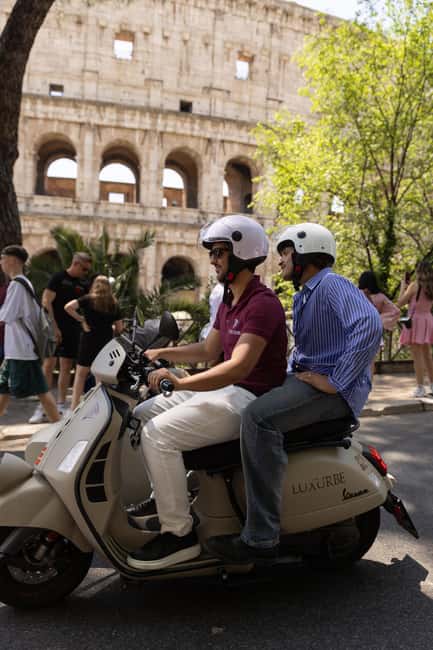
Piazza Navona comes next with a guided stop of about 15 minutes. This is where Bernini’s Fountain of the Four Rivers anchors the square, and the guide helps you read the scene.
Navona is a helpful contrast after earlier monuments. It feels more human-scale. You’ll also get the sense of how Rome performs in public spaces—people watching, street life, and a square that keeps pulling you back to the center.
Time is limited, though. If you want to shop or linger, plan to come back later. On this tour, your job is to soak up the square without losing the route’s flow.
Piazza Venezia: the Altar of the Fatherland area
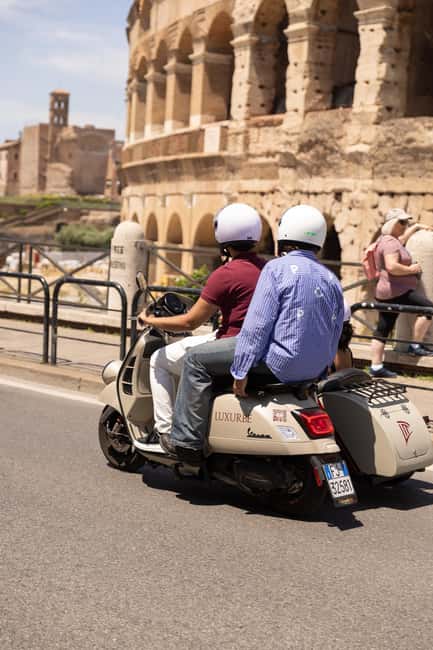
Piazza Venezia is a guided stop around 10 minutes. Here, the big visual is the imposing Altar of the Fatherland nearby.
This stop is worth it because it’s a different chapter of Rome’s story than the ancient monuments you see elsewhere on the route. You’re getting a sense of how monumental Rome isn’t only about antiquity.
Since the stop is short, focus on scale and placement. It’s the sort of place where understanding the layout makes later photos look better.
Jewish Ghetto area: a guided pause with real texture
You’ll get a guided stop in the Jewish Ghetto area for about 15 minutes. This is one of the route segments that feels less like a single “attraction stop” and more like neighborhood understanding.
The practical value is that you’re not just driving past. The guide gives context while you’re in the area, so you come away with more than a location name.
It’s also a good reminder that Rome isn’t only big stones and famous fountains. It’s lived-in streets and layered communities. This segment helps balance the day.
Janiculum Hill: one of Rome’s best rooftop viewpoints
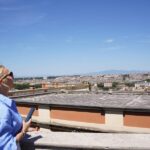
Janiculum Hill is your panorama moment. You’ll have a guided stop of about 10 minutes here, and it’s described as one of the best panoramic terraces in Rome.
This is exactly where the sidecar format shines. You’re not fighting for a lookout spot by foot for a long time. You get pulled into the view, the guide explains what you’re looking at, then you’re back on the road.
One extra detail: if your timing lines up near 12:00, you might catch the cannon described in one of the tour experiences. It’s not something you should count on, but it’s a fun possibility when the clock cooperates.
Vatican City and St. Peter’s Square: big views from a short stop
St. Peter’s Square is on the route, with a guided stop of about 15 minutes. You get the classic Vatican framing and a chance to take it in without planning an all-day separate Vatican visit.
This works best if you keep your expectations aligned. You’re seeing the area from the outside and getting guide context. It’s not a full Vatican plan here.
If you’re doing this early in your trip, it’s a strong way to understand the place before you decide whether you want deeper time later.
Trastevere: the lighter-feeling end of the loop
Trastevere appears on the schedule with a guided stop of about 10 minutes. Even if your time is short, this is the part of the route that tends to feel more like roaming through real Rome rather than only moving between monuments.
You’ll pick up atmosphere through the streets and viewpoints you pass, and the guide keeps you oriented. Think of it as a palate cleanser before the final iconic finale.
Ending at the Colosseum: iconic views without entry tickets
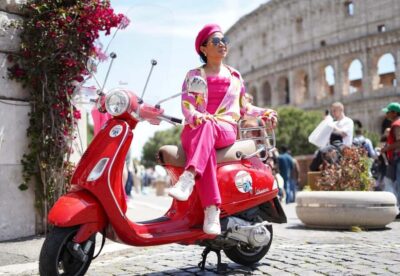
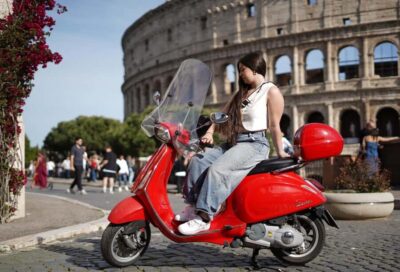
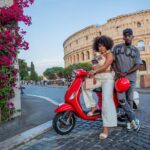
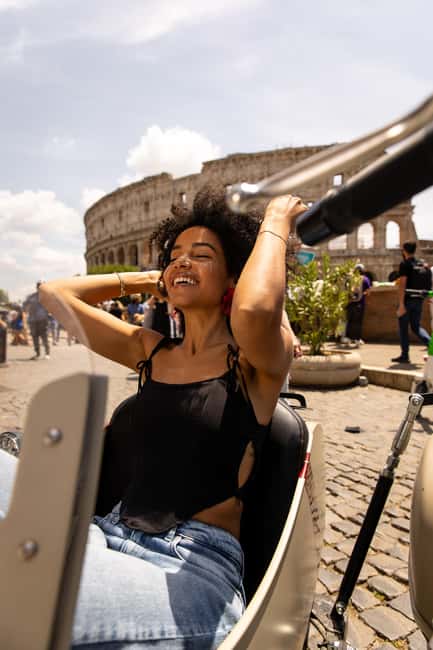
The tour ends at the Colosseum area after a guided stop of about 15 minutes. The Colosseum is described as a witness to legendary battles and grand spectacles of the Imperial era.
Here’s the key point: the tour is panoramic and does not include entrance tickets. That means you’ll be in “see it from the outside and learn it” mode, not “walk inside for hours.”
Still, this ending is smart. You finish with the most recognizable symbol of ancient Rome, which makes the whole route feel like one connected story rather than scattered stops.
You return to Piazza del Popolo 11 afterward, back where you started.
Value check: is this $82 per group deal actually worth it?
At $82 per group up to 2, this tour can be a strong value if you’re traveling with someone and you want an efficient overview with guide support.
You’re getting more than transport. You’re paying for a driver/guide, safety gear, included passenger insurance, clear audio so you don’t miss the narration, and even professional pictures. That adds up when you compare it to paying for separate guide time plus a self-guided plan that doesn’t give you built-in context.
The “worth it” part depends on what you want:
- If you want a fun, fast way to hit major highlights with guidance, this is good value.
- If you want deep interior visits, long time at major sites, or museums, you’ll likely feel shorted because the stops are panoramic.
For many first-timers, it’s a great “get your bearings fast” experience—then you choose what deserves return visits later.
Who should book this Vespa sidecar tour
I’d point you toward this tour if you match one or more of these:
- You want Rome highlights in one 3-hour hit.
- You prefer small-group touring (limited to 10) with clear audio.
- You like street-level views—historic alleys plus big piazzas.
- You want an early-trip orientation, before you decide where you want more time.
It may not be your best match if you:
- Want entrance tickets and long interior visits.
- Need wheelchair access (this tour is not suitable for wheelchair users).
- Are traveling with young children under 2.
Practical tips so your start doesn’t get messy
Two details matter a lot.
First, show up at Piazza del Popolo 11 and wait outside the Leonardo da Vinci Museum entrance area. Don’t walk in. The driver won’t have a Luxurbe sign to look for, and the vehicle is expected to be easy to recognize when it arrives. Allow up to 10 minutes waiting time.
Second, pack light. No large bags, no food or drinks in the vehicle, no smoking, and no sharp objects. Wear comfortable shoes because you’ll stand and move at stops.
If the weather is light rain, the tour runs. If it’s severe, it can be postponed or rescheduled. Either way, plan to stay flexible.
Should you book this tour?
Yes, if you want a guided Rome highlight loop with Vespa-sidecar fun and clear storytelling, without spending your day in queues. The route hits the places you’ll want photos of—Trevi, Pantheon area, Piazza Navona, Vatican area, Trastevere, and the Colosseum—while also adding character through stops like the Jewish Ghetto area and the Janiculum Hill viewpoint.
If your top priority is going inside monuments for long stretches, then look at a different kind of plan. This one is for the best overview version of Rome, on two wheels, with a guide who keeps you oriented and entertained.
FAQ
How long is the Vespa Sidecar tour?
The tour lasts 3 hours.
Where do I meet the guide and vehicle?
Meet at Piazza del Popolo 11, in front of the Leonardo da Vinci Museum. Wait outside and do not enter.
Does this tour include entrance tickets to monuments?
No. It’s a panoramic tour, so entrance tickets are not included.
What languages are the guide and audio support available in?
The live guide is available in Italian and English. Audio guides are available in English, Italian, and Spanish.
How many people are in the group?
It’s a small group limited to 10 participants.
Is safety gear provided?
Yes. Certified helmets are provided, and passenger insurance is included.
Can I bring luggage or food?
No. You can’t bring luggage or large bags, and food and drinks are not allowed in the vehicle.