REVIEW · ROME
Vespa Sidecar Tour at Day/Night with Pickup
Book on Viator →Operated by Romaround Tours · Bookable on Viator
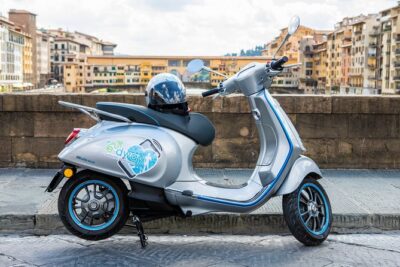
Vespa at night makes Rome feel cinematic. This shared night ride sidecar tour is designed to keep you moving, so you can zip past traffic when temperatures drop and still hit big sights fast. I really like the small group setup (max 12), because the guide can actually help with photo stops and give you more hands-on attention. The trade-off is simple: you’re on a scooter for most of the time, with short viewpoint breaks, so this is best for travelers who want momentum, not slow museum pacing.
I also appreciate the “small comforts” that make the ride feel easier: a provided helmet, included coffee and/or tea plus gelato, and ponchos if rain shows up. The tour runs about 3 hours (around 2 hours for the 9:30 PM option), so it works as a fun orientation to Rome when you don’t want to spend your limited time in lineups.
In This Review
- Key Things I’d Bet on
- Why a day-and-night Vespa circuit is a smart Rome intro
- Piazza Venezia to the Colosseum: your first real photo hit
- Terme di Caracalla, the Pyramid of Cestius, and why the route keeps climbing
- Aventine Hill and the Orange Tree Garden: the break from traffic energy
- Circus Maximus, a Tiber River cruise, and your Trastevere food-and-coffee pause
- Janiculum Hill’s Fontanone: the ride ends with a view worth standing for
- What the shared sidecar setup feels like (and how to pick your seat)
- Small group size and guides: why the stories land better on a Vespa
- Price and value: what $156.07 buys you in real Rome time
- Day vs night: traffic, temperatures, and when you’ll want to start
- Punctuality, rain plans, and how to prepare without overthinking
- Should you book this Vespa sidecar tour?
- FAQ
- How long is the Vespa sidecar tour in Rome?
- Where does the tour start and end?
- Is the tour offered in English, and do I get a mobile ticket?
- What’s included in the price, and what’s not included?
- What’s the group size, and will I ride in a sidecar if I’m solo?
- What happens if it rains?
- Are there height and weight limits?
Key Things I’d Bet on
- Max 12 travelers means more guide attention and fewer chaotic regrouping moments
- Day-and-night options let you pick the pace and light that match your trip
- Helmet provided + ponchos in rain keeps you from scrambling mid-ride
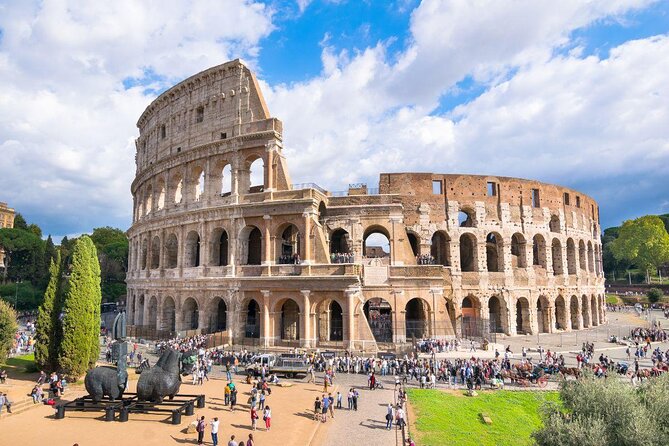
- Photo-friendly stops around Colosseum, Aventine Hill, and the Pyramid of Cestius
- Coffee/tea and gelato are included, so you’re not paying extra for a break
Why a day-and-night Vespa circuit is a smart Rome intro
Rome is stunning, but it’s also big, busy, and full of “how do we get there?” moments. A Vespa sidecar tour helps you solve that problem in one shot, because you cover ground quickly and still get stops at landmarks you’d otherwise string together across multiple days.
The day-versus-night choice is a big part of the value. The night option is specifically timed so you can get that evening “Rome view” feeling while temperatures cool down and you can move through traffic faster. If you prefer calmer streets and softer daylight for photos, the daytime version gives you more traditional sightseeing breaks.
Piazza Venezia to the Colosseum: your first real photo hit
You start at Piazza della Cancelleria, 1, near public transportation. From there, the tour kicks off in the heart of the action with a start at Piazza Venezia, where you’ll get the wide-open view of the huge Vittoriano Monument before you really feel the rhythm of riding.
The tone here is part sightseeing, part story time. Once you’re moving, the guide helps connect what you’re seeing to what Rome used to be like, and you’re not stuck only looking forward and hoping you’ll remember everything later.
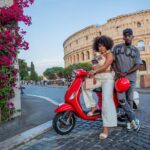
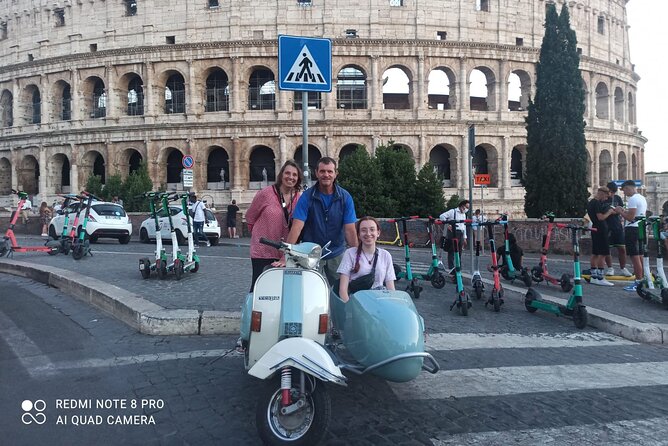
Then you hit Colosseum for a focused stop (about 15 minutes). This is a short window, but it’s long enough for a proper photo set, and the guide’s commentary helps you understand what you’re looking at beyond the usual postcard framing. The practical win is that you get close enough for pictures without turning your whole day into “waiting your turn.”
Terme di Caracalla, the Pyramid of Cestius, and why the route keeps climbing
After Colosseum, the tour heads to Terme di Caracalla (about 10 minutes). You get a quick moment with the Roman Baths—enough time to orient yourself and appreciate the scale without needing tickets or a long visit.
This is also where the ride starts to feel different from a simple “big sights parade.” The route is built around shifting neighborhoods and changing views, so you feel Rome as a city of layers instead of just one straight line of landmarks.
Next comes a drive-by of the Pyramid of Cestius, an Egyptian-style pyramid sitting inside Rome. You’ll likely catch it at speed, but that’s exactly the point: it’s the kind of odd detail you’d miss on foot unless you already knew where to look.
Aventine Hill and the Orange Tree Garden: the break from traffic energy
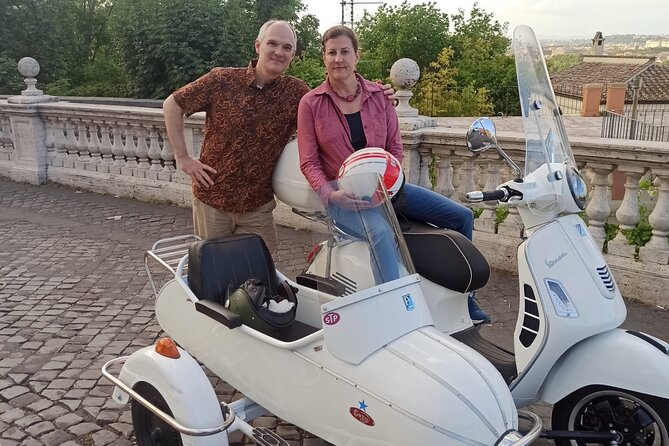
From the pyramid, you climb toward Aventine Hill, where the tour shifts into a quieter, more “upper Rome” feel. The route includes the residential-villas vibe along the hill, which is a refreshing change after the busy core.
Then you stop at Giardino degli Aranci (Orange Tree Garden) for about 15 minutes. This is one of the best “reset” moments in the circuit: you hop off the Vespa, stretch your legs, and get a calm pocket of greenery and that citrus scent that feels miles away from car horns.
Even if you don’t do a deep walk, the garden stop matters because it gives your brain a breather. After that, you’re back on the scooters for the next wave of Rome sights, with a better sense of where you are on the map.
Circus Maximus, a Tiber River cruise, and your Trastevere food-and-coffee pause
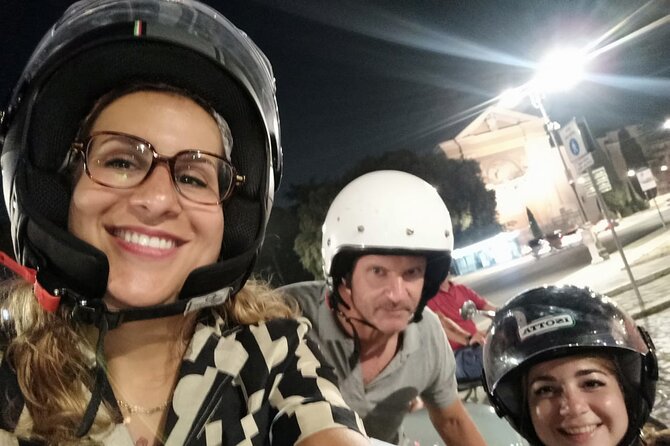
After the orange garden, the tour continues with a drive-by of Circus Maximus—that wide-open space where the imagination really kicks in. Again, it’s not a long stop, but the payoff is seeing the scale from the road and understanding why the area was so important.
Then you get a scenic route along the Tiber River. This is the “cool down” section of the ride, with the water and the bridges creating a calmer pace than the tighter streets. It’s a smart moment in the itinerary because it lets you feel the city’s layout instead of only hitting monuments.
Next is Trastevere for about 20 minutes. This is where the tour turns practical and delicious: you can choose between gelato or coffee (both are included through the tour’s included break). Trastevere is also one of those neighborhoods where you can glance down side streets and feel the old Rome vibe without committing to a full neighborhood tour.
One extra detail I’d file away: some people remember a prosecco-style stop in Trastevere during their time there. It’s not listed as a standard part of what’s included, so treat it as an occasional bonus rather than a promise.
Janiculum Hill’s Fontanone: the ride ends with a view worth standing for
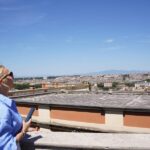
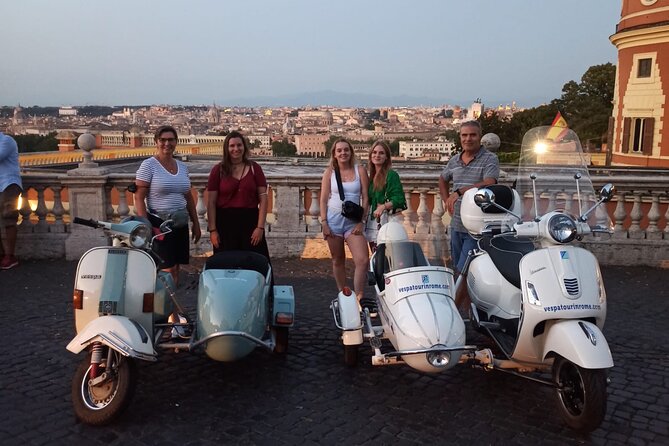
Your final stretch takes you to Colle del Gianicolo and the big finish at Fontanone on Janiculum Hill. You park the Vespas and get around 15 minutes to take photos and enjoy the panoramic view of Rome.
This stop is valuable even if you think you’ve already “seen the view.” The difference here is that you’re seeing the city from above after moving through it by scooter—so the places you passed earlier suddenly make more sense.
If you’re doing the night tour, this is also where evening lighting can do its magic. Some riders have described special, unobstructed viewpoint time around the Colosseum area after sunset, and the end-of-tour hill views can feel like a neat final chapter.
What the shared sidecar setup feels like (and how to pick your seat)
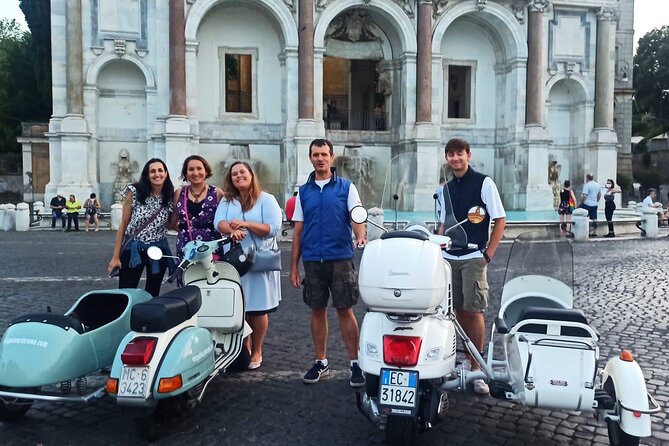
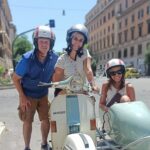
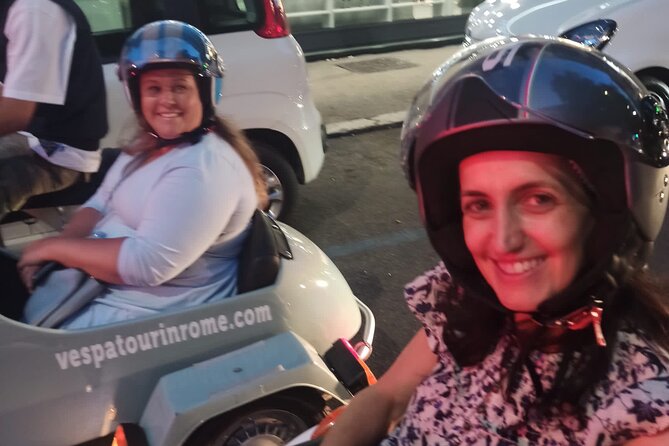
This is a shared Vespa scooter sightseeing tour with sidecar riding. If you’re traveling solo, the tour notes that if you’re the one guest only, you’ll ride a single Vespa (no sidecar) with the driver. For odd-number bookings, you may also get a single Vespa setup in addition to shared sidecars.
That matters because sidecar tours can feel different depending on whether you’re in the open wind and street motion. If you’re sensitive to motion or you don’t love getting tight with a stranger, the solo Vespa option can be a nice comfort upgrade.
There are also limits you should respect: max weight 220 lbs / 100 kg and max height 195 cm / 6.4 ft. And since helmets are provided, you’ll want to plan to wear one the whole time—simple, but it changes how glasses and hair feel for a couple hours.
Small group size and guides: why the stories land better on a Vespa
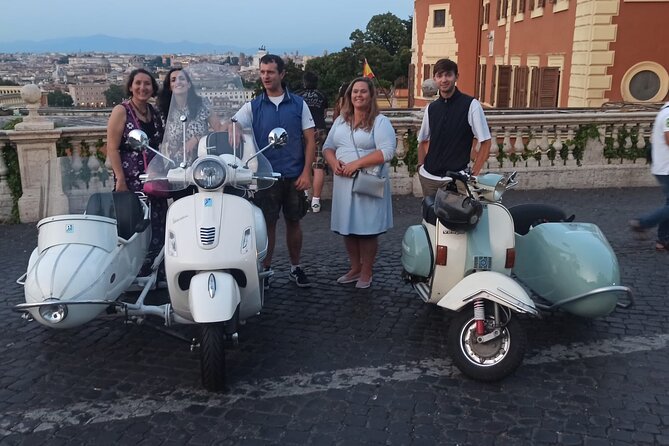
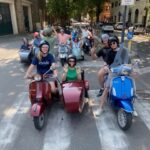
The tour caps at 12 travelers, which changes everything. With that size, regrouping feels calmer, and the guide can spend time on what you’re actually seeing right now, not just reading a script.
The guide-led “what you’re looking at” approach seems to be a big reason people love this tour. Different crews rotate through, and names mentioned include Manuel, Marco, Stefan, Simon, Enrico, Andreas, Roberto, Andrea, and Oliver. Even if you never meet one of those specific people, you can expect a guide who’s comfortable mixing driving skills with history-style storytelling and photo guidance.
From a practical standpoint, ask for help with photos at every stop. The best part of having a guide is that they know where the angle works and how to keep the group from turning your best shot into a crowd scene.
Price and value: what $156.07 buys you in real Rome time
At $156.07 per person for roughly 3 hours, you’re paying for speed, access, and guidance—not just transportation. The included items help soften the cost: you get the driver/guide, helmet use, and an included break with coffee/tea and gelato.
Also, this tour is set up to cover major areas efficiently: Piazza Venezia, Colosseum, Terme di Caracalla, Aventine Hill, Giardino degli Aranci, Trastevere, and the Janiculum Hill viewpoint. If you tried to recreate that kind of route with only walking and taxi hopping, the math often gets expensive fast.
One more value point: you’re not booking entry tickets as part of the package. The tour states attraction entry is not included, so you’re mostly paying for the ride and the guidance, with free stop moments built around exterior views and quick breaks.
Day vs night: traffic, temperatures, and when you’ll want to start
This tour is offered at day and night, and the schedule matters. The listing notes the 9:30 PM tour runs about 2 hours, which is a shorter version—useful if you want evening views without a late-night commitment.
The night option is designed around a practical benefit: you can zip past traffic once the evening cool-down hits. That’s not a small detail in Rome. It can mean more time sightseeing and less time stuck.
The daytime version is where you’ll likely enjoy the classic “Rome walking breaks” feel—especially since it includes stops for coffee and gelato (and it’s built to feel a little more relaxed around those pauses). If you’re traveling with people who prefer daylight photos and fewer night streets, daytime can be the better first choice.
If you’re trying to decide between them, think about your group. For couples and first-timers, I often suggest night when you want atmosphere and quick orientation. For families or anyone who hates late starts, daytime is easier to digest.
Punctuality, rain plans, and how to prepare without overthinking
The tour runs even when it rains, and you’ll get ponchos. That’s a comfort for you, because you don’t need to gamble on weather apps or buy an emergency jacket on the street.
Your best prep is simple:
- Wear closed-toe shoes you’re happy to stand in for quick photo moments
- Bring sunglasses or clear eyewear if you’re sensitive to wind
- Use a light layer for evening; the tour itself notes temps drop at night
Also, remember this ends back at the starting point (the meeting point in Piazza della Cancelleria). Some riders have appreciated the guide helping them get to a more convenient continuation point at the end, but it’s smart to plan as if you’ll still walk a bit after the tour.
Should you book this Vespa sidecar tour?
Yes, if your Rome trip needs a fast, fun way to see a lot without feeling lost. This is a strong choice for first-timers, couples, solo travelers, and even families—because you get a mix of big sights, viewpoints, and comfort breaks without the stress of figuring out transport between scattered neighborhoods.
Book it especially if you want the night experience and like the idea of bypassing traffic with a professional driver and a guide who helps you get good photos quickly. The main reason to hesitate is that it’s not a slow, deep-dive pace. If what you crave is long museum time and quiet wandering, you’ll want to pair this with slower, on-foot afternoons.
If you’re deciding today, I’d pick the tour time based on your energy level: daytime for relaxed photos and easier timing, and night for that faster, cooler, more cinematic Rome feel.
FAQ
How long is the Vespa sidecar tour in Rome?
It lasts about 3 hours on average. If you choose the 9:30 PM tour, the duration is 2 hours.
Where does the tour start and end?
The meeting point is Piazza della Cancelleria, 1, 00186 Roma RM, Italy. The activity ends back at the meeting point.
Is the tour offered in English, and do I get a mobile ticket?
Yes, the tour is offered in English. You’ll receive a mobile ticket, and you get confirmation at booking time.
What’s included in the price, and what’s not included?
Included items are the driver/guide, coffee and/or tea plus gelato, and helmet use. Attraction entry tickets and gratuities are not included.
What’s the group size, and will I ride in a sidecar if I’m solo?
The tour has a maximum of 12 travelers. If you are one guest only, you will use a single Vespa (no sidecar) with the driver. For odd-number bookings, you may also receive a single Vespa in addition to shared sidecars.
What happens if it rains?
The tour still runs in case of rain, and ponchos are provided.
Are there height and weight limits?
Yes. The max weight is 220 lbs / 100 kg, and the max height is 195 cm / 6.4 ft.