REVIEW · ROME
Vespa city tour in Rome with two different routes
Book on GetYourGuide →Operated by Romeismylove · Bookable on GetYourGuide
Vespa scooting makes Rome feel personal fast. This Vespa city photo tour is built for seeing the big landmarks from the street, stopping often enough to take photos, and getting a local guide’s context along the way. You choose between two route styles, so you can match the vibe of your trip—classic central highlights or viewpoints plus fountains.
I especially like that you ride as a passenger, so you can relax while an experienced driver handles the traffic flow, and you still get guided photo breaks. I also like the “Rome from outside” approach—no time wasted in lines or inside-ticket scrambling—so in 1.5 hours you actually cover a lot of ground. One thing to think about: you’re viewing monuments from the street only, and there are no entrance tickets included.
In This Review
- Quick highlights to know before you go
- Riding as a Vespa passenger: fun, fast, and actually doable
- Route choices: Route 1 classic icons vs Route 2 hills, key hole, and fountains
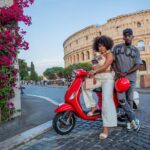
- The Colosseum and Circus Maximus start: Rome’s postcard settings without the ticket hassle
- Route 1 photo loop: Mouth of Truth, Trevi, Spanish Steps, Pantheon, and Piazza Navona
- Route 2 viewpoints: Aventine key hole to the Orange Garden sunset views
- Trastevere and the lived-in streets feeling
- Fontana dell’Acqua Paola and the water-moment break
- St. Peter’s Basilica and Castel Sant’Angelo: finishing with big geometry
- Price and value: why $62 can make sense for a short, high-impact day
- Comfort, safety, and weather reality
- Who this Vespa tour is best for (and who should skip it)
- Should you book this Vespa City Tour?
- FAQ
- FAQ
- How long is the Vespa city tour in Rome?
- How much does it cost?
- Where do I meet the guide?
- What’s included with the tour?
- Do I drive the Vespa myself?
- Which routes are available?
- Are monument entrances included?
- What languages are the tour guides?
- Is the tour suitable for kids or pregnant women?
- Is there free cancellation?
Quick highlights to know before you go
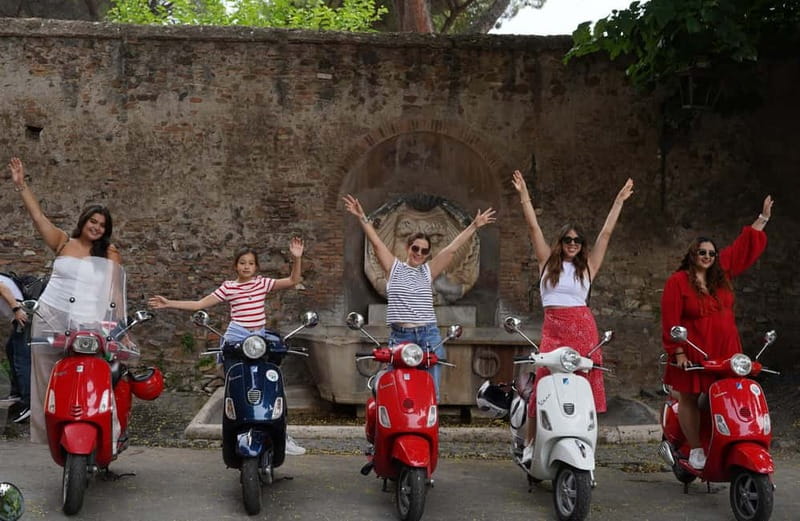
- Two-route choice: pick Route 1 (classic sights) or Route 2 (Aventine views and fountains)
- Photo-first pacing: built-in stops at scenic points for pictures
- Outside views only: no monument entry tickets, so plan for street-level sightseeing
- You ride passenger-style: helmet on, driver focuses, you focus on enjoying and shooting
- Guides that help with confidence: people note guides staying calm and considerate even in rough weather
- Short but wide coverage: about 1.5 hours with a clear start at Via del Colosseo
Riding as a Vespa passenger: fun, fast, and actually doable
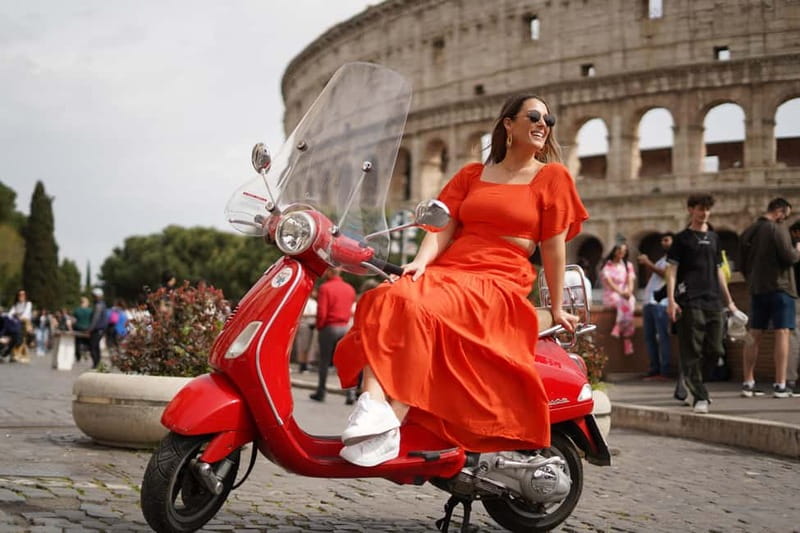
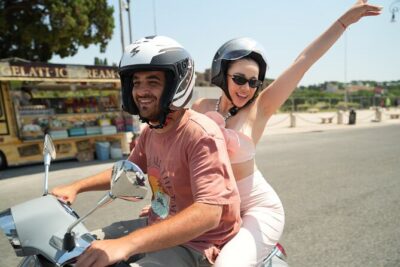
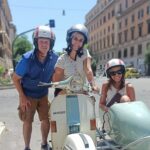
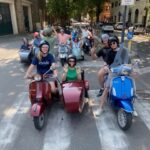
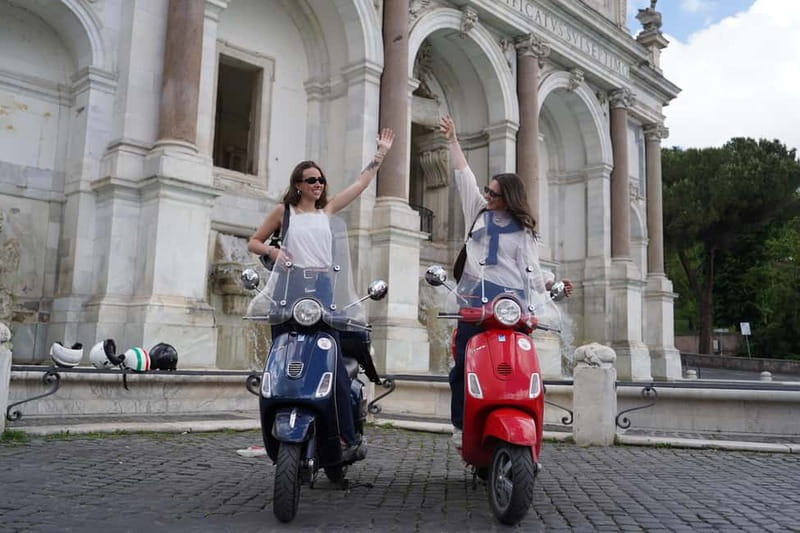
If you’ve been curious about a Vespa tour in Rome but worried about the driving part, this is the sensible way to try it. You don’t drive—you’re a passenger with an experienced driver and a live tour guide who stays with the group and talks through what you’re seeing.
That setup changes the whole experience. You get the thrill of zipping through Rome’s streets without the mental load of steering, braking, and finding your lines. And because you’re not stuck scanning traffic for safety, you can pay attention to the details your guide points out—church fronts, piazza geometry, and street-level landmark angles that you’d miss walking fast.
You’ll also be provided a helmet plus hygienic caps. That’s a small thing, but in a city full of close passes and quick turns, it’s good to know you’re geared for the ride.
Route choices: Route 1 classic icons vs Route 2 hills, key hole, and fountains
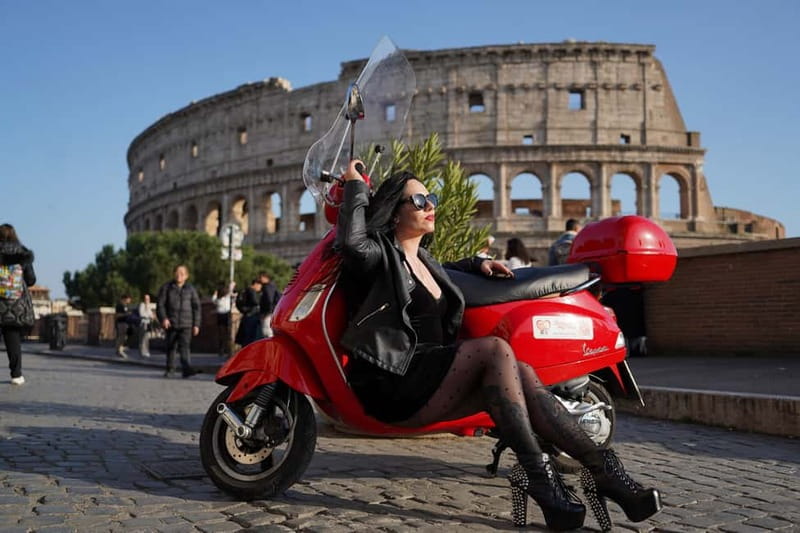
The best part here is choice. You can pick the route that fits your priorities, and both are designed around the same core “Rome loop” energy—landmarks, big views, and photo pauses.
Route 1 leans classic and central:
- Colosseum
- Circus Maximus
- Mouth of Truth
- Piazza Venezia
- Trevi Fountain
- Spanish Steps
- Pantheon
- Piazza Navona
Route 2 feels more scenic and “viewpoint Rome”:
- Colosseum
- Circus Maximus
- Aventine Hill (Key Hole)
- Orange Garden
- Fontana dell’Acqua Paola
- Janiculum Hill
- Castel Sant’Angelo
One practical note: the tour is about what you see from outside. So whether you’re in the “greatest hits” route or the “hills and fountains” route, you’re not going inside the landmarks.
The Colosseum and Circus Maximus start: Rome’s postcard settings without the ticket hassle
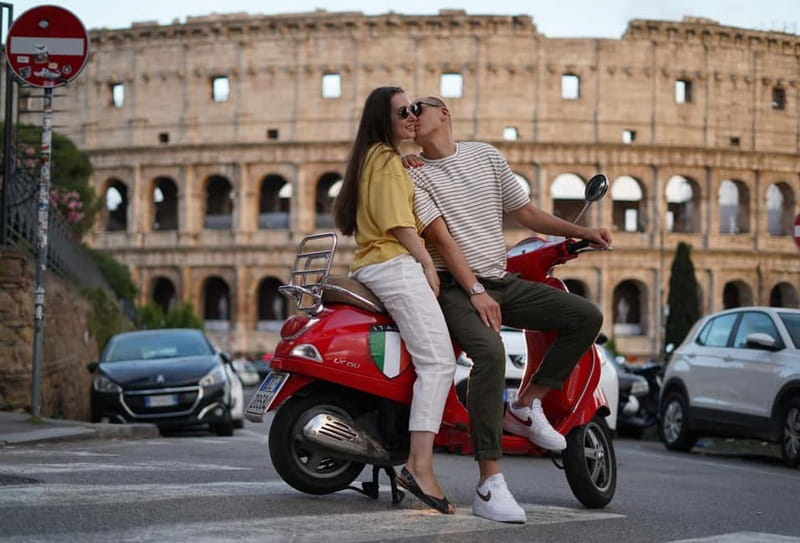
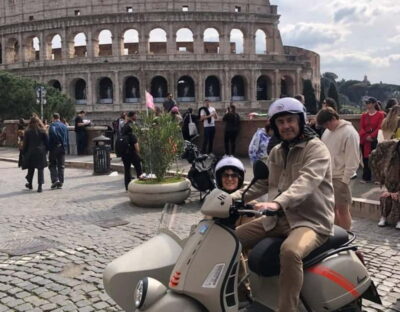
Most first-time Rome trips revolve around the Colosseum, and this tour uses that reality wisely. You begin around Via del Colosseo (meet in front of Cafe Roma) and get a quick connection to the historical heavyweight of the city. You’ll pass by key areas like the Circus Maximus too, which is one of those places you can spot on a map but really understand only after seeing how wide and open the setting feels in person.
Because the tour is short—about 1.5 hours—this “pass-by and photo stop” method makes sense. You’re not trying to do everything. You’re getting the right shapes and sightlines early so the rest of the day feels easier.
If you’re the kind of traveler who likes to orient themselves quickly, this is a good move. You’ll learn where things sit in relation to each other, which helps later when you go back on foot (for coffee, for gelato, for a second look at the one building that really grabs you).
Route 1 photo loop: Mouth of Truth, Trevi, Spanish Steps, Pantheon, and Piazza Navona
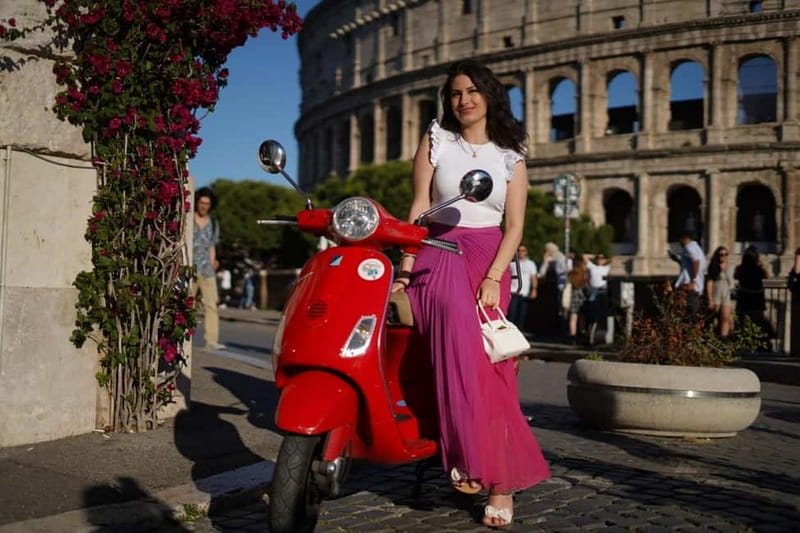
If you pick Route 1, you’re basically choosing the “greatest hits” Rome experience. This route is loaded with places people already have on their list, and that matters because you can check off big icons without turning the day into a marathon.
Here’s how the stops typically feel as a photo tour:
- Mouth of Truth: You’ll get the landmark moment from the street. Even without entry, it’s one of those “I’ve seen this in movies” places that instantly becomes real when you’re there.
- Piazza Venezia: This area often reads as a dramatic city stage—wide space, strong building lines, and a clear sense of scale.
- Trevi Fountain: You’re not going inside anything here. You’re riding in, getting the fountain in frame, and moving on—fast enough to beat some of the drag that can happen when you try to linger too long.
- Spanish Steps: Great for silhouette photos and skyline angles. The trick is timing and framing, and the tour’s rhythm helps you get there without stressing.
- Pantheon: You’ll see it from outside—enough to feel the “wow” of the mass of it, even if you’re not entering.
- Piazza Navona: This is where the tour format shines. The square is built for walking energy and street scenes, and you’ll feel that lively plaza vibe even from a scooter stop.
If your Rome plan is tight and you want maximum recognition per minute, Route 1 is the straightforward pick.
One drawback to keep in mind: because the tour covers several famous sites in one go, it’s not the most relaxing route if you want slow, lingering time at each place. It’s fast and photo-friendly, not slow and museum-like.
Route 2 viewpoints: Aventine key hole to the Orange Garden sunset views
Route 2 is for you if you want Rome to feel softer and more scenic, not just famous. The shift is big: instead of only central icons, you trade some of the “headline monuments” for viewpoint moments and fountain stops.
The route includes Aventine Hill (Key Hole), which is a small curiosity with big payoff. It’s the kind of thing you remember because it’s specific. You also get a sense of Rome’s layers—churches and rooftops and the way streets funnel your eye.
Then comes one of the most memorable segments: Giardino degli Aranci (Orange Garden). This stop is built in with a break time and scenic views—about 15 minutes—so you can actually use the location instead of just passing through. The tour schedule even frames it as a sunset-friendly kind of pause, which is a big deal in Rome because the light can change how everything looks in a matter of minutes.
From there, the ride continues toward Fontana dell’Acqua Paola for another short scenic break and photo stop. And later you’ll reach Janiculum Hill, with another longer break time for pictures and views (about 15 minutes). That Janiculum stretch is the part of the day that makes you think: okay, this is why Rome is famous.
If you like photographs that show more sky, more horizon, and less “standing around near one monument,” Route 2 delivers.
Trastevere and the lived-in streets feeling
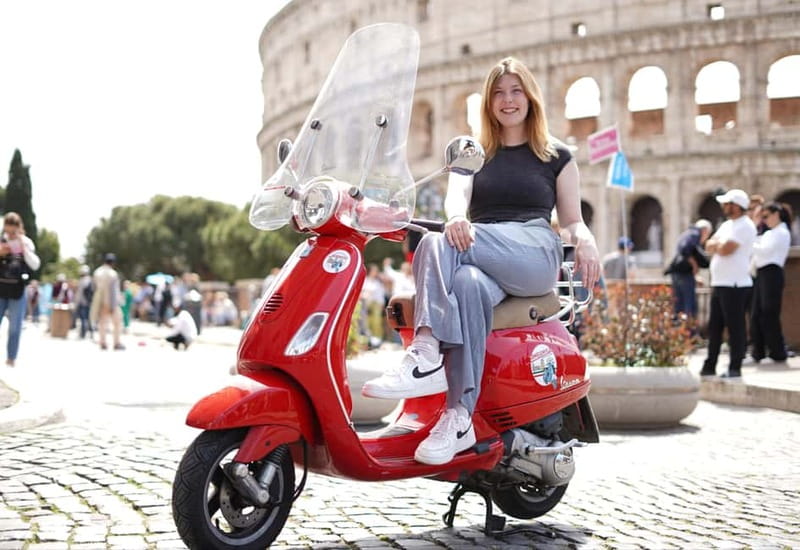
Even on routes loaded with big names, you still get the benefit of passing through neighborhoods that feel like real Rome. One of the stops in the route flow is a Trastevere pass-by, and it matters because it keeps the tour from feeling like a sterile loop of only official landmarks.
This is where Vespa-style travel actually helps you. Walking all day through Rome is great, but it can also turn into a rhythm of too many streets that look similar. On a scooter, you get momentum. You see how the city bends and connects, and you get that “this is a living city” feeling sooner.
Fontana dell’Acqua Paola and the water-moment break
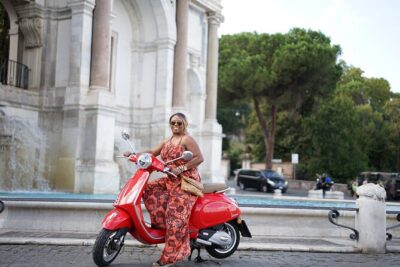
A fountain stop isn’t just about taking a photo. In Rome, fountains often act like wayfinding landmarks and mood setters—sound, stone, and the kind of open space that makes it easier to breathe between heavier sights.
With Fontana dell’Acqua Paola, the tour includes a short break time and a photo stop (around 10 minutes). That time window is useful: long enough to get a few angles and a couple of shots, short enough to keep the overall momentum of the tour.
It’s also a smart contrast point. If you’ve been staring at large monuments back-to-back, fountains give your eyes something different—details, textures, and the feeling of a small pause inside a moving day.
St. Peter’s Basilica and Castel Sant’Angelo: finishing with big geometry
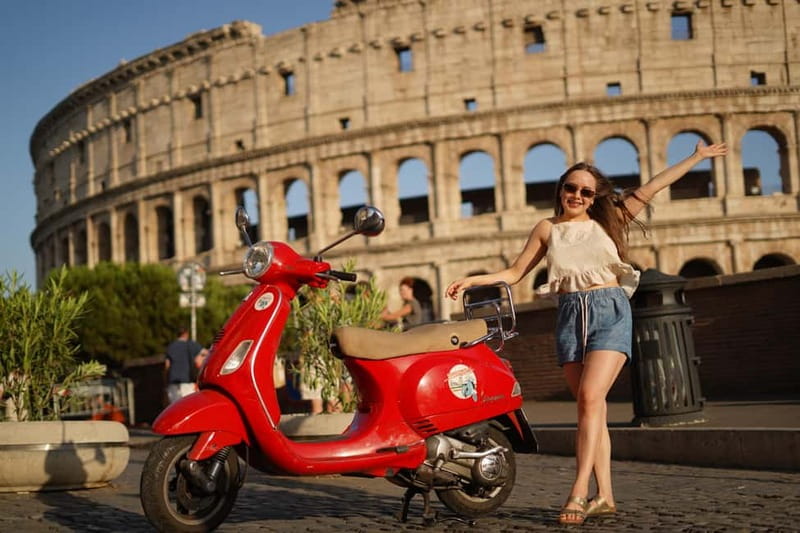
Near the end of the loop, the tour passes by St. Peter’s Basilica and then Castel Sant’Angelo. These are not subtle sights, and even from the street you can usually feel the scale.
The ride includes brief pass-by time for both (about 5 minutes each), which fits the tour’s style: you’re not doing a long stop at the end. You’re arriving at a strong, satisfying “Rome finale” and ending near Via Quattro Novembre, 119.
This ending also works practically. If you’ve got dinner plans, drinks, or a night stroll, you’re not boxed into some far-out start location—you’re finishing in an area that can feel convenient for continuing your day.
Price and value: why $62 can make sense for a short, high-impact day
At $62 per person for roughly 1.5 hours, you’re paying for more than transportation. You’re paying for three things that are hard to DIY quickly in Rome:
- Time compression. In a limited window, scooter riding plus smart photo stops can cover a lot of “big name” Rome.
- Guided interpretation. The route isn’t just a list of stops. Your guide provides context, so you understand what you’re looking at instead of just taking pictures of buildings.
- A photo-first pacing plan. It’s easy to miss your best angles when you’re walking alone and managing crowds. Here, the stops are designed for camera time.
Now the honest part: if you’re the type who prefers long visits—hours at Trevi, deep museum time at Pantheon, or full inside tours—this may not be your best value. The tour explicitly focuses on outside views only and doesn’t include tickets or guided tours inside monuments.
But if you want a practical introduction, the kind of orientation that makes the rest of your trip easier, $62 can feel like a reasonable shortcut.
Comfort, safety, and weather reality
This tour isn’t a white-glove parade. You’re on a moving scooter in a real city. But the format is set up to keep you comfortable: you’re a passenger, you get a helmet, and the driver handles the riding.
One review highlight I took seriously: people noted guides being considerate when weather turned rough. That tells me the tour operators expect real-world conditions and care about passenger nerves, not just speed.
Still, be realistic. This isn’t for people who hate being on the move, and it also isn’t suitable for:
- Children under 10
- Pregnant women
If that applies to you, I’d look for an alternative walking or tram-based option.
Who this Vespa tour is best for (and who should skip it)
This is a strong fit if:
- You want a fast, fun Rome photo intro
- You’d like to see the city without hunting for parking or juggling transit
- You prefer outside views and landmark framing over museum time
- You want a guide to fill in the “what am I looking at?” gaps
It’s not the best fit if:
- You want guaranteed time inside major monuments
- You need a totally relaxed pace at every stop
- You’re uncomfortable riding as a passenger in traffic-heavy environments
Language support is also a plus: the live guide can be English, Italian, or Turkish, which helps if you want clear explanations and not just vague directions.
Should you book this Vespa City Tour?
I’d book it if your goal is a high-impact intro to Rome in about 90 minutes, with photo breaks and a real guide shaping what you see. The best reason to choose it is the two-route strategy: Route 1 is perfect for your “classic Rome” hit list, while Route 2 adds viewpoints like Orange Garden and Janiculum Hill that make your photos look like you had more time than you really did.
Skip it if your dream Rome day is inside tickets, long museum pacing, or slow wandering with zero motion. This tour is about efficient street-level sightseeing, not deep-entry experiences.
If you’re trying to decide between “more time in fewer places” and “see a lot fast with context,” this tour is the faster, guided, camera-friendly answer.
FAQ
FAQ
How long is the Vespa city tour in Rome?
The tour lasts about 1.5 hours.
How much does it cost?
It costs $62 per person.
Where do I meet the guide?
The meeting point is in front of Cafe Roma.
What’s included with the tour?
You get a helmet, hygienic caps, and a Vespa scooter with driver.
Do I drive the Vespa myself?
No. You join as a passenger with an experienced driver and an experienced tour guide.
Which routes are available?
You can choose between two route options. One includes sights like Trevi Fountain, Spanish Steps, Pantheon, and Piazza Navona. The other includes Aventine Hill key hole, Orange Garden, Fontana dell’Acqua Paola, Janiculum Hill, and Castel Sant’Angelo.
Are monument entrances included?
No. The tour does not include ticket entrance to monuments or guided tours inside monuments. You’ll see them from outside.
What languages are the tour guides?
Guides are available in English, Italian, and Turkish.
Is the tour suitable for kids or pregnant women?
No. It’s not suitable for children under 10 or pregnant women.
Is there free cancellation?
Yes. You can cancel up to 24 hours in advance for a full refund.