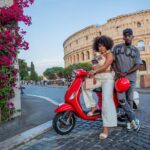
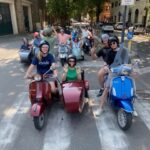
Rome at scooter speed is hard to top. This Vespa sidecar tour gives you a guided loop through the Eternal City’s must-sees and offbeat pauses, without you doing the driving. You’ll get helmets plus safety gear, and headset options so you can actually hear the guide as Rome zips by.
I love that it’s built for comfort and focus: a capped touring group (max 8 people), professional driver up front, and clear safety briefing before you move. You also get the fun choice of riding in the sidecar or behind the driver, with seat swaps possible at stops.
One consideration: you’re a passenger only. Plus, sidecar access has height and weight rules, and if your group size is odd, you’ll likely share and alternate seats at every stop—so not everyone can lock in the sidecar for the entire ride.
Why this tour feels like Rome, not a checklist
- Sidecar + guide: you learn as you move, without parking or long waits on foot
- Capped group (8 max) keeps it calmer than most big tours
- Two time options (morning or evening) lets you match your energy and light
- Headsets help you hear stories even when you’re riding through busy streets
- Icons and strange little stops run together: keyhole, Mouth of Truth, panoramic viewpoints
- Ends at the Spanish Steps so you finish right where many people want to wander next
In This Review
- Why a Vespa Sidecar beats another Rome highlight tour
- Meeting in Rome and how safety gear + seating work
- Santa Maria Maggiore and Monti’s cobblestones to set the tone
- Colosseum, Palatine Hill, and Circus Maximus: seeing the icons at speed
- Aventine Hill’s keyhole (Buco della Serratura) and the “breathe and look” pause
- Testaccio and the Mouth of Truth: ancient myths in real neighborhoods
- Colle del Gianicolo viewpoints, then Piazza Navona and Campo de’ Fiori
- Trevi Fountain, Largo Argentina, Spanish Steps, and a Pantheon pass-by
- Price and time: is $179.81 worth it for 3 hours?
- Who this tour fits best (and who should rethink it)
- Should you book this Vespa sidecar highlight tour?
- FAQ
- How long is the Rome City Highlights and Hidden Gems Vespa Sidecar Guided Tour?
- How much does the tour cost?
- What language is the tour offered in?
- Is this a driving tour or a passenger tour?
- How many people are in each tour group?
- What if my group wants the sidecar the whole time?
- Do sidecar passengers need to meet height or weight requirements?
- Is a helmet and safety equipment provided?
- What should we wear for stops at places of worship?
- Does the tour include food and drink?
- Where does the tour start and end?
Why a Vespa Sidecar beats another Rome highlight tour
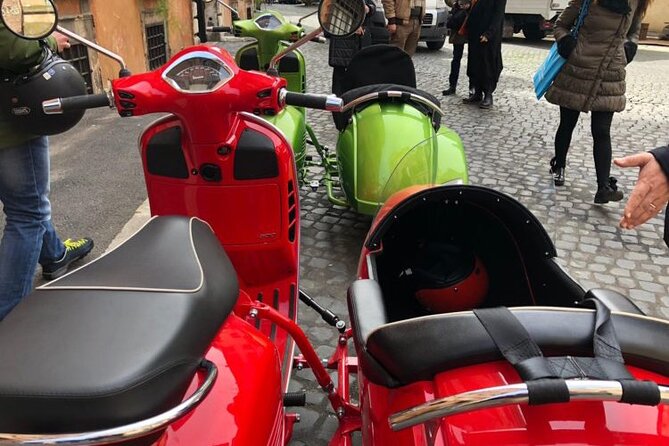
Rome on foot is great, but it can be stop-and-go in all the wrong ways: tight streets, slow crossings, and the same traffic bottleneck twice. This style of tour keeps the momentum. You’re riding through neighborhoods and sight corridors in a way that feels local, not museum-lined.
The value here is that you get more than photos of landmarks. You get a driver who handles the streets, plus a guide who gives you story context as you pass the big stuff and then slows down for the “how did they even build this?” moments. That’s the sweet spot for first-time Rome visits—when you want orientation fast.
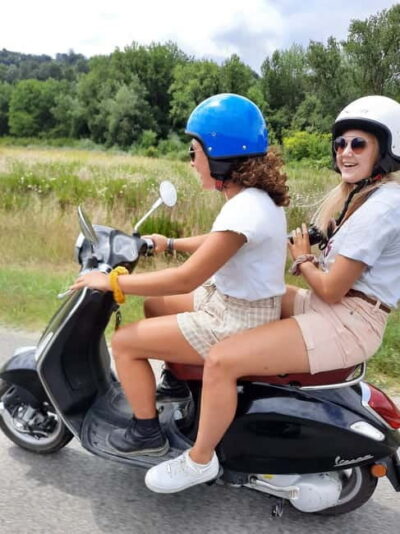
And yes, it’s also just fun. Riding in a sidecar changes your angle on the city. Streets feel tighter, views feel bigger, and you notice details you’d miss walking past at street level.
Meeting in Rome and how safety gear + seating work
You meet at Piazza di S. Andrea della Valle, 9 (near public transportation). From there, the ride setup includes a safety prep and equipment check, and the route starts in the Piazza della Repubblica area.
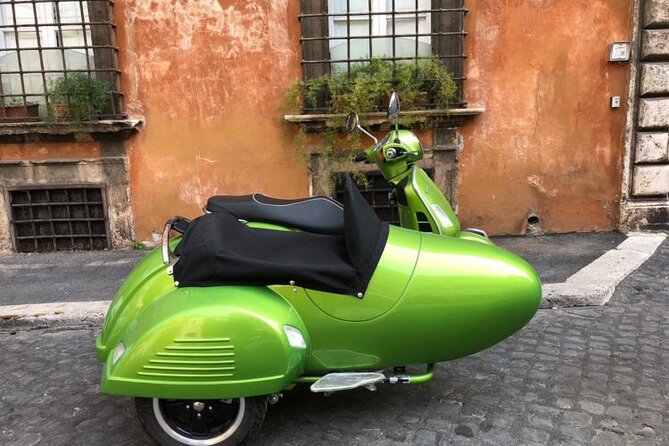
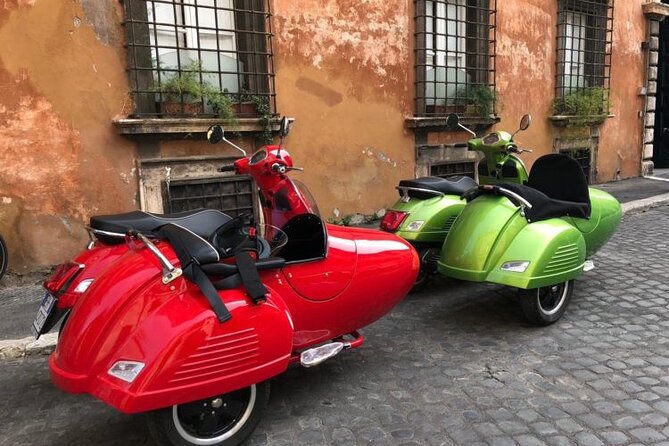
Here’s how the vehicle seating works: each Vespa sidecar setup can take two people. One sits in the sidecar and the other rides behind the driver. You can alternate seats at stops, which matters if you want both the best ride experience and the view experience over the 3 hours.
Safety gear is provided, including helmets. You’ll also have the option to use headsets with your helmet, so you can listen to the guide while moving.
Practical constraints you should plan around:
- Sidecar passenger height requirement: at least 4 feet
- Sidecar passenger weight maximum: 110 kg / 240 lbs
- This is not a driving experience. You’re a passenger only.
- For people under 5, it’s not suitable to alternate; they ride in the sidecar the whole time with seatbelts.
- If your group has an odd number of people, you’ll need to share and alternate seats at every stop.
If any of those rules might be an issue (especially height/weight or very young kids), check your group mix before booking so you don’t end up disappointed about seating.
Santa Maria Maggiore and Monti’s cobblestones to set the tone
The tour begins with a short meet-and-gear moment, then you’re on your way through Rome with an immediate shift into its layered character. One of the early anchors is Santa Maria Maggiore, a major basilica that gives you an “old Rome meets living Rome” contrast right away.
From there, you pass through Monti, one of Rome’s oldest neighborhoods. The point isn’t that you stop forever here. It’s that you’re getting the texture of Rome—cobblestones, street rhythm, and neighborhood identity—before you hit the headline monuments.
Quick dress-code note if you’re expecting to enter any place of worship: shoulders and knees must be covered (no tank tops or short dresses). Even if you’re not planning on a long visit, I’d pack a light layer just in case.
Colosseum, Palatine Hill, and Circus Maximus: seeing the icons at speed
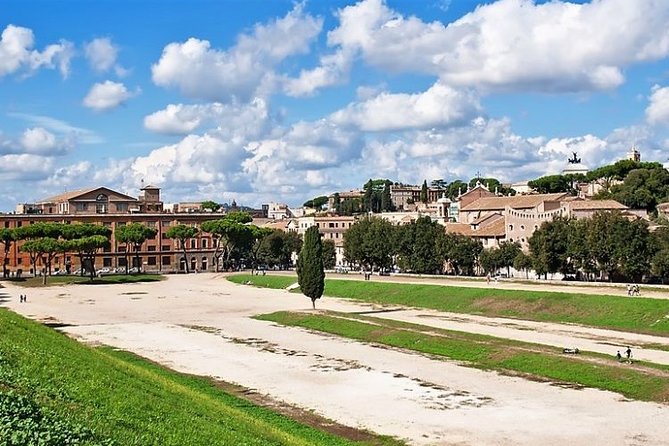
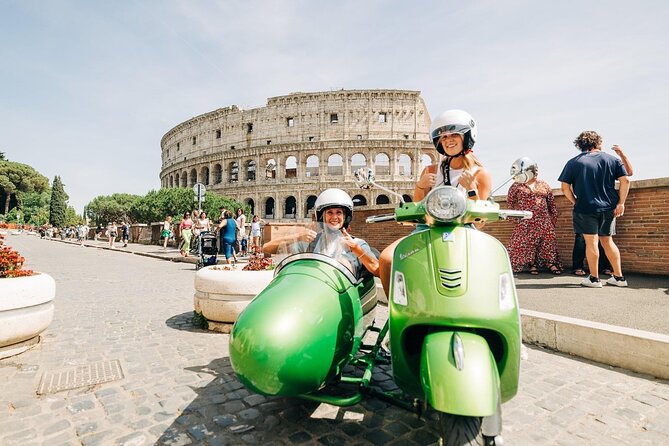
This is the part most people come for. You ride past the Colosseum, Palatine Hill, and Circus Maximus while the guide brings the area to life with stories and facts as you move between viewpoints.
What I like about this approach is pacing. On foot, the Colosseum area can feel like “walk, squeeze, look, hurry.” On a Vespa-style loop, you get a mix: you see the monument clearly, then you glide to another angle and another context without feeling like you’re stuck in a line.
You’ll also get photo stops along the way. Those stops aren’t long enough to replace an in-depth Colosseum ticket plan, but they’re great for getting your “I’m really here” shots without burning half a day.
And because you’re not steering the vehicle, you can focus on the guide’s cues: where you are in relation to ancient Rome and why these landmarks weren’t just famous—they were central to daily life and power.
Aventine Hill’s keyhole (Buco della Serratura) and the “breathe and look” pause
Then the route turns toward a more curious Rome. Up on Aventine Hill, you’ll visit Buco della Serratura, the famous keyhole view people talk about for a reason: it’s weird, simple, and strangely satisfying.
This stop is only about 5 minutes, and that’s exactly right. You’re not stuck waiting around. You step up, look through the keyhole, and get a quick payoff. It’s also a nice mental break from giant monuments—smaller, quieter, and a little playful.
There’s a subtle benefit here for anyone who’s feeling overwhelmed by Rome’s scale. The keyhole stop forces you to slow down your attention for a moment. You stop treating the city like a photo wall and start treating it like a place with secrets and viewpoints.
Testaccio and the Mouth of Truth: ancient myths in real neighborhoods
Next up is Testaccio, an area that feels more local and less souvenir-busy. You’ll pass by the Pyramid of Cestius and head toward the Bocca della Verità—the Mouth of Truth—where the guide explains the legend tied to liars.
This is one of the most memorable stops because it mixes storytelling with a literal object you can understand instantly. It’s not just a background landmark. It’s an experience you can see, point at, and connect to a myth.
Around this stretch you’ll also pass the Theatre of Marcellus and other iconic neighborhoods. The value isn’t that you spend hours here. It’s that you learn how Rome’s big ancient pieces sit inside modern streets—surrounded by everyday life.
One small caution: if you care about photos, have your phone ready before the stop time. These moments move quickly, and everyone wants the same shot.
Colle del Gianicolo viewpoints, then Piazza Navona and Campo de’ Fiori
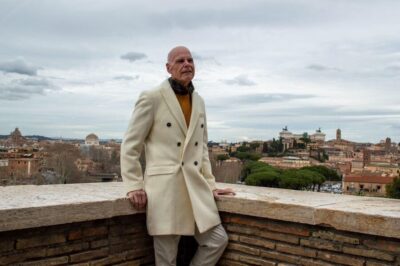
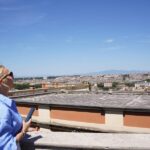
Rome always looks better when you get above it. That’s why the tour includes Colle del Gianicolo, one of the best views of the city. Expect a brief pause that’s short enough to keep the day moving, but long enough to actually take in the horizon.
Then you roll into classic Rome squares, including Piazza Navona. You’ll see the fountain area associated with Bernini, which makes the square feel theatrical—like the city is putting on a show for itself.
You’ll also travel toward Campo de’ Fiori, another “people-watching first” spot. This part works well for you if you want a sense of where locals stroll and where the city feels alive beyond monuments.
If you’re the type who wants a quick coffee or gelato, plan on buying it yourself because food and drink aren’t included. Timing can vary with the group and street conditions, but this is the section where a snack stop often makes sense.
Trevi Fountain, Largo Argentina, Spanish Steps, and a Pantheon pass-by
As the tour approaches the finish, it leans into the most iconic postcard section of central Rome—without turning into a long walking slog.
You’ll pass Trevi Fountain and get a moment tied to the coin tradition. Then the route continues toward Largo Argentina, linked with Julius Caesar’s assassination, where the guide connects the political shock of the past with the reality of Rome’s street layout today.
Next comes the Spanish Steps, a major endpoint moment. The tour ends at the top of the Spanish Steps in Piazza della Trinità dei Monti, which is a great choice because you’re positioned for an easy transition into your own wandering—shopping streets, photo angles, and late-afternoon strolling.
You’ll also see the Pantheon from the road. You’re not promised a full entry experience here, but it’s still a high-impact pass. Even from outside, the Pantheon’s shape is hard to ignore.
Price and time: is $179.81 worth it for 3 hours?
At about $179.81 per person for roughly 3 hours, you’re paying for three things: local expertise, transportation that’s fast for Rome, and a ride format you can’t DIY easily.
What helps the value is what’s included:
- Local expert guide and driver
- Helmet and safety gear
- Headsets for listening while riding
- A route that covers major highlights plus short, memorable stops like the keyhole and Mouth of Truth
What’s not included:
- Food and drink
- Pick-up and drop-off
If you’re thinking about spending half a day building your own loop—tickets, public transit, navigating traffic, and trying to time viewpoints—you’ll often spend similar money and still miss the “stories while you glide” advantage. The route is tight, but it’s designed for orientation and memorable photos.
Where the price may feel less worth it is if you only want one or two monuments and you’re willing to spend the time walking. This tour shines when you want variety and you’d rather spend your limited Rome time moving through neighborhoods with a plan.
Who this tour fits best (and who should rethink it)
This tour works especially well for:
- First-timers who want the big landmarks plus a few surprising stops
- People who dislike slow logistics like long lines and stuck transit connections
- Families who want a fun activity that still teaches history through story
- Anyone who’s curious about Rome’s neighborhoods, not just its monuments
It may not be your best match if:
- You need a driving role. You can’t drive; this is passenger only.
- You can’t meet sidecar requirements (height/weight), or you’re traveling with very young children who can’t alternate seats.
- You want long sit-down breaks and museum-style time. This is a riding tour with short stops, so you’ll still need to plan follow-up visits if you want deeper time inside major sites.
If you go evening, expect a different feel: lights, glow, and cooler air. If you go morning, expect clearer sightlines for photos and a smoother start.
Should you book this Vespa sidecar highlight tour?
If you want Rome that feels fast, human, and story-driven, I’d say yes. This is the kind of tour that gives you orientation and motivation—so your next day walking feels smarter.
The main reasons to book are simple: a guided ride, safety gear and headsets, and a route that balances headline monuments with oddball stops like the Aventine keyhole and the Mouth of Truth. The guide-and-driver team quality tends to show up in the way the tour is paced and how confidently the city facts get delivered; names like Brando, Ricardo, Xander, Spin, and Mattia appear in accounts for a reason—personality and clarity matter when you’re moving.
Just double-check your group’s seating fit (sidecar rules, sidecar alternation, and odd-number sharing), and plan to handle your own food. If those boxes work, this is a smart way to spend 3 hours in Rome with a grin on your face.
FAQ
How long is the Rome City Highlights and Hidden Gems Vespa Sidecar Guided Tour?
It’s about 3 hours.
How much does the tour cost?
The price is $179.81 per person.
What language is the tour offered in?
The tour is offered in English.
Is this a driving tour or a passenger tour?
This experience is for passengers only. Driving is not permitted.
How many people are in each tour group?
The maximum group size is 8 travelers.
What if my group wants the sidecar the whole time?
Each vehicle holds two guests: one in the sidecar and one on the Vespa behind the driver. If you want sidecar-only time for someone, you may need to book additional spots based on how many people want to stay in the sidecar the entire tour.
Do sidecar passengers need to meet height or weight requirements?
Yes. Sidecar passengers must be at least 4 feet tall, and the maximum weight is 110kg / 240lbs.
Is a helmet and safety equipment provided?
Yes. Safety equipment and helmets are provided for participants.
What should we wear for stops at places of worship?
You need shoulders and knees covered. Tank tops and short dresses aren’t allowed for entry at places of worship.
Does the tour include food and drink?
No. Food and drink are not included.
Where does the tour start and end?
Start: Piazza di S. Andrea della Valle, 9, 00186 Roma RM, Italy. End: Piazza della Trinità dei Monti, 00187 Roma RM, Italy at the top of the Spanish Steps.