REVIEW · HANOI
Vespa Tour Hanoi Life Rustic
Book on Viator →Operated by Hanoi Vespa Adventures · Bookable on Viator
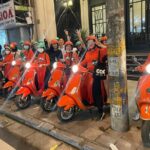
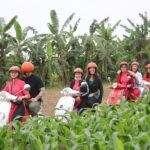
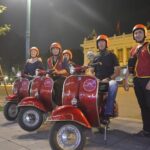
Riding a Vespa through Hanoi’s back streets feels like time travel. This half-day Hanoi Life Rustic tour is built around the daily, real-city pace: you cruise tree-lined avenues and colonial streets, then hit places most people skip, like the train street where locals move stalls for the passing rails. Two things I especially like are the Duong Tau rail track moment (timed so you see it in action) and the food stop for bun cha plus snacks and drinks that keep the experience relaxed, not rushed. One drawback to plan around: this tour depends on good weather, and if conditions are poor you may be offered a different date or a full refund.
The day runs roughly 4 to 5 hours in the morning, with hotel pickup and drop-off, a safety briefing, and helmets included. You’ll also get a guided context for the December 1972 bombing era around Huu Tiep Lake and the B-52 Lake site, plus a break at West Lake with tea/coffee/beer and snacks. If you’re expecting a standard “Old Quarter photos and done” day, this isn’t that. It’s more about how Hanoi works when the streets aren’t staged for tourists.
In This Review
- Key highlights you’ll actually remember
- Why this Hanoi Vespa day feels more like local life
- Duong Tau train street: the moment Hanoi literally makes room
- Huu Tiep Lake and B-52 Lake: history that’s tied to place
- West Lake and its pagoda: calm roads, then a lakeside break
- Thanh Cong apartment buildings: rooms built in the air
- The lunch that makes the day worth it: bun cha
- Old Quarter ending: quick reset, then back to your hotel
- Price and what you’re really paying for at $66
- Small-group comfort: a tour that doesn’t feel crowded
- Practical tips before you ride
- Should you book Hanoi Life Rustic by Vespa?
- FAQ
- What’s the duration of the Vespa tour?
- What time does the tour start, and is pickup included?
- How many people can be on the tour?
- What’s included in the price?
- What food will you have for lunch?
- Are entrance fees required for the stops?
- Is there a mobile ticket?
- What’s the cancellation policy?
Key highlights you’ll actually remember
- Duong Tau Train Street: watch a working rail line cut through narrow homes and shops
- Huu Tiep Lake & B-52 Lake: see a key site tied to the December 1972 bombing
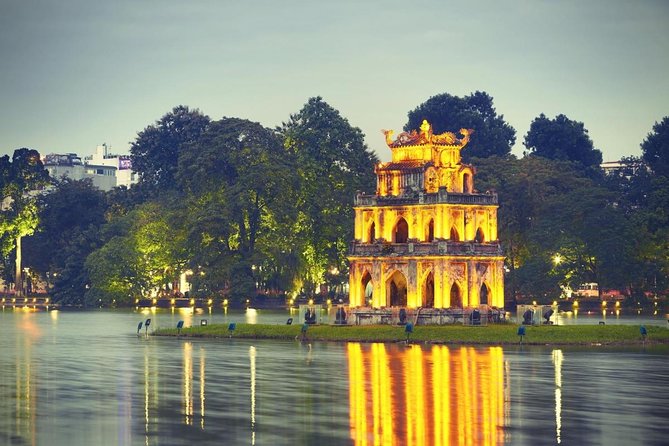
- West Lake pagoda stop: learn local Buddhism and ancestor worship customs, then enjoy lakeside drinks
- Thanh Cong apartment area: spot overhanging rooms built in the air and see life in older building blocks
- Behind-the-scenes music stop: meet a performer in a small sidewalk shop and enjoy music together
- Included bun cha lunch: BBQ pork and seafood spring rolls with dipping sauce and young papaya
Why this Hanoi Vespa day feels more like local life
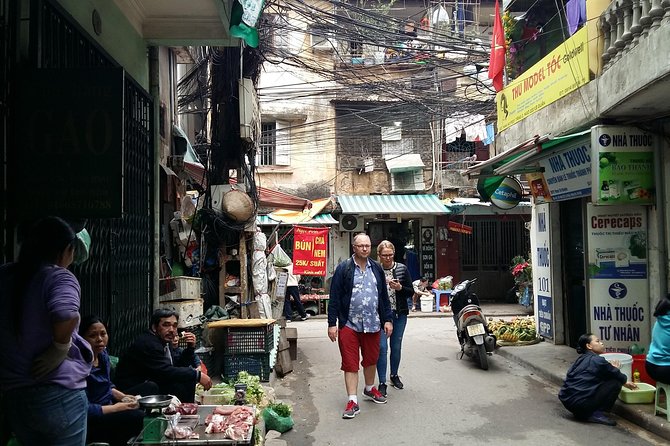
There’s something about Hanoi that doesn’t translate well from a bus window. On a Vespa, you feel the city’s rhythm: slow turns through residential lanes, brief pauses at street life points, and the way neighborhoods share space. This tour leans hard into that. Instead of only hitting postcard spots, you ride toward everyday corners—market edges, lake roads, and older apartment zones—where the city looks lived-in, not curated.
I also like how the tour keeps the pace human. It’s small-group friendly, with a maximum of 2 travelers, so you’re not lost in a crowd. Even the structure feels designed for comfort: you’ve got stops to watch something specific, a pagoda and lake break, then a food-focused segment before ending back at your hotel. And because it’s built with pickup and drop-off included, you don’t waste your morning figuring out transport.
Duong Tau train street: the moment Hanoi literally makes room
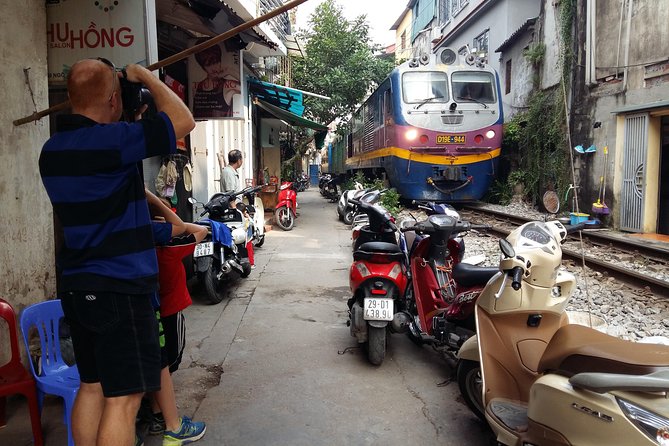
The day starts with hotel pickup and a safety briefing, then you’re on the Vespa right away. Your first major stop is Duong Tau, where a rail track still runs through narrow residential streets. Twice a day, a train passes—so the residents treat it like a scheduled interruption. A few minutes before it arrives, market stalls and displays get moved away from the rails. Kids play nearby, daily errands continue until the timing hits, and then life shifts again once the train has gone.
What makes this stop special is that it isn’t just a view. Your guide times your arrival so you see the coordinated routine unfold, including how shops and homes adjust in real time. It’s a powerful reminder that infrastructure here isn’t a distant thing—it’s part of daily choreography. It also explains why Hanoi feels so close-up. When you’re on a Vespa, you’re close enough to notice the small decisions people make in seconds.
Practical note: even with a quick stop window (about 30 minutes), this is one of those “watch and breathe” moments. You’ll want to keep your phone secure and your posture steady while you’re watching the rail action.
Huu Tiep Lake and B-52 Lake: history that’s tied to place
After the train street, you ride to Huu Tiep Lake and the Downed B-52 site. This is the December 1972 bombing thread—specifically tied to the area where you can see the body of a US aircraft at B-52 Lake.
This stop works best when you treat it like a place you’re walking through, not like a lecture. You’re not stuck staring at an abstract “war story.” Instead, you’re in the landscape where the events are remembered. And since you’re traveling by Vespa between stops, the context feels connected: city life around you, then a shift to remembrance at the site.
If you prefer a tour that handles history with careful pacing, you’ll likely appreciate this. It’s a short stop (about 15 minutes), but it doesn’t try to be everything. The goal feels more like: place the event in your head, then move on so you don’t burn out.
West Lake and its pagoda: calm roads, then a lakeside break
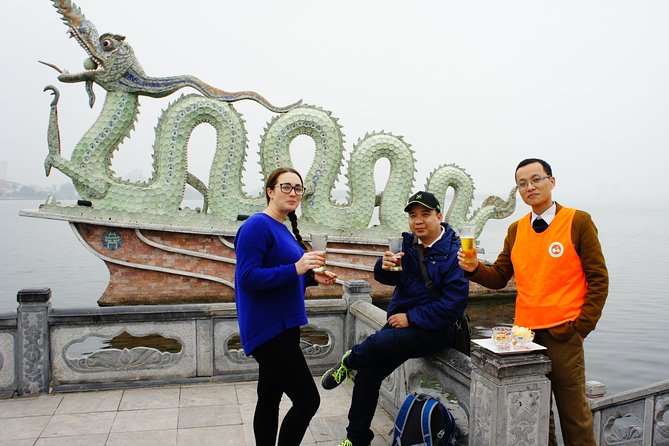
Next, you leave the sharper edge of city streets and head toward West Lake, where the roads feel more serene and the pace naturally slows. Your stop includes a visit to an ancient local pagoda, with time to learn about Buddhism in Vietnam and the customs of ancestor worship.
This is one of those segments where the value is in the small details. You’ll pick up context for why religious and family practices show up so naturally in everyday life—especially in how people honor ancestors and keep rituals part of routine. Even if you don’t call yourself a temple person, it helps you understand what you’re seeing outside of “just architecture.”
Then comes the break: you get panoramic views of West Lake and an outdoor drink setup—tea, coffee, beer, plus snacks. It’s a nice reset in the middle of a ride-heavy morning. In other words: you don’t just travel through Hanoi’s spiritual spaces; you also get a comfortable moment to enjoy the scenery while the day settles into “lunch soon” mode.
Thanh Cong apartment buildings: rooms built in the air
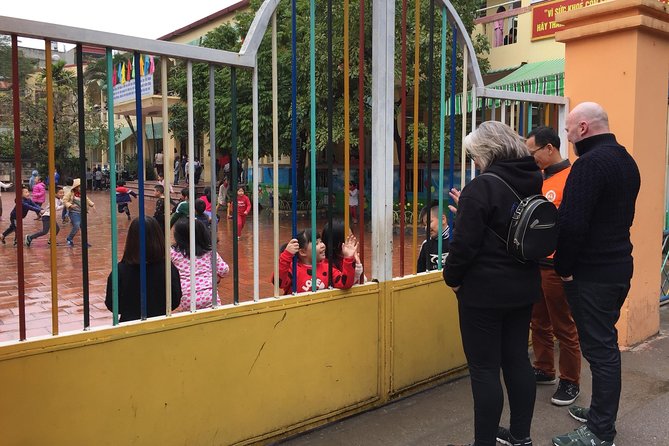
After West Lake, you roll toward the Thành Công area. You’ll pass the Bonsai market on the way, then reach the zone of older apartment buildings. This part of Hanoi can feel like the city’s hidden geometry: tight building layouts, shared walls, and the famous overhanging “rooms built in the air.”
Here’s what’s genuinely interesting: you’re not only looking at buildings from the street. You walk to see the behind-the-scenes side of how people use older apartment blocks, including the overhanging spaces that suggest how families adapted to limited land. It’s visual, but it also tells a story about density, creativity, and how home expands where it can.
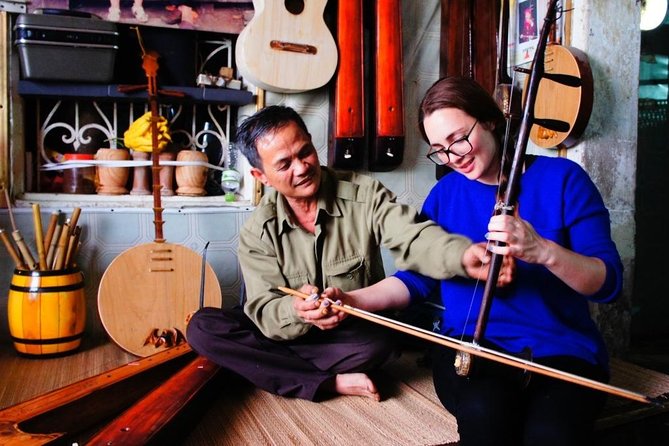
Then you head to a small, dark sidewalk shop. You’ll take a seat, meet and interact with a performer (you can expect music performances here), and enjoy the show in an intimate setting. This is one of the highlights if you like human moments more than checklists. It’s also a good contrast to the big-picture rail and war stops.
The lunch that makes the day worth it: bun cha
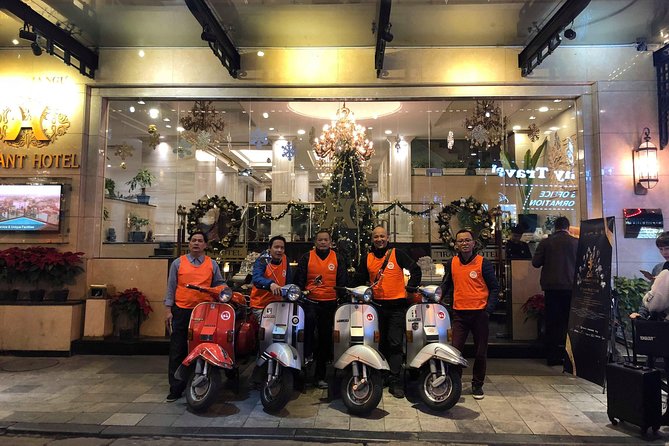
By the time lunch arrives, you’ll be ready for something hearty. You ride to a local restaurant area and taste bún chả—rice noodles paired with BBQ pork and seafood spring rolls, with dipping sauce and young papaya plus spices.
This lunch matters because it anchors the tour in what Hanoi does best: food that isn’t fancy but is absolutely specific. It also helps connect your day’s theme—rustic daily life—with the kind of meal locals take seriously. And because lunch is included (along with snacks and drinks earlier), you don’t spend your time budgeting or hunting for the next place.
Food timing also works well here. You’re not eating at the first stop, and you’re not waiting until the very end. You’ll finish lunch, then the tour’s final ride is mostly a wind-down back toward the hotel.
Old Quarter ending: quick reset, then back to your hotel
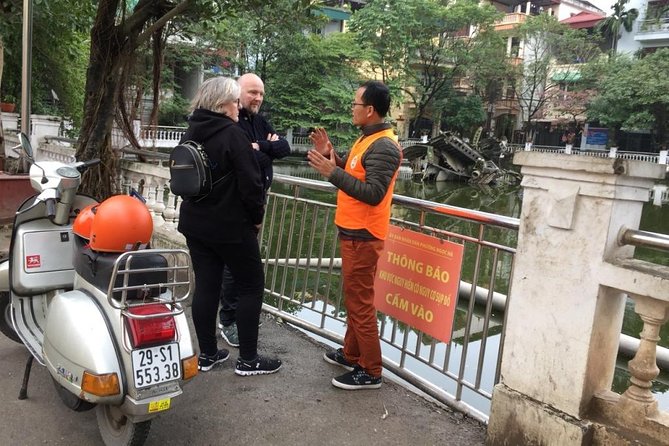
After lunch, you head back and finish around the return ride. There’s a short Old Quarter drive at the end, then the tour ends. The value here is that you get a final “orientation” feel for where you are in Hanoi without turning the day into another sightseeing sprint.
It’s the kind of wrap-up that helps if you’re staying nearby and want to head out later on your own. You’ll likely understand the city layout better because your morning came from neighborhoods and street patterns, not just one commercial corridor.
Price and what you’re really paying for at $66
At $66 per person for a 4 to 5 hour half day, this is priced like an experience that includes more than riding. You’re paying for Vespa with experience drivers and good helmets, plus hotel pickup and drop-off, lunch, coffee/tea, snacks, and alcoholic beverages, and “all fees and taxes.” Rain ponchos are included if needed too.
Is it “cheap”? No. But it’s not only a scooter rental either. The price covers the hard parts of a Vespa day: finding safe routes, handling timing for events like the train street pass, and keeping stops spaced so you’re not constantly waiting.
If you were to recreate it on your own, you’d likely end up paying for rides, transport, and meals anyway—then lose the guided access to the specific street moments and local context. That’s the trade: you pay for a guided flow, and you get a morning that feels designed rather than cobbled together.
Small-group comfort: a tour that doesn’t feel crowded
A maximum of 2 travelers is a big deal on a Vespa tour. It tends to mean you get more breathing room at stops and fewer awkward “turn sideways to let people pass” moments. It also supports the pacing. Guides can adjust if you’re taking photos slowly, if you want a moment longer at a viewpoint, or if you’re not sure about something on the route.
In past departures, the guides and drivers included people like Tom, and drivers such as Dan, Shang, Mack, and River. If you get one of that team, you’ll probably feel the same vibe: helpful and comfortable, with focus on safety and clear stop guidance.
Practical tips before you ride
A Vespa day is easy to enjoy when you show up prepared. I’d plan for these basics:
- Wear shoes with grip. You’ll be walking small segments between stops.
- Bring a light layer. Morning air near lakes can feel different from the midday sun.
- Keep your phone secured. The rail street moment and quick transitions are not “slow stroll” conditions.
- If it’s rainy, use the included rain poncho. It’s better than improvising with whatever you carried.
And quick reality check: Vespa tours are active. You’ll sit, ride, and hop off for short windows. If you’re expecting a totally sedentary, museum-only day, you might feel it more than you expected.
Should you book Hanoi Life Rustic by Vespa?
Book this tour if you want Hanoi as a working city—train street logistics, wartime place markers, lake-area culture, and apartment life you won’t find by accident. It’s especially strong for an introduction to the city because you get context fast, then you’re still full enough (hello bun cha) to explore on your own later.
Skip it if you dislike riding on scooters or you’re worried about weather. Since it needs good conditions and includes time outdoors, you want a morning that’s stable. Also, if you only want major tourist sights and long museum-style stops, this may feel more street-and-scene than monument-focused.
If you’re flexible on food timing and you like watching everyday life up close, this one fits like a well-worn jacket. Quiet in some places, moving fast in others, and built around moments you’ll remember long after the map scroll.
FAQ
What’s the duration of the Vespa tour?
It runs about 4 to 5 hours.
What time does the tour start, and is pickup included?
Pickup is offered, and the tour starts at 8:00 am (with the half-day running 8:30–12:30).
How many people can be on the tour?
The group maximum is 2 travelers.
What’s included in the price?
Coffee and/or tea, snacks, alcoholic beverages, lunch, all fees and taxes, a Vespa with experience drivers and good helmets, rain poncho if needed, and hotel pickup/drop-off.
What food will you have for lunch?
Lunch includes bún chả with BBQ pork and seafood spring rolls, plus dipping sauce with young papaya and other spices.
Are entrance fees required for the stops?
No. The listed stops show admission tickets as free, and the tour also includes all fees and taxes.
Is there a mobile ticket?
Yes, the tour uses a mobile ticket.
What’s the cancellation policy?
You can cancel for a full refund if you cancel up to 24 hours in advance of the start time. If the experience is canceled due to poor weather, you’ll be offered a different date or a full refund.
If you tell me your travel dates and your comfort level with scooter riding, I can help you decide whether this morning schedule fits your Hanoi plan.