REVIEW · HANOI
Vespa Tour HANOI BACK STREETS: FOOD+LOCAL LIFE+CULTURE & FUN
Book on Viator →Operated by Hanoi Vespa Adventures · Bookable on Viator
Hanoi feels different when you ride pillion. This 4-hour vintage Vespa tour strings together food, street scenes, and real neighborhood life, from flea-market repairs to the famous train street. You also get a smart mix of icons (cathedral, bridges, West Lake areas) and places you’d normally skip.
What I like most is the way the route stays off the big roads, so you’re moving with the city instead of just around it. I also like the pacing: you get photo moments, short walks, and enough time at each stop to actually look, not just snap and go. The guides (people like Tam, Chris, and Alex) are part of the magic—keeping everyone comfortable and organized.
One consideration: this is a scooter ride with some walking, and Hanoi weather matters. It’s also not all lighthearted—one stop includes the downed B-52 and the bombing-related memorial area, which can feel heavy.
In This Review
- Key points before you go
- Getting on the vintage Vespa: timing, pickups, and what the ride feels like
- Stop 1 at St. Joseph’s Cathedral: first photos, then real neighborhood mode
- Flea market + Nguyen Cong Tru old apartments: where Hanoi’s economy story shows up
- Long Bien Bridge to Banana Island: Red River views plus floating-life contrasts
- Huu Tiep Lake and the downed B-52: a serious stop with big emotions
- Duong Tau train street: the timing trick that makes it work
- Lunch at Hanoi Train Station: a cozy reset after the ride
- Price and what you’re actually buying for $57.60
- Who should book this Vespa back-streets route
- Should you book it? My honest take
- FAQ
- FAQ
- How long is the Vespa tour?
- What time does it run in the morning or afternoon?
- Where does the tour start?
- Is pickup from my hotel included?
- How many people are in the group?
- What’s included in the price?
- Are admission tickets included?
- Is train street part of the tour, and is it always open?
- Is lunch included, and where is it served?
- What happens if the weather is bad?
Key points before you go
- Vintage Vespa + safe rider setup: a quick safety briefing helps you feel confident before you hit narrow lanes.
- Small group size (max 12) keeps the ride calm enough to hear the guide and actually take in what you’re seeing.
- Banana Island walk + a 86-year-old host gives you a firsthand look at daily life on the river.
- Train Street timing: parts may be temporarily closed for safety, and the team works around it to show you when the train passes.
- Lunch included at a local spot inside the Hanoi Train Station area makes the day feel complete, not rushed.
Getting on the vintage Vespa: timing, pickups, and what the ride feels like
This tour is built around morning or afternoon departures, each about 4 hours total. The usual window is 8:30–12:30 (morning) or 13:00–17:00+ (afternoon), and the experience ends back at the starting meeting area.
Pickup is offered, and it’s hotel pickup and drop-off, which matters in Hanoi because hopping between neighborhoods on your own can eat up time fast. The tour runs with English-speaking guides and uses private transportation rather than mixing you into a huge crowd.
You’ll ride a vintage Vespa with a safety-first approach. Before you start, there’s a short briefing, and you sit as the pillion. From what’s consistently praised, the team focuses on comfort—this is the kind of tour where it helps to have drivers who know how to move through traffic without making passengers tense.
If you’re thinking about comfort: expect close streets, quick changes in scenery, and lots of “look at this” moments. It’s not a slow, sit-behind-a-window kind of sightseeing. You’re traveling the way locals do—by scooter—so you’ll feel the city’s rhythm.
Stop 1 at St. Joseph’s Cathedral: first photos, then real neighborhood mode
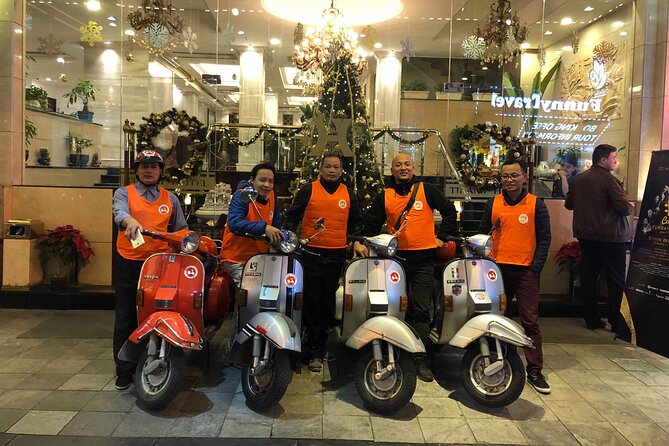
You start at St. Joseph’s Cathedral (P. Nhà Thờ, Hàng Trống, Hoàn Kiếm, Hà Nội 100000, Vietnam). The plan is to hop on, take a ride to meet the main group there, and get a few fun group photos early on.
This isn’t just a landmark stop for background. St. Joseph’s Cathedral is described as neo-Gothic, modeled after Notre Dame in Paris, and it’s tied to the Roman Catholic Archdiocese of Hanoi. So you’re seeing a colonial-era style landmark at the start—an easy way to orient yourself before the route turns into back-street Hanoi.
The time here is about 20 minutes, and the admission ticket is included. Drawback-wise, if you’re not into church architecture or you hate short photo-and-move stops, this may feel like a quick “check it off.” But it’s also the easiest mental reset for the rest of the ride.
Flea market + Nguyen Cong Tru old apartments: where Hanoi’s economy story shows up
Next comes a drive into the city center, then you reach the flea market and the Nguyen Cong Tru old apartment building area. This area is presented like a living museum of older Hanoi life—especially connected to the government subsidy period that lasted for decades.
Here’s the useful context: the flea market exists because supplies weren’t always enough during those years. People needed parts, fixes, and workable substitutes, and that demand shaped a repair-and-reuse culture. When you walk through, you’re not just browsing. You’re watching hundreds of small stalls that specialize in mechanical accessories.
You’ll spend around 20 minutes, and entry is free. What to watch for: don’t treat it like a souvenir market only. Look at the types of items people trade and fix—this is where you see how everyday needs shape business. If you’re into street-level economics and daily problem-solving, this stop lands well.
One possible drawback: flea-market walking means lots of small paths and close stalls. If you prefer wide, calm spaces, pace yourself.
Long Bien Bridge to Banana Island: Red River views plus floating-life contrasts
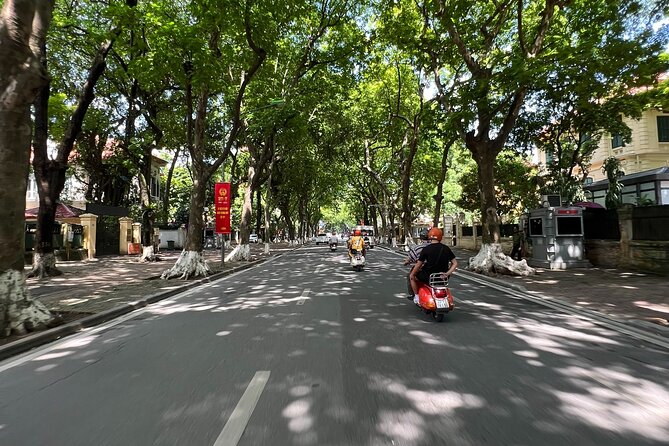
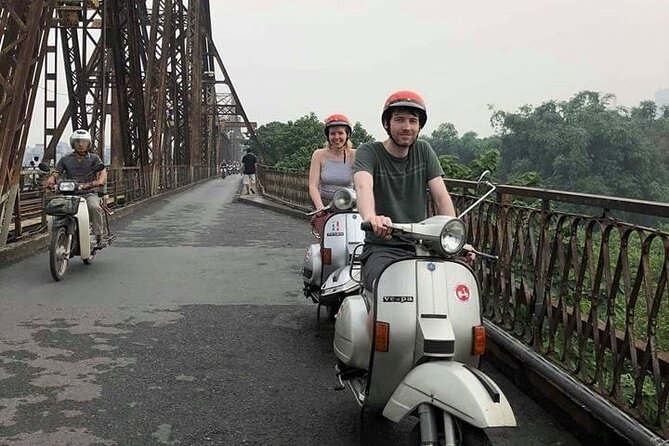
From the historical Long Bien Bridge (built in 1898 by the French company Daydé & Pillé), you get an overlook of the Red River before heading toward Green Banana Island. Long Bien is a good “in-between” stop: it gives you a landmark view, then quickly shifts you back into lived-in neighborhood scenery.
Then you do a 1.5 km walk on Banana Island. The focus here is practical, not just scenic:
- Farming activities
- a floating village
- an outdoor gym
- a river beach
You also get an interaction opportunity with an elderly couple—one of the highlights is a living-in-a-tiny-floating-house visit involving an 86-year-old elderly couple. It’s designed to show the contrast between different levels of life in Hanoi, and it does it through direct contact, not by explaining from a distance.
Time for this stretch is about 1 hour, and admission is included. Consideration: the 1.5 km walk is the one part of the route that’s more “active.” Comfortable shoes help, especially if the ground is uneven near river areas.
If you want one reason to book this specific tour (and not just any scooter ride): Banana Island is the moment where the tour shifts from sightseeing to understanding how people actually live around the water.
Huu Tiep Lake and the downed B-52: a serious stop with big emotions
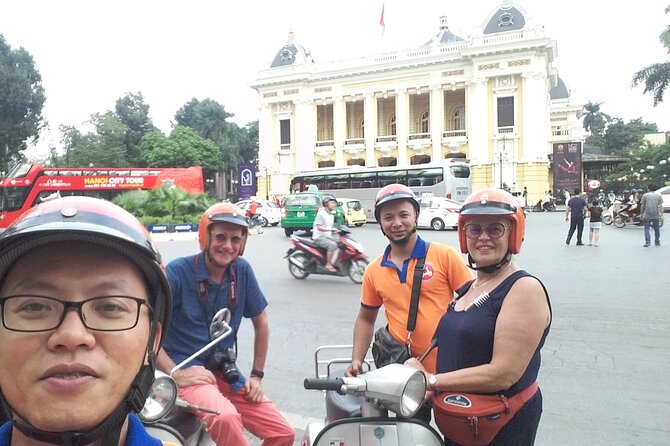
After Banana Island, you ride along the area near the world Guinness record mosaic wall, the romantic West Lake zone, and through zigzag alleys in Ngọc Hà village.
Then you stop at Huu Tiep Lake area to see the B-52 Lake—the site connected to the December 1972 bombing of Hanoi, with the body of a US aircraft.
Time here is about 30 minutes, and admission is included. This isn’t a “take photos and laugh” moment. It’s a memorial-type stop with a clear historical context. If you’re sensitive to war-related sites, plan for that. I find it helps to approach it quietly: read what’s there, take a breath, then move on when you’re ready.
Also note: because the stop is tied to the bombing-related area and aircraft remains, you may feel the heaviness more than you expected—so mental prep matters.
Duong Tau train street: the timing trick that makes it work
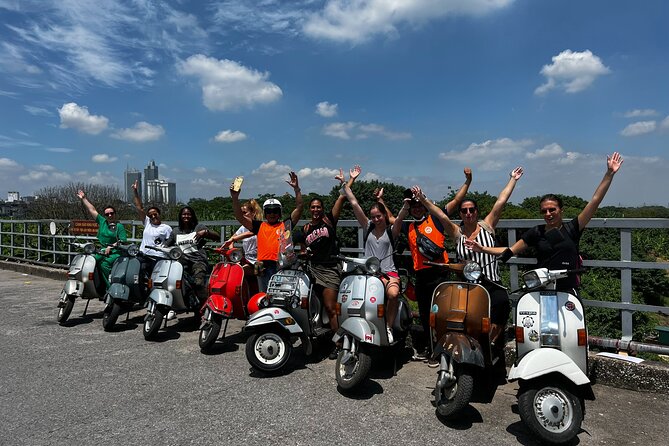
This is the stop that often sells people on Hanoi scooter tours, but the real value is how the tour handles it.
You visit Duong Tau, the Hanoi train street area. You’ll walk along the tracks where houses sit just centimeters from the railway line. The tour specifically notes that some parts may be temporarily closed by local government for safety, and the team knows exactly when and where the train appears to keep your curiosity satisfied without taking risky chances.
Time here is about 30 minutes, and admission is included.
What’s practical about this: waiting near the track is where the experience either becomes chaos or stays calm. Since the tour is designed around safe timing, you’re more likely to see the train pass without feeling like you’re improvising everything yourself.
You’ll also enjoy a drink while waiting. That small detail matters because it turns a stressful “stand-by” moment into something more human—something closer to how locals handle a routine interruption.
Lunch at Hanoi Train Station: a cozy reset after the ride
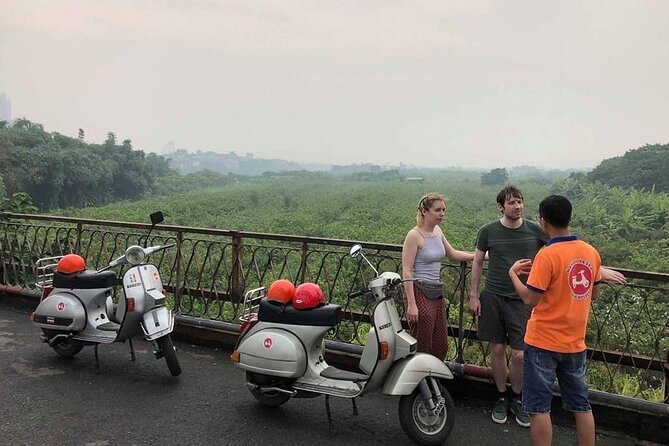
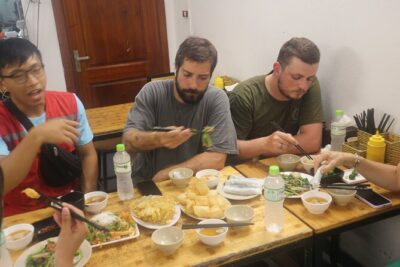
After the train street walk, you finish with Hanoi train station and a local restaurant meal. The tour keeps it simple: you sit down inside a truly local Vietnamese restaurant and enjoy lunch there.
Time is about 30 minutes, and lunch is included. If you’ve been out all morning or early afternoon, lunch inside a train-station-area setting feels oddly satisfying—you get a real break, but you stay in the same Hanoi mood.
The meal is described as “quintessence of Vietnamese cuisine,” and that’s the practical promise: this isn’t a fancy show lunch. It’s a straightforward, comfortable reset where you can fuel up before heading back.
Price and what you’re actually buying for $57.60

At $57.60 per person, the price looks reasonable once you match it to what’s included:
- Private transportation
- English-speaking guide
- Vintage Vespa with safe riders
- Pickup and drop-off
- Lunch
- All fees and taxes
- Multiple admissions included (with the flea market entry specifically free)
So you’re not just paying for a ride. You’re paying for navigation, timing (especially for train street), and access to stops that don’t fit well into a DIY half-day.
Does it include everything? Tips are not included, which is typical. Also, personal expenses aren’t included. But for most people, the built-in lunch and included admissions remove the annoying “what’s extra?” feeling.
Who should book this Vespa back-streets route
This tour is a strong match if you want:
- a short, focused half-day experience (about 4 hours)
- to see Hanoi beyond the main sightseeing lanes
- photo time plus real street scenes like the flea market and train street
- a guide-led plan that handles safety and timing
It’s also a good choice if you like food as part of the story, since lunch is included and the day is designed around stops that connect to daily life.
Who might pause first: if you hate scooters, struggle with uneven walking, or get stressed by close traffic, consider whether the pillion style and the 1.5 km walk are comfortable for you. If you’re sensitive to war memorial content, know the B-52 Lake stop is part of the route.
Should you book it? My honest take
I’d book this if you want one Hanoi outing that mixes big-city landmarks with everyday texture, without you having to plan every turn. The route is designed to move fast but not randomly: it includes iconic checkpoints, then pushes you into flea market repairs, river-adjacent life on Banana Island, and the train street timing problem that most people would struggle to handle safely.
If you’re the kind of person who thinks a map and a Grab ride are enough, you might feel this is more structure than you need. But if you want your half-day to feel like Hanoi—not a checklist—this is the kind of tour that usually delivers.
FAQ
FAQ
How long is the Vespa tour?
The tour is about 4 hours.
What time does it run in the morning or afternoon?
There’s a morning schedule from 8:30–12:30 and an afternoon schedule from 13:00–17:00+.
Where does the tour start?
The meeting point is St. Joseph Cathedral at P. Nhà Thờ, Hàng Trống, Hoàn Kiếm, Hà Nội 100000, Vietnam.
Is pickup from my hotel included?
Yes. Pick up and drop off at your hotel are included.
How many people are in the group?
The tour has a maximum of 12 travelers.
What’s included in the price?
Included features are private transportation, English-speaking guide, vintage Vespa and safe riders, hotel pickup/drop-off, lunch, and all fees and taxes.
Are admission tickets included?
Admissions are included for the listed paid stops, while the flea market stop (Phố Chùa Vua) is marked as free.
Is train street part of the tour, and is it always open?
Train street is included, and the tour notes that some parts may be temporarily closed for safety. The team indicates they know when and where the train passes safely.
Is lunch included, and where is it served?
Yes. Lunch is included at a local Vietnamese restaurant inside the Hanoi train station area.
What happens if the weather is bad?
The experience requires good weather. If it’s canceled due to poor weather, you’ll be offered a different date or a full refund.