REVIEW · HANOI
Vespa Sidecar Sightseeing and Cuisine Tour in Hanoi
Book on Viator →Operated by Vespa Sidecar Tour in Hanoi · Bookable on Viator
Hanoi by sidecar is wonderfully efficient. I love the Vespa sidecar route through backstreets plus the fact that you cover a lot of key sights without wasting time. I also love the food-and-culture angle: you get lunch included, and you’re pointed toward the snacks you’ll want to hunt for on your own. The one drawback to consider is weather—this tour is built for good conditions, so rain can affect timing.
This isn’t the kind of “bus-and-brag” sightseeing that only touches the postcard parts of town. You’ll pass major landmarks like the Hanoi Opera House area, get a guided look at the Imperial Citadel area without long museum time, and spend real time around temples and the Old Quarter streets.
It’s also genuinely practical: pickup is offered, you start and end near the same central meeting point, and you ride in a sidecar that’s described as comfortable, clean, and safe. If you’re the type who likes to ask questions—traffic chaos, history, worship customs—this tour gives you a structure for it.
In This Review
- Key Highlights You’ll Actually Care About
- A Vespa Sidecar Way to See Hanoi Fast (and Not Stress)
- Price, Time, and What You’re Buying for $55
- Getting There: Meeting Point, Pickup, and How the Tour Runs
- Stop 1: Hanoi Opera House and the Presidential Palace Pass-By
- Stop 2: Duờng Tau and Train Street—What You’ll See and What to Expect
- Stop 3: Imperial Citadel (Thăng Long) North Gate Without the Time Sink
- Stop 4: Phú Tây Hồ—Vietnamese Worship Culture Up Close
- Stop 5: Chùa Trấn Quốc—Oldest Temple Feel and Story-Led Photos
- Stop 6 and Stop 7: Old City Gate to Old Quarter Snack Time
- Stop 8: Hoàn Kiếm Lake Photo Circuit and Ngọc Sơn Stories
- Lunch Included: The Real Reason This Tour Works for Food Lovers
- Who This Tour Fits Best (and Who Might Want Another Plan)
- Should You Book This Vespa Sidecar Sightseeing and Cuisine Tour?
- FAQ
- How long is the Vespa sidecar sightseeing and cuisine tour?
- Where does the tour start and end?
- Is pickup available?
- What’s included in the price?
- Are entrance tickets included?
- Are snacks and egg coffee included?
- Does the tour go to Train Street if it’s closed?
- What if the weather is bad?
- What is the cancellation policy?
Key Highlights You’ll Actually Care About
- A ride-first itinerary that gets you through Hanoi’s backstreets fast, with time on foot where it matters
- Duờng Tau and Train Street access—even though Train Street has been closed by local government, the tour says it will still take you there
- Temple stops with context (Phu Tay Ho and the oldest temple, Chùa Trấn Quốc), plus chances to join local activities
- Old Quarter walking time built in, including traditional snack time
- Hoàn Kiếm Lake photo circuit featuring spots like Tháp Rùa and Cầu Thê Húc, with story-led stops
A Vespa Sidecar Way to See Hanoi Fast (and Not Stress)
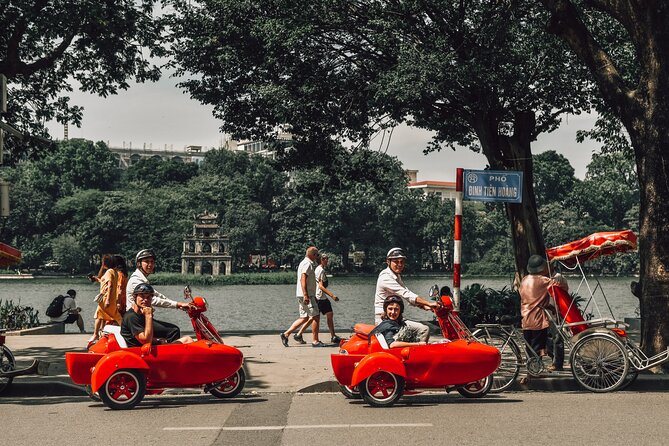
If you’ve ever tried to “optimize” Hanoi on your own, you know the problem: the city looks close on a map, but it can feel like a puzzle in motion. This tour solves that with a Vespa sidecar setup that’s built for movement. You don’t just stare at traffic—you ride through it while your guide handles route logic and timing.
What I like most is that the day doesn’t feel like a highlight reel that ignores daily life. You’ll pass historic landmarks, then peel into areas where locals actually move and worship. That mix is the sweet spot for a first visit. You get orientation (where things are, how areas relate), and you also get cultural context that makes the sights feel earned.
Sidecars also change the way you experience street scenes. From the road, you’re close enough to notice sounds, food smells, and the rhythm of small streets—without having to do the tricky “where do I park this scooter” math. If you want Hanoi to feel real, not just photographed, this style of touring tends to work.
Price, Time, and What You’re Buying for $55
For $55 and about 4 hours 30 minutes, you’re paying for three things: transport, guidance, and food coverage that keeps you from spending the whole day deciding what to eat.
Yes, there’s sightseeing value: several major stops are built in. But the bigger value is that your guide provides the connective tissue—what you’re seeing and why it matters. For example, you don’t just arrive at a gate or a temple. You get a quick guided explanation and then time to look around and take photos.
Food-wise, lunch is included, and you get bottled water. You do still pay for some extras (snacks and egg coffee are not included, and you buy them at the market and train street). That’s a good setup if you like flexibility: you’re not forced into a single “tour meal,” but you’re also not left hungry with a dead phone battery and no plan.
One practical point: since the tour includes time on foot in busy areas, bring shoes you can handle on uneven sidewalks and slick spots after rain. This is the kind of half-day where comfort is worth more than style.
Getting There: Meeting Point, Pickup, and How the Tour Runs
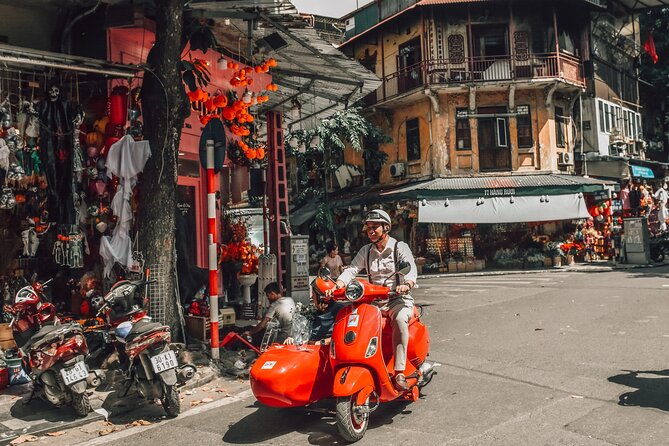
The meeting point is 3 P. Hàng Tre, Lý Thái Tổ, Hoàn Kiếm, Hà Nội. The tour ends back at the same point, so you don’t get stuck figuring out your last transport leg.
Pickup is offered, which helps a lot if you’re staying outside the immediate Old Quarter zone. You’ll also get a mobile ticket. I like that kind of low-friction start—arrive, check in, roll out.
The tour is private, meaning only your group participates. That can matter in places like train street areas or temple courtyards where quick adjustments to pace help. Also, your guide can tailor the speed: slow enough for questions and photos, fast enough that you still hit all stops before your energy crashes.
And because Hanoi can throw you curveballs weather-wise, it’s smart to watch the forecast. This experience requires good weather. When it’s good, it flows. When it’s not, you should be ready for changes.
Stop 1: Hanoi Opera House and the Presidential Palace Pass-By
You begin with a short greeting at the meeting point and then hit the road. One of the early strengths is how you’re guided past major landmarks before you even stop. You’ll pass the Presidential Palace area while your guide shares historical context, which helps everything you see later “click.”
Then you arrive at the Hanoi Opera House. The time here is about 25 minutes, with free admission. This isn’t a long formal visit. Think of it as a sight-and-story stop: a chance to orient yourself visually, grab photos, and understand why the building matters in the city’s mix of French colonial influence and Vietnamese identity.
Drawback to consider: if you’re expecting a deep, slow museum-style tour, this first stop is more of a quick “get your bearings” moment. It works well for most people because the day is packed—but if you hate crowds and prefer long indoor time, you might want to balance this with a separate slower activity later.
Stop 2: Duờng Tau and Train Street—What You’ll See and What to Expect
After the Opera House area, the route moves to Duờng Tau, an outdoor market. This is where the day starts to feel more like street Hanoi than landmark Hanoi. Your guide introduces the market vibe and sets up the next stop.
Then comes the big one: the famous train street area. The itinerary notes that Train Street has recently been closed by local government, yet the tour says it guarantees taking you there. The practical takeaway for you is simple: even if the exact “train street experience” is limited, you’ll still be pointed toward the iconic location and the surrounding street scene.
You should also plan your snack spending here. Snacks and egg coffee aren’t included, and the idea is you buy them at the market and train street area. If you want the classic egg coffee moment, this is one of the likely windows to grab it.
One consideration: street conditions can change fast. If the train street access is restricted on the day, your guide’s explanations and photo spots become even more important. Don’t treat it like a guaranteed perfect “train passes overhead” scene. Treat it like a guided look at an instantly recognizable Hanoi phenomenon.
Stop 3: Imperial Citadel (Thăng Long) North Gate Without the Time Sink
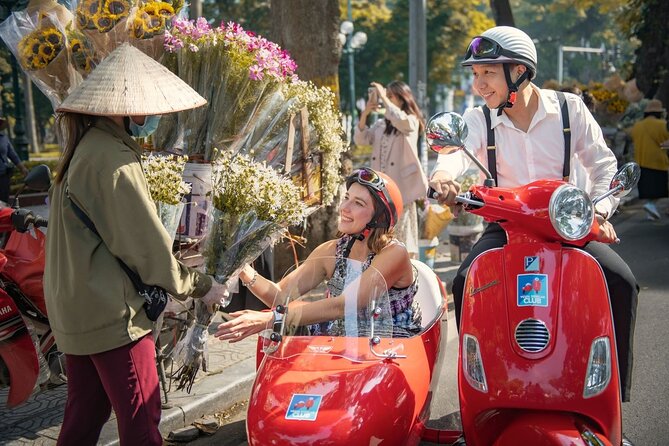
Next up is the Imperial Citadel of Thang Long. You stop at the North Gate and do not go inside. The time is short—about 20 minutes—with guided historical information and time to take pictures.
For many visitors, that’s a smart balance. Going inside can take more time and energy, and sometimes you’re competing with crowds and logistics. Here, you get the context you need to appreciate what you’re seeing, and then you keep moving.
The drawback: if you’re a serious history nerd who wants walls, museums, and long reading, this gate-only approach may feel too brief. But for a half-day sightseeing-and-cuisine plan, it’s efficient. You’ll leave knowing what the place is, even if you don’t spend hours there.
Stop 4: Phú Tây Hồ—Vietnamese Worship Culture Up Close
Phú Tây Hồ is one of those stops that changes the tone of the day. You’ll spend around 25 minutes here. Your guide introduces Vietnamese worship culture, and the tour includes time for you to join some activities like local people, or simply see around the temple.
This is valuable because it helps you interpret what you’re looking at. Temples in Vietnam aren’t just photo backdrops. The small rituals, the way people move, and the everyday flow around the grounds are part of the place’s meaning.
One practical tip: be respectful with clothing and behavior. In temple areas, your guide’s instructions matter, so follow them closely, especially if you’re offered chances to take part in certain activities.
If you prefer purely secular sightseeing, this might feel more “cultural” than “scenic.” But if you’re curious, it’s a great way to see Hanoi as a living city, not a set of monuments.
Stop 5: Chùa Trấn Quốc—Oldest Temple Feel and Story-Led Photos
Then you head to Chùa Trấn Quốc, described as the oldest temple in Hanoi. You get about 25 minutes here too. Your guide explains worship traditions and shares legend stories related to the site. There’s also time to walk around, take photos, and join some local activities.
This stop tends to be a highlight for people who like temples but don’t want a “sit and read a guidebook” experience. Stories make the visuals easier to understand. You’ll recognize details better when you know what the legends are pointing at.
As with any temple visit, be mindful of where people are praying and what areas are meant for ceremonies. If you take photos, do it without blocking foot traffic. Your guide will usually steer you toward good, non-disruptive spots.
Stop 6 and Stop 7: Old City Gate to Old Quarter Snack Time
The tour keeps things moving through central historic space. You’ll see the Old City Gate for about 10 minutes. It’s a quick historical look at how local life sits around older architecture—then you’re off again.
After that, you spend about 1 hour in the Old Quarter. This is one of the most useful parts of the entire tour because it’s where you get street-level atmosphere. Your guide introduces historical culture on famous streets, and there’s time to enjoy traditional snacks.
This is also where you can start building your own “next day plan.” Once you’ve walked with a guide here, you’ll have a stronger sense of where to return later for a second pass—especially if you want quieter browsing or you discover a snack you want to chase again.
If you’re someone who gets overwhelmed by crowds, Old Quarter can be intense. That said, the tour’s timing and guided pacing can make it easier. Wear breathable layers and keep water handy (bottled water is included).
Stop 8: Hoàn Kiếm Lake Photo Circuit and Ngọc Sơn Stories
The final major sightseeing block centers on Hoàn Kiếm Lake—often called the heart of Hanoi for good reason. You’ll have about 50 minutes here, with time to take photos and hear stories at key spots.
Expect a photo loop around the lake, with stops that include Tháp Rùa (Turtle Tower) and Cầu Thê Húc (The Huc Bridge). You’ll also hear stories tied to Ngọc Sơn Temple, Tháp Bút, and the hero monument area.
This part is where the tour’s storytelling pays off. The lake looks beautiful in photos, but the legends make it memorable. You’ll likely understand the symbolism better and notice details you would’ve missed alone.
Practical note: Hoàn Kiếm can be busy. If you want the best photos, hang back a second when your guide points out a spot and don’t rush. The best angle often shows up with a little patience.
And yes, you’ll return back toward the meeting point afterward.
Lunch Included: The Real Reason This Tour Works for Food Lovers
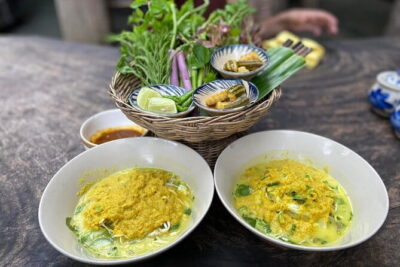
Lunch is included, and that matters because Hanoi can lure you into “just one more street snack” mode until dinner becomes a scramble. Having lunch built into the schedule gives you structure.
The tour also supplies bottled water. Small thing, big comfort. It keeps the ride-and-walk rhythm from becoming a dehydration problem, especially if the day is warm.
For snacks and egg coffee, you’ll buy them at the market and train street area. I like this approach because it lets you choose what you actually want rather than taking a one-size-fits-all set. If egg coffee is on your list, this is the moment to try it. If you’d rather stick to smaller bites, you can.
Who This Tour Fits Best (and Who Might Want Another Plan)
This tour is a great fit if you want to:
- See a lot of Hanoi in a half-day without running between addresses
- Learn the meaning behind landmarks and temples, not just capture photos
- Use the Old Quarter time to get oriented for what to do next
It may be less ideal if you:
- Prefer long museum-style visits (several stops are shorter by design)
- Want guaranteed train passes and dramatic train-overhead moments (the train street area is noted as closed)
- Dislike weather-dependent plans (the tour requires good weather)
Also consider motion comfort. Sidecar riding is part of the experience. The descriptions you’ll see emphasize safety and comfort, but if you’re sensitive to traffic noise or sudden movements, it’s smart to plan for that.
Should You Book This Vespa Sidecar Sightseeing and Cuisine Tour?
I’d book it if your top goal is efficient Hanoi with real context. You get a safe, comfortable transport method, an English-speaking guide experience (based on reviews), and a route that mixes landmarks, temples, and Old Quarter street life. The included lunch and bottled water make it feel like a true “tour meal plan,” not just sightseeing with a snack suggestion.
Skip it or pair it carefully if you only want slow, deep history or you’re visiting during weather that’s likely to disrupt outdoor time. And if your dream is a perfect train street show, treat this as a guided visit to the area and its story—not a guaranteed spectacle.
If you’re planning your first days in Hanoi and want a smart foundation for the rest of your trip, this is one of the easier ways to get your bearings fast.
FAQ
How long is the Vespa sidecar sightseeing and cuisine tour?
The tour lasts about 4 hours 30 minutes.
Where does the tour start and end?
It starts at 3 P. Hàng Tre, Lý Thái Tổ, Hoàn Kiếm, Hà Nội, Vietnam and ends back at the same meeting point.
Is pickup available?
Pickup is offered.
What’s included in the price?
Lunch and bottled water are included.
Are entrance tickets included?
Entrance tickets for the listed stops are shown as free.
Are snacks and egg coffee included?
No. Snacks and egg coffee are not included, and you buy them at the market and train street.
Does the tour go to Train Street if it’s closed?
The itinerary states that the street has been closed by local government, but the tour guarantees to take you there.
What if the weather is bad?
The experience requires good weather. If it’s canceled due to poor weather, you’ll be offered a different date or a full refund.
What is the cancellation policy?
You can cancel for a full refund up to 24 hours before the experience starts. If you cancel less than 24 hours before, the amount paid is not refunded.