REVIEW · HANOI
Hanoi Back Streets Vespa Tours: Hanoi Vintage Vespa Tours City
Book on Viator →Operated by ASIA VESPA TOURS · Bookable on Viator
Old scooters, big Hanoi energy. This Hanoi Vintage Vespa Tour is built for getting your bearings fast, with a driver-ready guide team and route choices that steer you away from the usual postcard loop. You’ll follow old roads, hop across major bridges, and see landmarks from the street, not from a stuck bus seat.
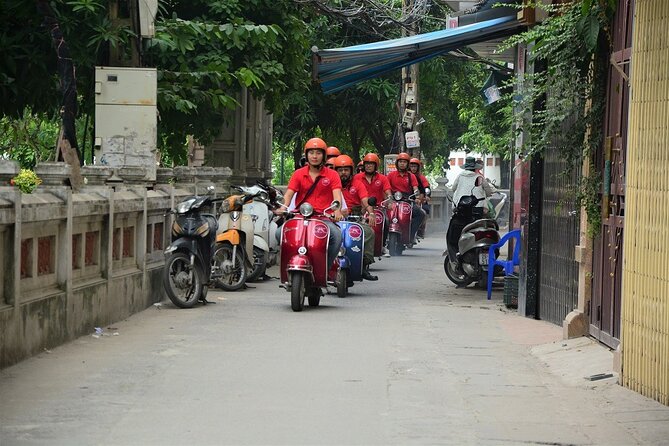
Two things I’d bet you’ll like right away: the vintage Vespas and the very practical setup. You get a safety briefing first, then you’re guided through the traffic rhythm with drivers who keep things controlled. I also love that the tour mixes big sights with quieter stops like West Lake areas and the Hữu Tiep Lake site, so it doesn’t feel like a checklist-only ride.
One drawback to consider: this is a scooter tour in busy city streets. Even with safety coaching, it’s not ideal if you hate riding close to traffic, or if you’re uncomfortable sitting on a scooter for several hours.
In This Review
- Key highlights at a glance
- Why a vintage Vespa works so well for Hanoi
- The route in plain English: from Opera House to Trúc Bạch
- Long Bien Bridge: the fast way to see Hanoi across the Red River
- Duờng Tầu: culture and street texture, not just big monuments
- West Lake farming lanes: a calmer side of the Red River edge
- Hữu Tiep Lake and the Downed B-52: history you can reach easily
- Passing Ba Đình, Hoàn Kiếm, temples, and Hanoi’s famous edges
- Trúc Bạch lunch: Vietnamese comfort food with a local feel
- Guides and safety: the detail that makes scooters feel doable
- Price and value: $59 for a full, efficient Hanoi loop
- Who should book this Hanoi back streets Vespa tour
- Should you book this Hanoi vintage Vespa tour?
- FAQ
- Where does the Hanoi Vintage Vespa Tour start?
- How long is the tour?
- Is pickup included?
- Do I get a mobile ticket?
- What’s the maximum group size?
- Are admission tickets included?
- What stops are part of the route?
- Does the tour pass major landmarks or only stop places?
- What about safety and learning to ride?
- Is free cancellation available?
Key highlights at a glance

- Vintage Vespa + trained pickup guides: Get briefed before you ride, and cruise with a small team.
- Long Bien Bridge crossing: A standout moment while you’re already in motion.
- West Lake farmland feel: Short stops that trade lanes of scooters for plants and river-side calm.
- Hữu Tiep Lake and the Downed B-52: A war-history stop that’s easier to reach by scooter than on your own.
- Lunch with local spots: You eat Vietnamese food that’s meant to taste like everyday Hanoi.
Why a vintage Vespa works so well for Hanoi
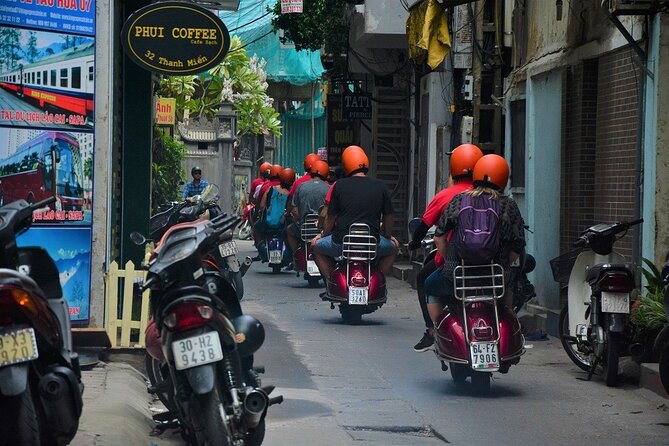
Hanoi can be intense. Traffic is loud, streets are tight, and walking everywhere eats your whole day. A Vespa tour solves that without turning the city into a blur.
On this route, you get a paced mix: major sights you’ll recognize, plus side streets that actually show how people move. The tour runs about 4 hours 30 minutes, and it’s set up so you’re not waiting around all the time. You ride, you stop, you learn, you eat, repeat.
The other big win is the feel of the vehicles. Old-school scooters have a slower, human scale than modern transport. When you pass landmarks along boulevards and then slip into alley networks, the contrast helps you understand the city’s shape.
The route in plain English: from Opera House to Trúc Bạch
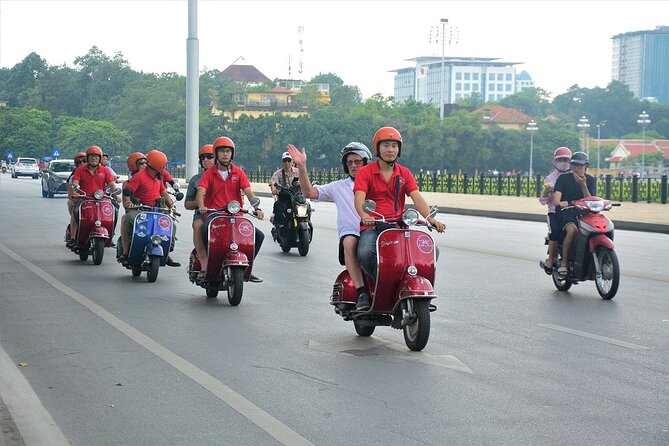
Your tour centers around a practical start: Hanoi Opera House on Tràng Tiền (1 Tràng Tiền, Phan Chu Trinh, Hoàn Kiếm). That’s a useful anchor point because it’s central and easy to orient yourself around later.
You’ll travel through several zones. Early on, you head toward Long Bien Bridge and the river crossing vibe. Next you work your way through areas connected to West Lake and the Red River side. Later you reach Hữu Tiep Lake and the Downed B-52 site. The last stretch leans toward local eating near Trúc Bạch, where the tour switches from sight stops to lunch time.
Along the way, there’s also a “pass by” layer. You don’t just do scooter-only detours; you also roll past major government and cultural points such as Ba Đình Square, the Ho Chi Minh Mausoleum area, Literature Temple, and Trấn Quốc Temple, plus scenic waters like Hoàn Kiếm Lake and Trúc Bạch Lake. It’s the kind of route that helps you connect neighborhoods on a map.
Long Bien Bridge: the fast way to see Hanoi across the Red River
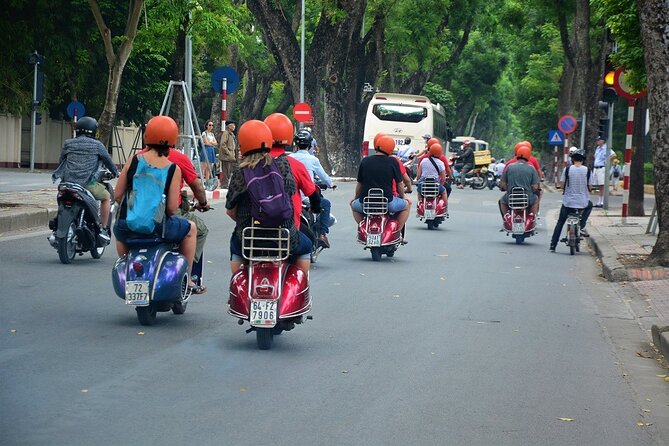
Long Bien Bridge is one of those Hanoi moments that hits harder when you’re moving. The ride time matters here because you’re not just staring at it from a distance.
Before you even start rolling, you get a safety briefing on how to mount the Vespa comfortably and how to ride safely. The goal is simple: get your bearings fast. Then the tour uses that setup to guide you across the bridge area and nearby streets.
This stop is also short enough to feel efficient. You’re not stuck there. You get the experience, the view, and the sense of scale, then you head to what comes next.
If you’re the type who likes photo moments, focus on the bridge crossing and the river edge angles. The tour format gives you more chances to spot good lines than a walking-only approach would.
Duờng Tầu: culture and street texture, not just big monuments
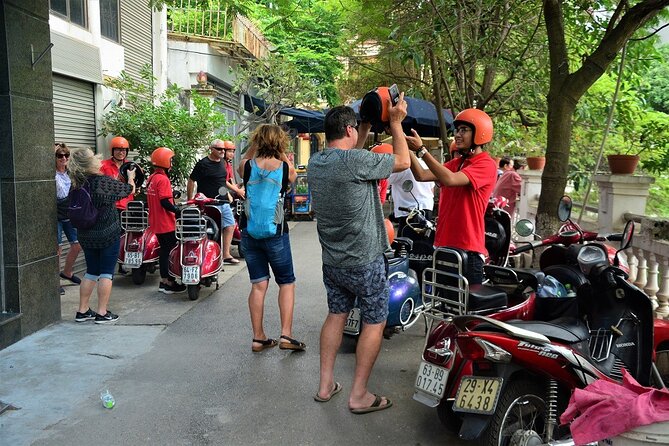
The next stretch moves you toward Duờng Tầu, which is more about street texture than a single “look here” site. You’re guided through iconic landmarks and lesser-known city parts, so you get variety without losing momentum.
This is the part of the tour where you’ll start noticing how Hanoi layers old and new. You’ll be on the scooter long enough to get comfortable with the flow, but you’ll still stop long enough to make sense of what you’re seeing.
Practical tip: keep your phone ready but don’t stop your focus when traffic tightens. The guides do the planning; you do the steady riding and quick snapping. You’ll enjoy it more.
West Lake farming lanes: a calmer side of the Red River edge
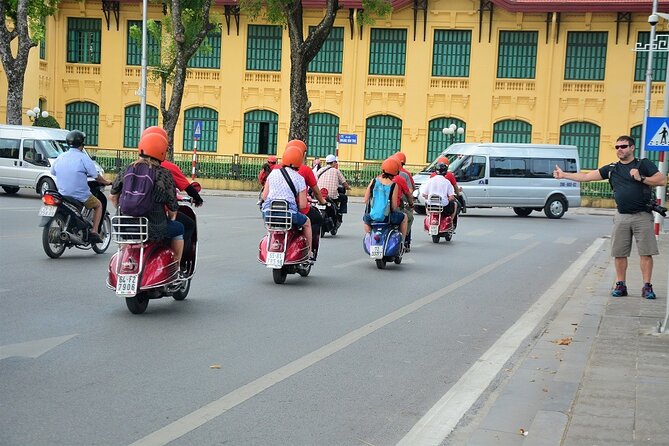
Then the tour shifts in mood toward West Lake and the farming zones connected to the Red River side. The plan includes riding through village areas known for flower, vegetable, and banana plantations.
This stop is valuable because it breaks the Hanoi intensity. Instead of another round of lanes and horns, you get a change of pace. The scooter still keeps it fun and efficient, but the surroundings slow your brain down.
You’re also seeing how Hanoi feeds itself locally, at least through the lens of these river-adjacent fields. It’s a different kind of sightseeing: less about a monument and more about how daily life shapes the view.
A small drawback to note: if you expect a long nature hike, this isn’t that. The timing is built for a quick, guided look, not an all-day rural stay. Think of it as a refresh between city sights.
Hữu Tiep Lake and the Downed B-52: history you can reach easily
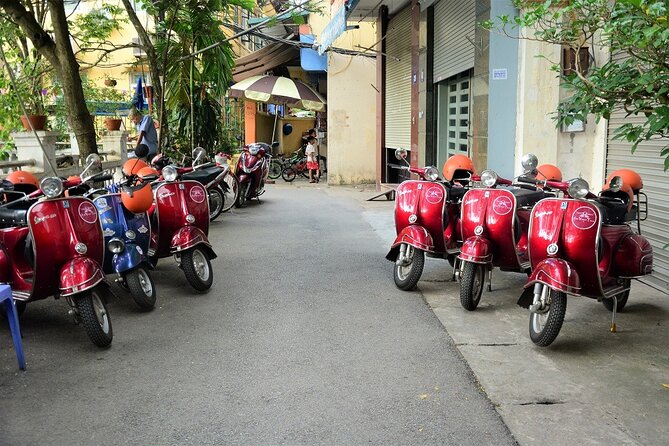
One of the most compelling stops is Hữu Tiep Lake and the Downed B-52 site. It’s tied to the 1972 war period, and the aircraft remains at the location, which makes the visit feel immediate.
What I like about doing this by Vespa is access. You can’t always reach these kinds of sites comfortably by public transport with the same timing. Here, the route brings you to it as part of a bigger day, so it doesn’t feel like a separate mission.
Expect it to be a reflective, quieter moment compared with the bridge and busy-city segments. It’s not a party stop. It’s a learn-and-look stop, and the guided narration helps connect what you’re seeing with the broader story.
If you like historical context, this is the time to slow down and listen. Even if you’re not a history person, the physical presence of the aircraft makes it easier to understand.
Passing Ba Đình, Hoàn Kiếm, temples, and Hanoi’s famous edges
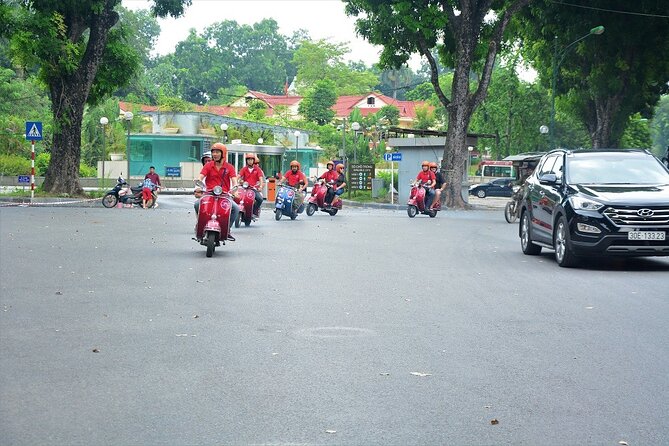
A big part of the experience is not only the stops, but also what you pass. You roll by the Ho Chi Minh Mausoleum area and Presidential Palace, and you pass Ba Đình Square. You’ll also go by the Temple of Literature area and Trấn Quốc Temple.
Later you move through scenic water regions such as Hoàn Kiếm Lake and Trúc Bạch Lake, plus the Opera House area again around the meeting point context.
This passing layer matters because it links the city’s “official face” with its everyday lanes. You get a sense of Hanoi’s geometry: squares and monuments, then the smaller streets and waterways that sit around them.
A practical note: while you’re passing major landmarks, don’t expect a long photo session at every spot. The tour is built around moving and stopping where it’s most meaningful.
Trúc Bạch lunch: Vietnamese comfort food with a local feel
The tour ends with a lunch stop near Trúc Bạch and local eateries. The format is designed to support family-run businesses and to keep the food feeling like everyday Hanoi rather than only tourist-friendly menus.
The earlier description also points to a café stop featuring authentic, organic, and nourishing Vietnamese dishes. In practice, what you should plan for is a real meal that breaks up the ride time and lets you recharge before heading back out to explore on your own.
Lunch timing is built into the final stretch (the last stage includes about 45 minutes). That’s enough time to eat without feeling rushed, but not enough to turn it into a second afternoon.
Bring water if you’re the type who gets thirsty while riding. It isn’t stated, so treat this as a common-sense move rather than a guarantee.
Guides and safety: the detail that makes scooters feel doable
This is where the reviews give you a strong signal. The guide names that pop up most are Chris and the broader ASIA VESPA TOURS team of guides and drivers. The feedback is consistent: guides are punctual, drivers are careful in hectic traffic, and English communication is described as strong.
You’ll also get a riding orientation before you set off. That matters because Hanoi street riding isn’t intuitive if you’ve never done it.
What you should watch for in your own body: keep a steady posture, relax your shoulders, and hold on with consistent pressure. The safety briefing is there to help you get comfortable getting on and riding easily, not to turn you into a scooter racer.
If you’re worried about riding in traffic, this tour is still worth considering because it’s structured around coaching and skilled drivers. That setup is the difference between a nervous ride and a confident one.
Price and value: $59 for a full, efficient Hanoi loop
At $59 per person for about 4.5 hours, this is priced like an activity you book to save time. The value is in the combination: transportation by scooter, guided interpretation, and multiple guided stops rather than one main attraction.
A few value boosters:
- The tour includes admission tickets for the guided stops listed during the ride.
- The group size stays capped at 15 travelers, which usually means more guide attention and less chaos at stops.
- Pickup is offered, which reduces time wasted finding the right spot before the ride.
Also, the tour is popular enough that it’s often booked about 29 days in advance on average. If you’re traveling in peak season, it makes sense to lock it in early to avoid schedule gaps.
Who should book this Hanoi back streets Vespa tour
This tour fits best if you want Hanoi in one afternoon without losing the flavor of side streets.
You’ll likely enjoy it if:
- you like cities but don’t want to spend the whole day walking
- you want a mix of classic landmarks and smaller, less-obvious stops
- you’re comfortable riding a scooter or willing to learn with a safety briefing
You might want to skip it if you strongly dislike street traffic or feel anxious around moving bikes, even with safety coaching. Also, if you can’t sit comfortably for several hours, this may be more work than you want.
The group size cap is a plus for couples and small friend groups who want conversation with the guide without a huge crowd.
Should you book this Hanoi vintage Vespa tour?
Yes, I’d lean toward booking if you want a well-paced, time-efficient Hanoi experience with vintage Vespas, strong guiding, and a route that includes the bridge crossing plus the Hữu Tiep Lake stop.
My decision checklist:
- You can handle scooter riding in city traffic, even if it starts with training.
- You want a guided route that connects major sights like Ba Đình and Hoàn Kiếm with quieter stops like West Lake and Hữu Tiep Lake.
- You’ll appreciate narration more than you need long museum-style time at each location.
- You want a full half-day activity with lunch built in, so you don’t have to plan meals separately.
If all that fits, this is a fun way to see Hanoi’s layers in a single ride.
FAQ
Where does the Hanoi Vintage Vespa Tour start?
The tour starts at Hanoi Opera House on Tràng Tiền (1 Tràng Tiền, Phan Chu Trinh, Hoàn Kiếm, Hà Nội).
How long is the tour?
The experience runs for about 4 hours 30 minutes.
Is pickup included?
Pickup is offered, and you’ll meet your guide and drivers to receive a safety briefing.
Do I get a mobile ticket?
Yes, the tour includes a mobile ticket.
What’s the maximum group size?
The tour has a maximum of 15 travelers.
Are admission tickets included?
Admission tickets are included for the listed guided stops during the ride.
What stops are part of the route?
You’ll visit areas such as Long Bien Bridge, Duờng Tau, West Lake, Hữu Tiep Lake and the Downed B-52, and end near Trúc Bạch with a lunch stop.
Does the tour pass major landmarks or only stop places?
It includes stops and also passes notable sights like Ho Chi Minh Mausoleum, Presidential Palace, Ba Đình Square, Literature Temple, Trấn Quốc Temple, Hoàn Kiếm Lake, and the Opera House area.
What about safety and learning to ride?
You receive a safety briefing on how to ride the Vespa and how to get on comfortably before setting off.
Is free cancellation available?
Yes. You can cancel for a full refund if you do so at least 24 hours in advance of the experience start time.