REVIEW · SIEM REAP
Angkor Wat: Guided Vespa Tour / Tuk Tuk or Car
Book on GetYourGuide →Operated by Vespa Backstreet · Bookable on GetYourGuide
Angkor feels bigger from two wheels. This guided Vespa tour turns the Angkor circuit into a moving photo safari with a historian guiding the story behind each stop.
I love how you glide past temple zones with less crowd time, yet still get serious guided attention at the main sights. I also love the human touch of the day—questions welcomed, history explained clearly, and lunch that actually feels like a break in Siem Reap heat.
One drawback to plan for: it’s a full 8-hour outing, and you’ll be riding and walking at multiple temples, so bring a heat game plan and pace yourself.
In This Review
- Key takeaways before you go
- Why a Vespa tour at Angkor just makes sense
- The morning at Bayon: those faces, plus context that makes them click
- Angkor’s main stops, plus the in-between layers
- Ta Prohm: tree roots, film fame, and actual guided meaning
- Lunch near Srah Srang: where the day slows down
- Off-the-beaten-track trails and uncrowded photo moments
- Community-based tourism stop: seeing real life between temples
- Angkor Wat: the crown, with a guide who knows where to look
- Price and logistics: what $29 really buys (and what it doesn’t)
- Who this Vespa tour suits best
- About the guides and what to expect from them
- Should you book this Angkor Wat Vespa day?
- FAQ
- Is the Angkor temple pass included?
- How long is the tour?
- What’s included in the $29 price?
- What language is the guide?
- When does the tour start?
- What’s the cancellation policy?
- Can I reserve now and pay later?
Key takeaways before you go
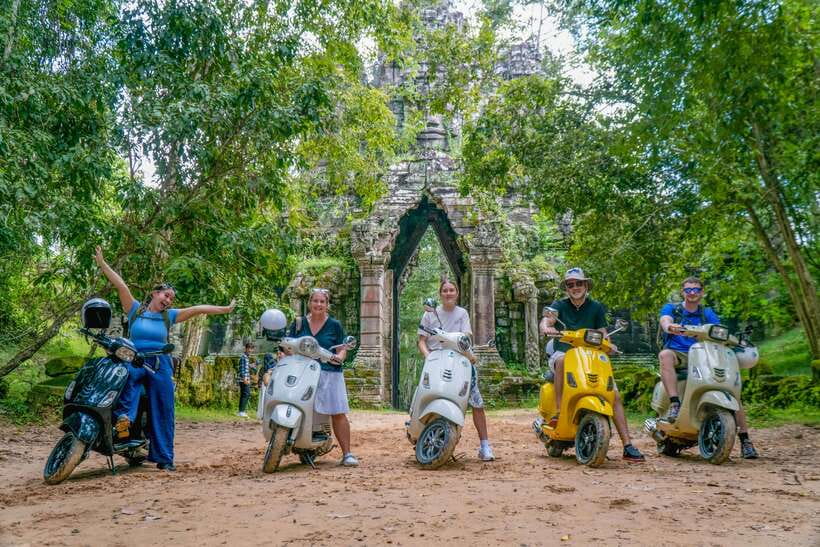
- Vespa transport for photo-friendly routes: you spend less time stuck in slow-moving crowds
- Historian-led temple explanations: details on symbolism and what you’re actually looking at
- Bayon first thing energy: the morning timing helps the site feel more manageable
- Ta Prohm with time for photos: tree-root ruins with a guided walkthrough
- Lunch and drinks included: a real reset before the afternoon temples
- A community-based stop: you see everyday Cambodia beyond temple walls
Why a Vespa tour at Angkor just makes sense
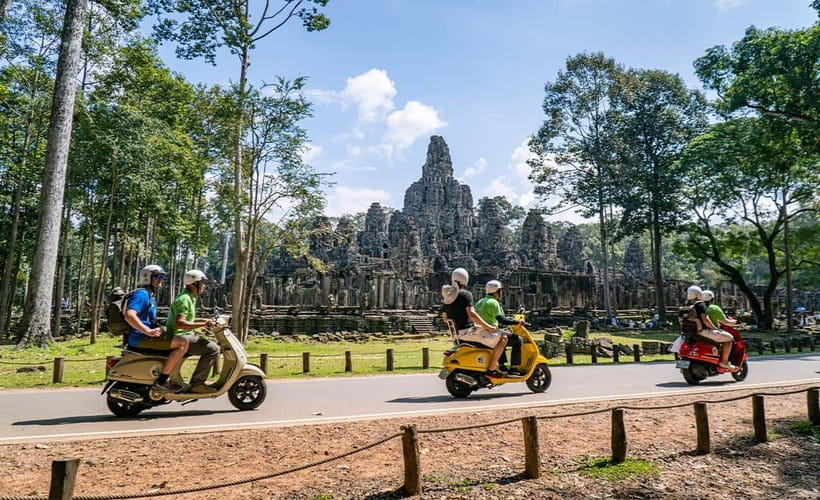
Angkor’s famous for big names and big crowds. The trick is finding a way to see the temples without spending the whole day inching forward behind other people. A Vespa-style circuit with an experienced driver helps you keep momentum, so you can spend more time actually looking and less time waiting.
I also like that this isn’t just a drive-by. You get a professional English-speaking historian/temple guide, so you’re not guessing what you’re seeing or why it matters. Instead, you learn the story as you go—how the sites were built, what the carvings and layouts meant, and where to look for the “wait, that’s there?” details.
The morning at Bayon: those faces, plus context that makes them click
The day typically starts at Bayon Temple in the morning. Bayon is instantly recognizable—towering faces staring out from the towers—but the guide is what turns recognition into understanding. You’ll get guided time (about three hours total), with pauses for photos and time to take in the layers of carvings.
What I like here is that Bayon sets the tone. You learn how the Angkor world worked—power, belief, and symbolism—before you move deeper into the circuit. And because you’re going early, the site feels less chaotic than it does later in the day, which means you can actually enjoy the temple rather than only chase angles.
If you’re the type who likes “tell me what I’m looking at” moments, Bayon is where the tour starts paying off.
Angkor’s main stops, plus the in-between layers
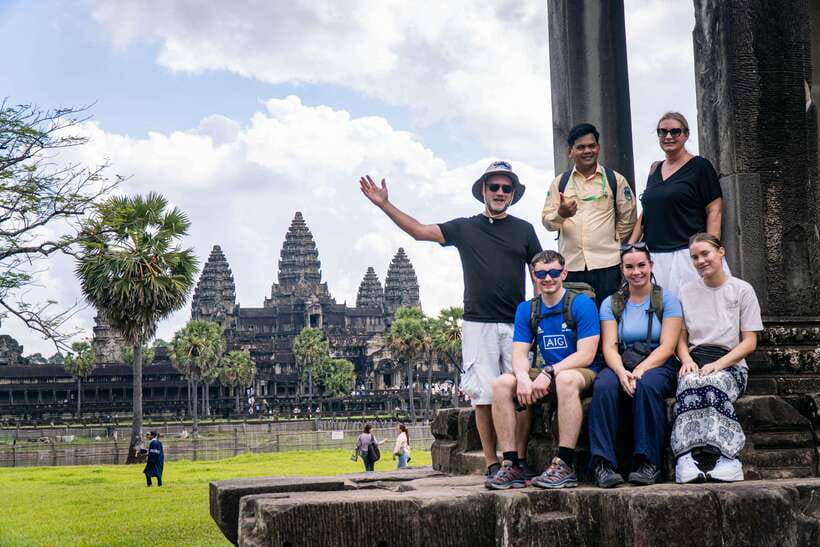
This kind of Angkor day works best when it’s not only the postcard temples. You’ll cover the big hits—Angkor Wat and Ta Prohm—but the tour also focuses on the in-between areas, like lesser-known trails and spots that help you escape crowds.
Along the way, you might also visit viewpoints tied to the classic temple scenery, including the Elephant Terrace. Even if you’ve seen photos, these areas make more sense when you’re there and someone can point out what the stonework is communicating.
A small-group format helps too. You’re not stuck waiting on long lines of people moving as one mass. Instead, you get a more flexible flow, especially for quick photo stops and short transitions.
Ta Prohm: tree roots, film fame, and actual guided meaning
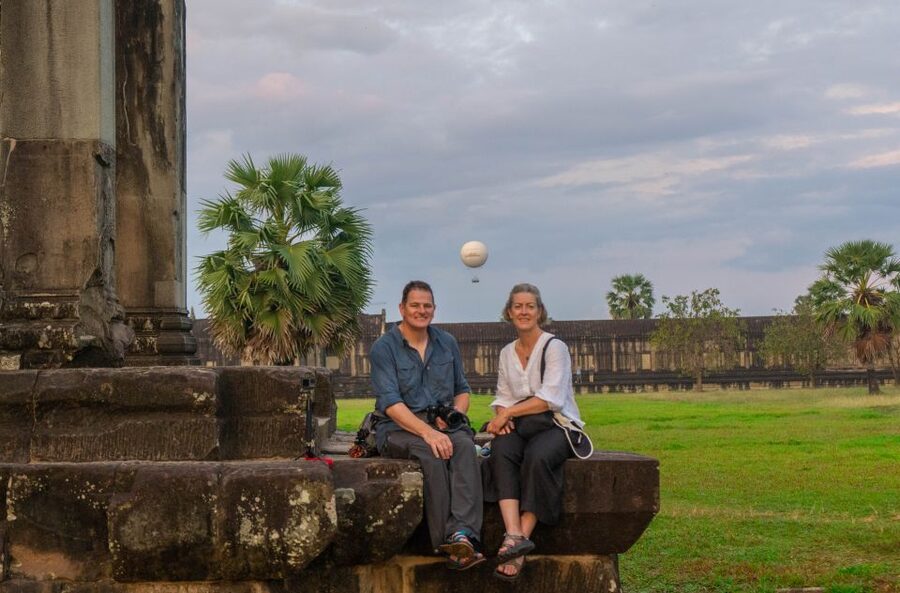
Next up is Ta Prohm, famous for the ruins entwined with trees. If you’ve seen the movie scenes from Tomb Raider, you’ll recognize why this place gets so much attention. But the temple is more than a movie set.
You’ll get a guided visit (around two hours) plus time for photos. The guide’s job is to show you what’s going on with the structure—how the temple survives with roots involved, how spaces were originally shaped, and where your eyes should land on the details.
What makes this stop worthwhile on a Vespa day is the pacing. You can jump from one site to the next without turning the afternoon into an exhausted shuffle. That matters at Ta Prohm, because you want energy left for looking closely, not only moving fast.
Lunch near Srah Srang: where the day slows down
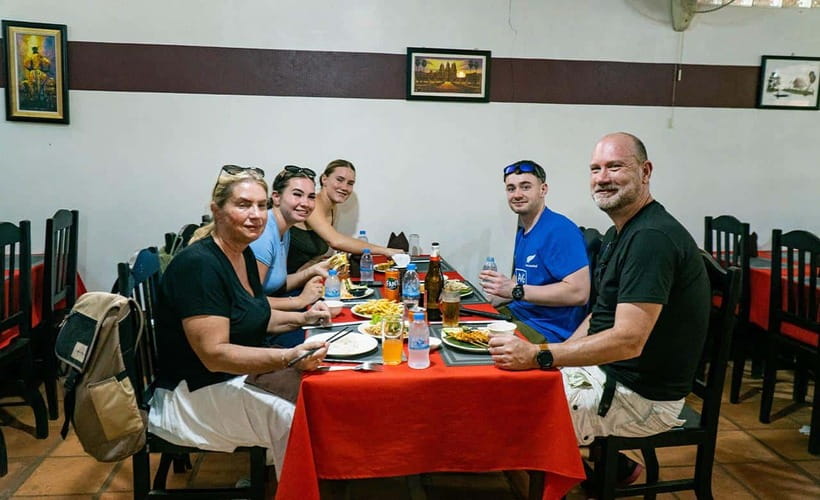
Midday is your reset. Lunch is included, and it’s set at a local house/restaurant area near Srah Srang, with about one hour for food and a breather. In the heat of Siem Reap, this break is more than convenience—it’s what keeps you from turning the afternoon into “just get me back.”
Some lunches are described as air-conditioned, which is a welcome perk when you’re stepping in and out of sun all day. Drinks are included too, so you can actually rehydrate and refuel without hunting around.
Practical tip: after lunch, your eyes will usually feel a bit slower. That’s a great time to ask your guide a question—something simple like what to notice next—because your guide can connect the dots from the morning sites.
Off-the-beaten-track trails and uncrowded photo moments
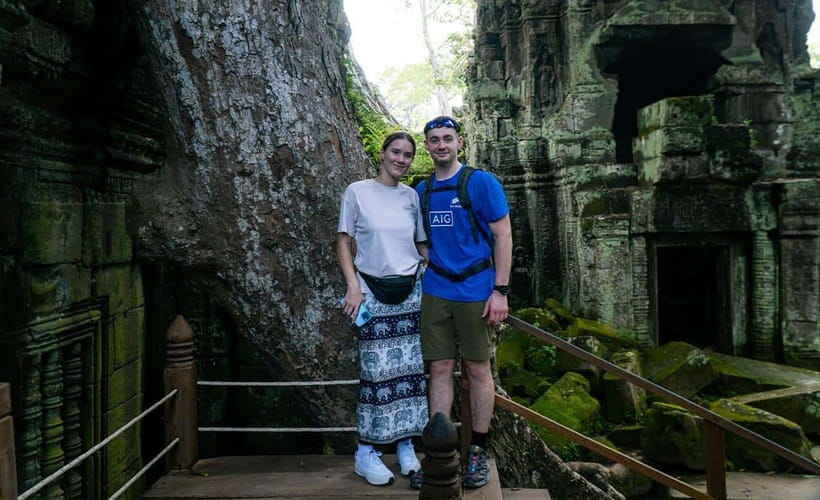
One of the main promises of this tour is that you’ll ride beyond the busiest paths. In plain terms: you’ll spend time in temple zones and viewpoints that are not just the standard, packed Instagram route.
This is where the Vespa format shines. A driver can take you on relaxed, efficient routes between key stops so you’re not losing hours to traffic jams and pedestrian bottlenecks. You also get the advantage of quick escapes—turns that let you reach a viewpoint without the full crowd surge.
The guide also helps with attention to detail. Several experiences highlight guides pointing out hidden carvings and explaining the small symbolism you would otherwise miss. It’s the difference between taking a photo and understanding what the photo is showing.
Community-based tourism stop: seeing real life between temples
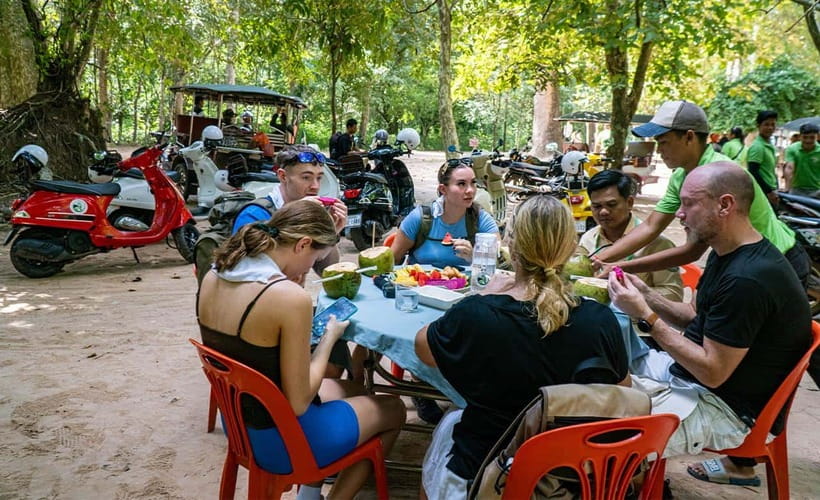
After you’ve covered the temple highlights, the tour includes a visit to a community-based tourism center. The idea is to experience everyday life of Cambodians firsthand, not as a lecture but as a lived context around the heritage sites.
This part of the day is a meaningful change of pace. Temple days can blur together—stone, shade, and repeating architecture patterns. A community stop helps you remember that Angkor isn’t an isolated world. It sits within a living country, with people navigating daily work, families, and community decisions.
Even if you’re short on time, this pause tends to stick in your memory because it reframes the trip as more than monuments.
Angkor Wat: the crown, with a guide who knows where to look
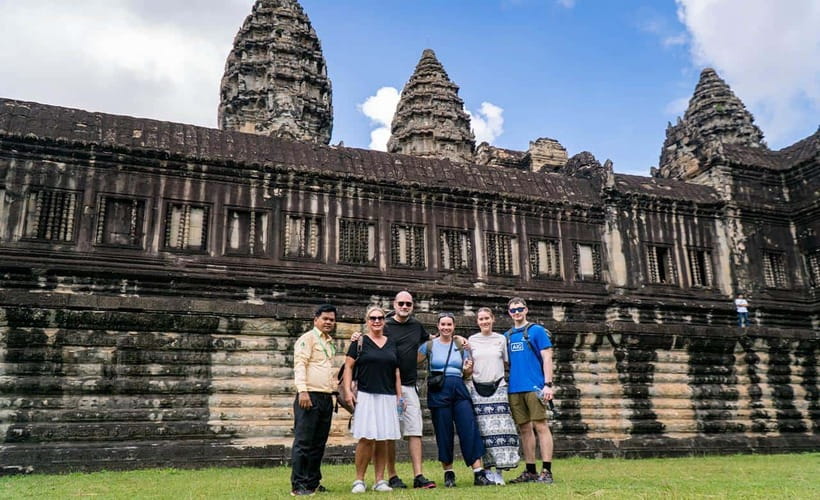
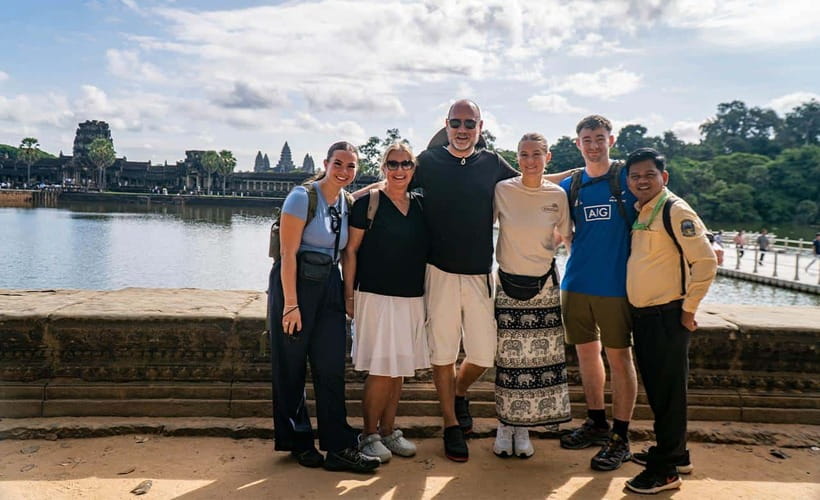
The tour also brings you to Angkor Wat for a guided visit of about two hours. Angkor Wat can overwhelm you at first—big scale, strong geometry, and all that sunlit stone. Again, the guide’s job matters: you’re not just walking corridors. You’re learning how to read the temple.
Expect your guide to explain the symbolism and the historical meaning behind what you see. The value here is that you’ll notice more during the walk. Instead of getting lost in the size, you’re guided toward key details and told what they represent in the broader story.
Also, after touring other temples earlier, Angkor Wat lands differently. Bayon sets one mood, Ta Prohm shows another, and then Angkor Wat gives you the “this is the system” feeling. By the time you reach it, you’re ready to connect the architectural language across the sites.
Price and logistics: what $29 really buys (and what it doesn’t)
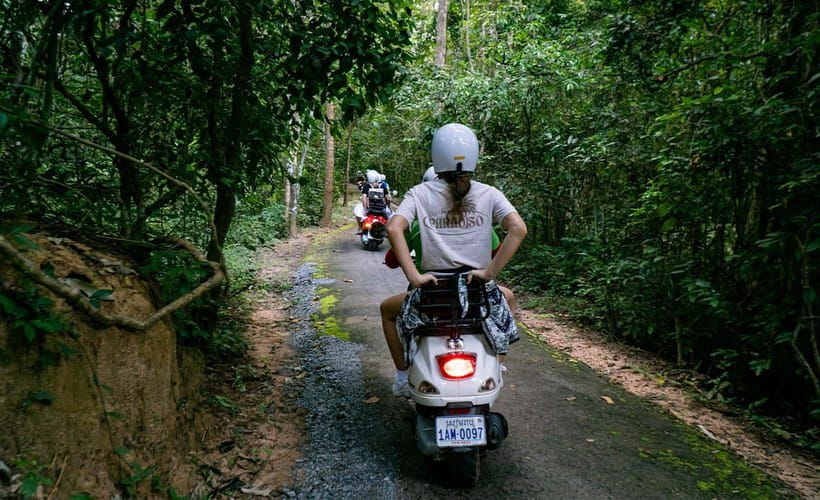
The price listed is $29 per person, for about eight hours with round-trip scooter transport, an experienced driver, and a professional English-speaking guide. Lunch and drinks are included, which usually ends up being one of the best value parts of the day.
The one big item not included is the Angkor temple pass. That’s important for your planning math. If you’re budgeting, you’ll need to factor the pass cost on top of the tour fare. Otherwise, you’ll get surprised right when you think you’re ready to go.
Value-wise, this setup works because you’re buying a full day of transportation plus interpretation. If you tried to DIY it—driver, route planning, guided explanations—you’d likely spend more while still risking long waits and crowd bottlenecks.
Small group availability is another reason the day feels efficient. You’re not fighting a huge crowd dynamic, and that makes each stop more enjoyable.
Who this Vespa tour suits best
This tour is a great fit if you:
- want temple guidance in English (not just wandering)
- like the idea of getting to sites with less crowd time
- prefer riding and pacing that keeps the day from turning into constant walking
- enjoy photo breaks but still want context, not only sightseeing
It’s also a solid choice if you’re traveling with mixed interests—someone may love architecture, someone else loves photos, and the guide can handle both by explaining what to look for as you go.
If you hate any scooter riding at all, or you’re dealing with mobility limits, you should think carefully. The day includes both temple walking and multiple short transitions.
About the guides and what to expect from them
You’ll be traveling with an experienced driver and a guide focused on history and temple meaning. Some experiences mention guides like Sotin and Sarak, with an approach that covers temple symbolism and also points out small details you might overlook. Other days mention guides like Son with a flexible, committed style, and there are also mentions of specific drivers like Peng.
In practice, what you’ll feel is this: the guide doesn’t only name the temples. They explain what’s happening in the stonework and why it was built that way. That’s what makes a day like this worth paying for.
Should you book this Angkor Wat Vespa day?
Book it if you want a full Angkor day that balances major temples with crowd-smart routing, plus real guided interpretation. The combination of Vespa transport, an English historian guide, lunch with drinks included, and a community visit makes it more than a checklist trip.
Skip it if you want total freedom to wander without structure, or if you’re not comfortable with a full 8-hour day that mixes riding and temple walking. Also, be sure you budget for the Angkor temple pass, since that’s on you.
If you’re aiming for an efficient, guided, photo-friendly Angkor experience that still feels human and local, this is the kind of tour that earns its place on your itinerary.
FAQ
Is the Angkor temple pass included?
No. The Angkor temple pass is not included, so you’ll need to arrange it separately.
How long is the tour?
The tour duration is 8 hours.
What’s included in the $29 price?
It includes round-trip by scooter, an experienced driver, a professional English-speaking guide, drinks, and lunch.
What language is the guide?
The live tour guide works in English.
When does the tour start?
Starting times vary. You’ll need to check availability to see the starting times.
What’s the cancellation policy?
You can cancel up to 24 hours in advance for a full refund.
Can I reserve now and pay later?
Yes. There’s a reserve now & pay later option, so you can book your spot without paying immediately.