REVIEW · CHIANTI HILLS
From San Gimignano: Chianti Half-Day Vespa Tour with Lunch
Book on GetYourGuide →Operated by Italy on a Budget Tours · Bookable on GetYourGuide
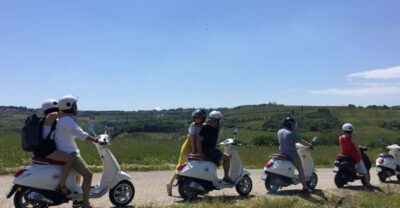
A Vespa through Chianti feels like local life. This half-day guided scooter ride from San Gimignano takes you through vine fields and cypress-lined roads, with planned photo stops and a winery break for lunch plus tastings.
I especially love the small-group size (max 8) and the way the day blends riding with a guided food-and-wine pause. It’s not just driving from point A to B; it’s structured so you get scenery, then a real meal at the end.
One thing to watch: the driving test is mandatory. If you can’t drive safely, you may be turned away (and the rules say no refunds), so be honest about your scooter comfort level before you book.
In This Review
- Key things I’d circle before you go
- From San Gimignano to Chianti: a half-day that actually fits
- Vespa 101 in the briefing: safety test first, fun second
- Riding Chianti hills on a 50cc Vespa: what the speed limits mean
- Photo stops and quiet villages: how the ride is paced
- Lunch and tastings at a local winery: where the day turns delicious
- Wine and olive oil tasting: learn enough to order better later
- Price and value for $181.26: what you’re really paying for
- Who this Chianti Vespa tour suits best (and who should skip)
- Practical tips before you ride: documents, deposit, and clothing
- Should you book the Chianti Half-Day Vespa Tour from San Gimignano?
- FAQ
- Do I need prior scooter or motorcycle driving experience?
- How fast do the Vespas go on this tour?
- What size is the group?
- What documents and payment do I need on the day?
- What kind of Vespa is provided?
- What’s included for lunch and tasting?
- How long is the tour, and when do we return?
- Is this tour suitable for everyone?
Key things I’d circle before you go
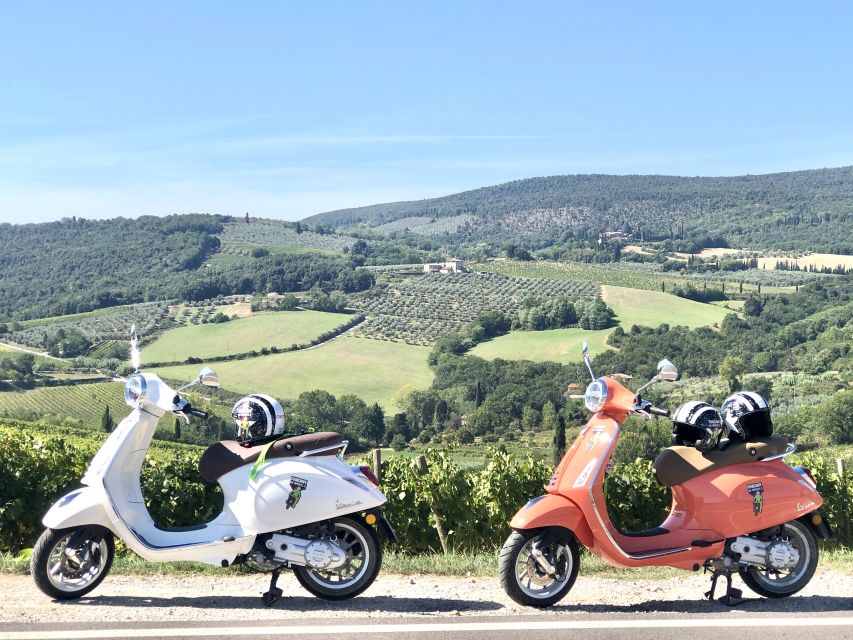
- 50cc Vespa + orientation + driving test before you roll out
- Small group (up to 8) means more attention and easier pacing
- Winery meal with wine and olive oil tasting plus a cellar walkthrough
- Plenty of photo stops across Chianti’s hills, vineyards, and quiet villages
- Time-efficient half-day: you’re back at the meeting point in the early afternoon
From San Gimignano to Chianti: a half-day that actually fits
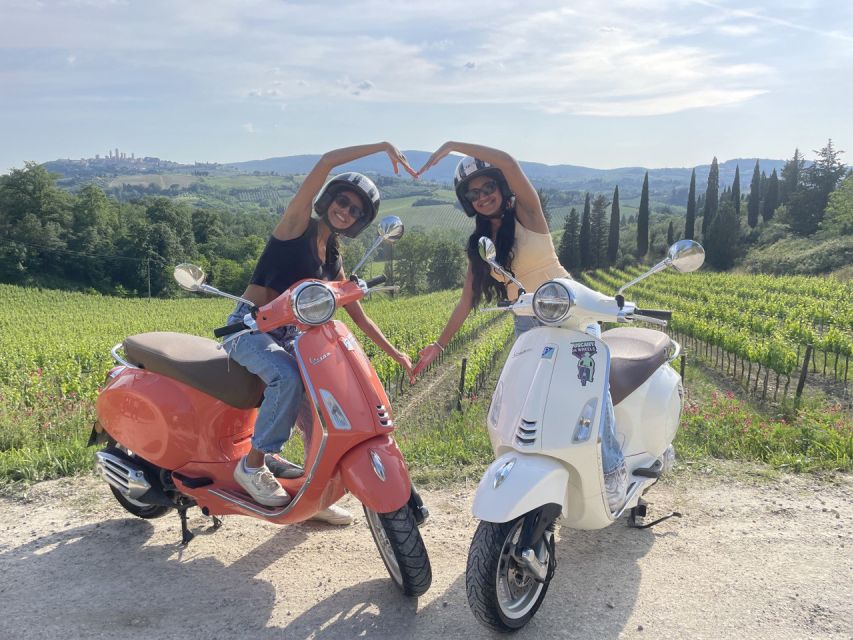
This is a 4.5-hour Chianti experience built around motion and stopping at the right moments. You start in the morning, head into the hills where famous Tuscan wines are produced, then return to the meeting point early afternoon. That timing matters in Tuscany because the good days fill fast: museums, gelato breaks, and long lunches can eat your daylight.
The format also makes practical sense for a first visit. San Gimignano is a great base, but the Chianti roads are where you feel the real “Tuscany” rhythm—vines on the slopes, farmhouses, and long views that open and close as the road bends. On a scooter tour, you don’t spend hours parked. You get to move through the countryside at a slow enough pace to notice what’s around you.
And because it’s a small group limited to 8, you’re less likely to get swallowed by a big-bus crowd. Instead, you ride with people who are there for the same thing: scenic driving, learning a bit along the way, and then eating well.
Vespa 101 in the briefing: safety test first, fun second
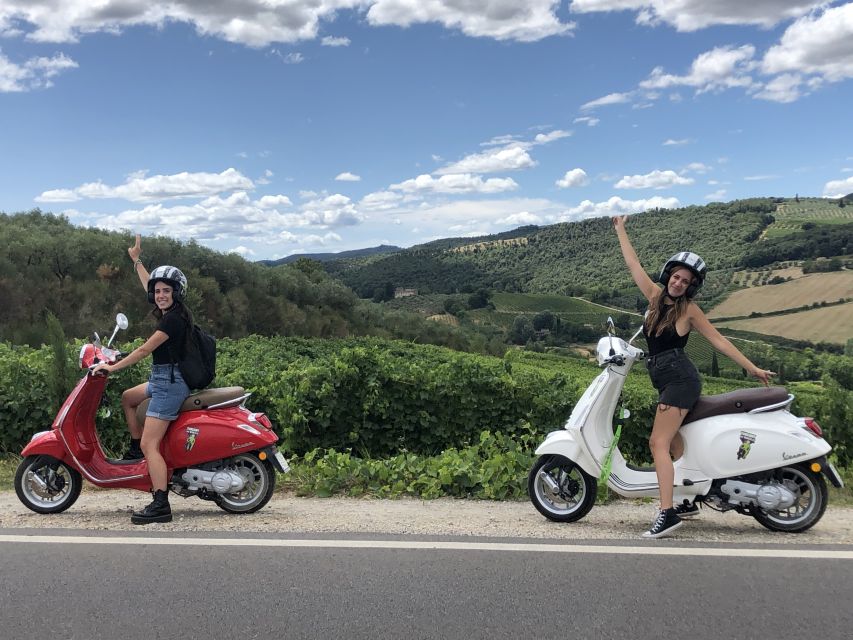
Before you start cruising, you get the pieces that make scooter tours either great or stressful: helmet, orientation, and a driving test. The test is not optional. The operator requires previous scooter or motorcycle driving experience and runs a practical check before departure.
Here’s why this is a good thing, even if it adds pressure. A 50cc Vespa sounds easy until you hit a hill, balance on a narrow lane, or ride behind slower traffic. The tour team’s setup aims to make sure you can handle those moments without turning the trip into white-knuckle work.
What you should do before the day:
- Wear comfortable shoes and clothes you can move in.
- Bring your original driver’s license (no copies).
- Arrive ready to demonstrate control in the first phase.
If you get there and realize you’re not comfortable, don’t “hope for the best.” The rules are firm: anyone unable to drive safely won’t be allowed to attend. In that situation, you may have the option to ride double with your partner—but the “no refunds” rule is in place, so plan carefully.
Guides also get mentioned for being patient and organized. Names that come up often are Vincenzo, Emanuele, Ottavio, and Emilia, and multiple guests highlight that the guide makes safety feel controlled and not chaotic.
Riding Chianti hills on a 50cc Vespa: what the speed limits mean
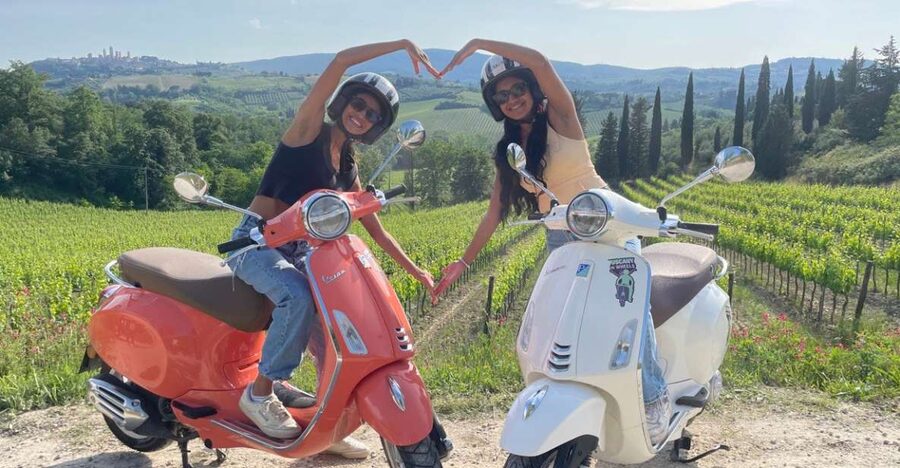
The Vespa you’ll use is a 50cc model (Primavera 50cc or Zip). That engine size is part of the charm. You’re not racing. You’re traveling like the locals do on small roads: steady, close to the scenery, and alert to everything around you.
The tour also has clear speed limits:
- up to 48 km/h on flat roads
- up to 15 km/h on hills
Those numbers are actually helpful for your expectations. It tells you this is built for winding rural routes, not highways. You can focus on the feel of the ride, the curves, and the views instead of scanning a speedometer.
If you’re the sort of person who loves a route with “stop-and-look” moments, this tour fits your style. The day is designed around scenic hills with vines, cypress trees, and rural houses, plus breaks for photo opportunities. You’re not just watching the guide go by—you get time to frame the road, the slopes, and the clusters of vineyards without feeling rushed.
One more practical note: weight and fit matter on a scooter. There’s a recommended max total weight of 160 kg (353 lbs), and the saddle height is 81 cm (2 ft), not ideal for anyone under 1.60 m (5’3”). If you’re borderline on height, it’s worth thinking through how you’ll plant your feet comfortably at stops.
Photo stops and quiet villages: how the ride is paced
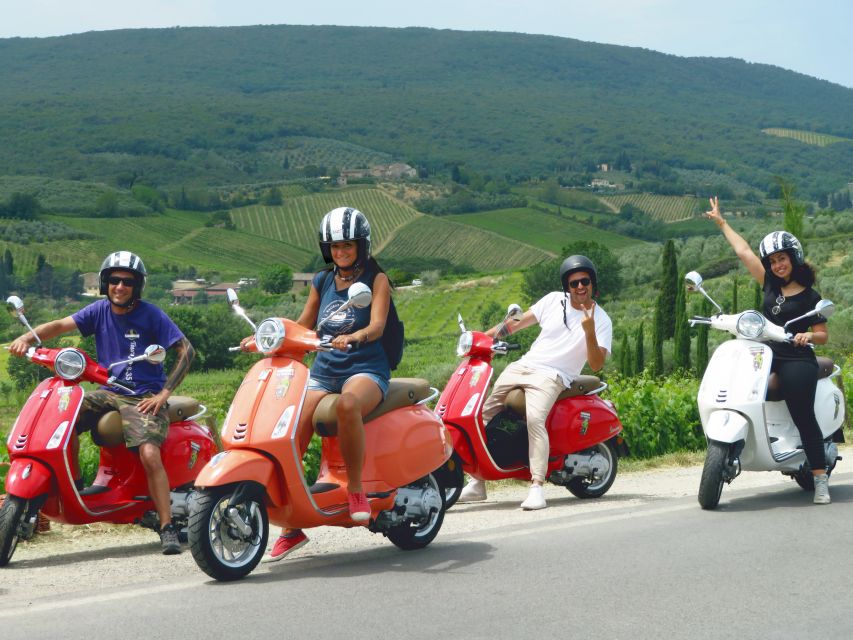
A big part of why people love this tour is how the route stays scenic without becoming exhausting. You’ll ride through Chianti’s working wine countryside—vineyards on slopes, farm buildings, and the small-road feeling that makes Tuscany feel personal.
Your guide builds in stops for photos, which changes the whole vibe. When you’re on two wheels, you can’t just stop whenever you want. So the planning matters: you get moments that are “worth parking the scooter” for.
Multiple guide styles show up in the stories people tell. For example, Vincenzo gets credited for mixing driving with wine knowledge and even helping with pictures and videos. That matters because it removes the awkwardness of trying to film one-handed while looking over your shoulder.
And when you reach smaller village areas, the pace is more about passing through slowly enough to notice textures and details—stone walls, shuttered windows, and the shapes of vineyard rows—than it is about sightseeing like you’re walking a museum circuit.
Lunch and tastings at a local winery: where the day turns delicious
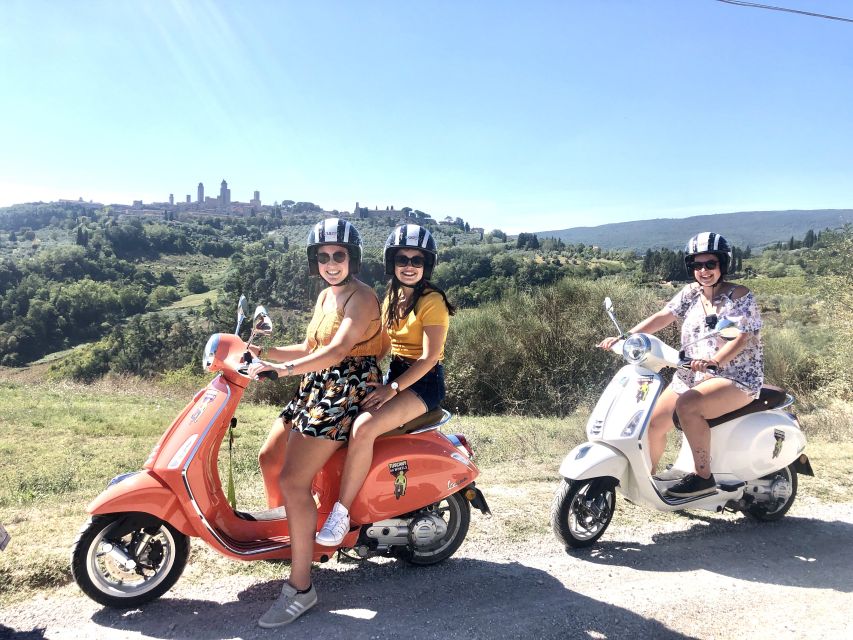
The best part of a good scooter tour is the reset. Here, that reset is a winery stop where you’re guided around the property and then served an authentic Tuscan meal.
During the break:
- the winery owners escort you around their property
- then you eat a Tuscan lunch
- after the meal, you get wine tasting and olive oil tasting
- you also get a guided winery and cellar visit
This is not just “here’s a glass, goodbye.” The tasting is part of the meal rhythm, and the cellar walkthrough gives context to what you’re tasting.
A specific winery name that shows up in the experience is Tenuda Torciano, described as wonderful for both wines and lunch. That kind of detail hints at the quality you can expect from the stop: a real working winery with hospitality, not a quick tourist transaction.
If you care about the why behind food and drink (even just a little), you’ll likely enjoy how the guide connects wine and olive oil to what you’re seeing on the ride. One guide highlighted in the stories is Vincenzo, who’s described as a guide and sommelier type all in one. That’s the kind of pairing that makes the tasting more than guessing what you like.
Wine and olive oil tasting: learn enough to order better later
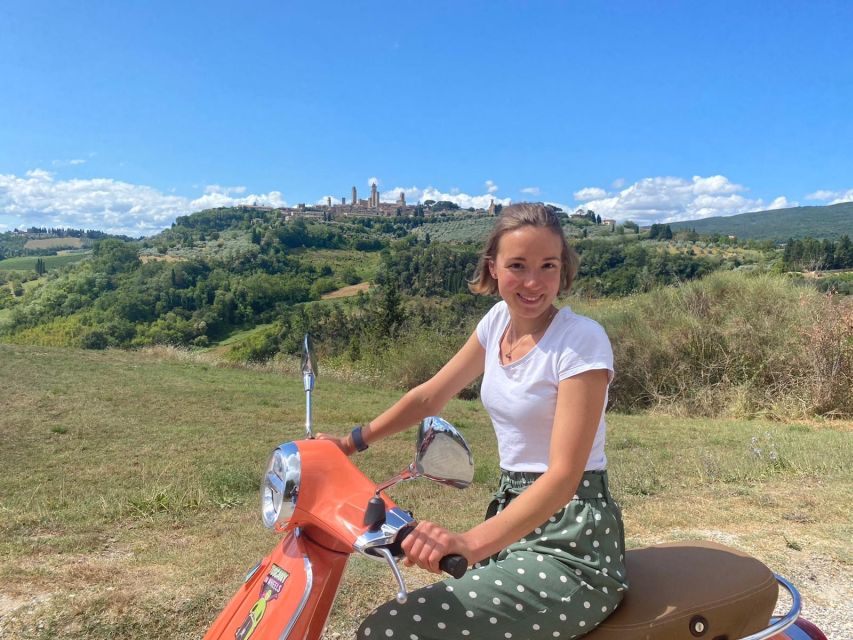
You’re getting two different flavors stories in one sitting:
- wine tasting (built around the region’s grapes and production style)
- olive oil tasting (where aroma, texture, and bitterness balance show up)
That combination is great because it trains your palate in two directions. Wine can be about fruit, structure, and acidity. Olive oil can be about freshness and finish. If you pay attention, you’ll get better at choosing what to buy back in town—or what to order when you return to your hotel.
Guides also get praise for how patient they are with guests who are new to the experience. That matters during tasting because it can feel awkward if you don’t know what you’re looking for. A calm, step-by-step guide turns tasting into a conversation, not a test.
And yes, the food is part of it. The lunch is described as authentic, and that’s a big deal on a day when you’re otherwise eating on the go. After hours on a scooter, a proper meal feels like a reward that actually matches the effort of the ride.
Price and value for $181.26: what you’re really paying for
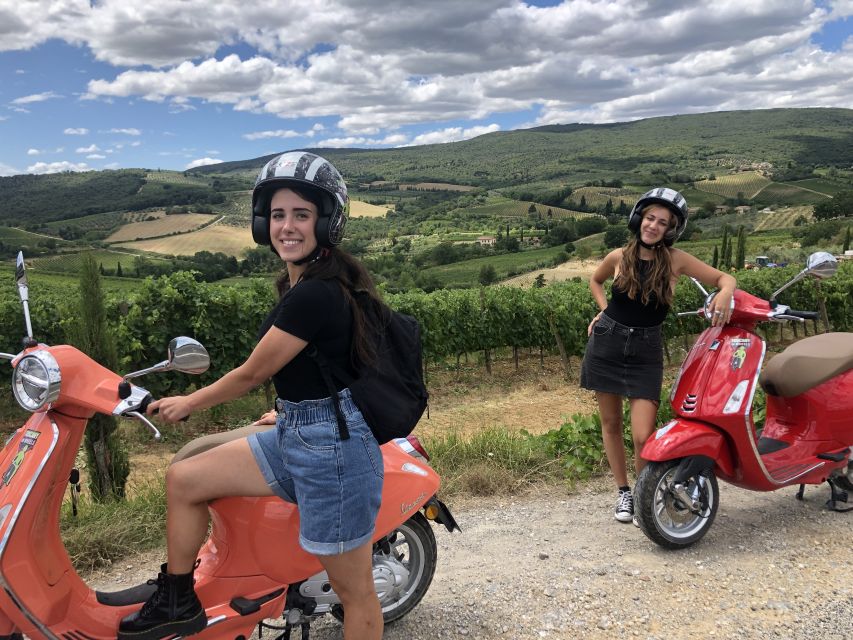
At $181.26 per person, this doesn’t look like a bargain in isolation. But when you break down what’s included, it starts to make sense.
You’re paying for:
- a 50cc Vespa (plus helmet)
- an English-speaking guide (and Italian too)
- a small-group format (max 8)
- orientation and a driving test
- third-party insurance
- a guided winery and cellar visit
- an authentic Tuscan meal
- wine tasting and olive oil tasting
In other words, the price isn’t only the scooter. It’s the full package: guide time, vehicle use, safety setup, and the entire winery meal-and-tasting segment. If you were to replicate this on your own—scooter rental, insurance, finding a winery, arranging a guided lunch—costs and hassle add up quickly.
Also, you’re buying a specific kind of day: morning riding, winery lunch, then returning early afternoon. That structure is hard to improvise well, especially if you want the scenic roads without getting lost or stuck waiting.
Who this Chianti Vespa tour suits best (and who should skip)
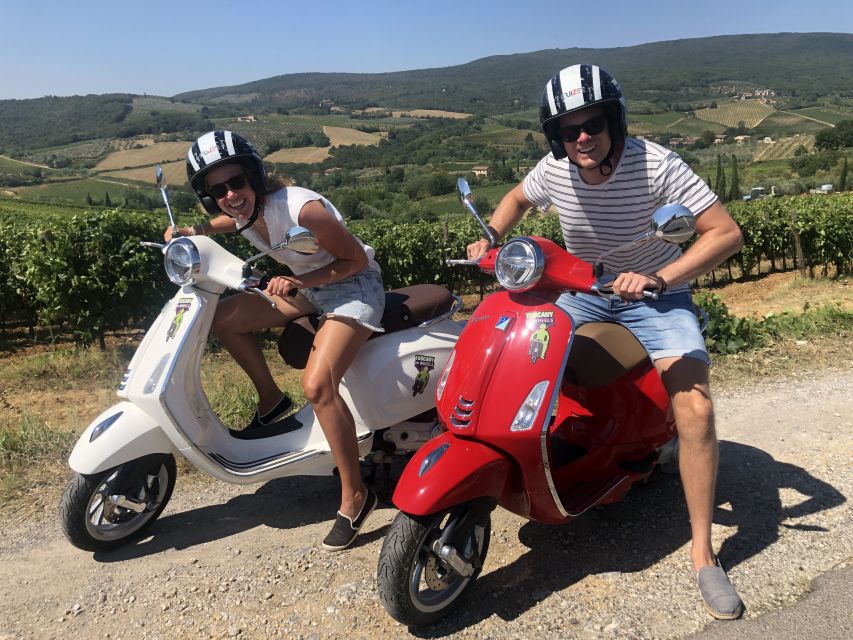
This tour is ideal if you want a hands-on Tuscan day and you like the idea of riding between vineyards rather than touring by bus or car with long stops. It also fits well if you enjoy learning while doing—especially around wine and olive oil, and how the region produces what you’ll taste.
You should think twice if:
- you’re pregnant (not suitable)
- you have mobility impairments (not suitable)
- you’re under 18 (not suitable)
- you’re not confident driving a scooter already (the driving test is mandatory)
Fit and body comfort also matter:
- max recommended weight 160 kg total
- saddle height 81 cm, not recommended under 1.60 m
- max speeds are capped, so don’t expect highway-style riding
If you’re traveling as a couple and one partner is a strong rider and the other is learning, the rules about driving safety are the deciding factor. If you’re both unsure, you might end up disappointed because the test is part of the plan, not a formality.
Practical tips before you ride: documents, deposit, and clothing
This is where you can make or break the day. The tour requires specific paperwork and a credit-card deposit.
Bring:
- passport or ID card (no copies)
- original driver’s license
- credit card (Visa or Mastercard only). The deposit is EUR 500 per Vespa.
- Not accepted: prepaid cards, debit cards, or Amex
No original documents means you may not be allowed to participate, and the rules state no refund in that case.
What to wear and pack:
- Comfortable, closed-toe shoes (you’ll want grip)
- Comfortable clothes for motion
- Plan for an outdoor morning and a winery stop after riding
Ride expectations:
- Vespa speeds are limited, especially on hills, so you’ll likely feel the ride more than chase it
- The scooter’s weight is noted (88 kg), which is part of why the training and fit checks matter
One more note: the meeting point can vary by option booked, and you’ll start and end back at the meeting point.
Should you book the Chianti Half-Day Vespa Tour from San Gimignano?
Book it if you want a half-day that mixes scenic Chianti riding with a real winery lunch and tasting, and you’re already comfortable driving a scooter. The small group size and the focus on safety first make this a smarter choice than many “fun ride” tours.
Skip it (or choose a different style of tour) if you don’t meet the driving requirement, you’re sensitive to scooter balance, or you fall into the listed non-suitable categories. The rules around participation and the no-refund policy if you can’t participate keep this from being a casual, last-minute try-your-luck activity.
If you’re the right fit, this is the kind of day where you leave with two things: the memory of quiet vineyard roads and the taste of Tuscany done properly at a winery table.
FAQ
Do I need prior scooter or motorcycle driving experience?
Yes. Previous scooter or motorcycle driving experience is required, and the team conducts a mandatory driving test before the tour. If you can’t drive safely, you won’t be allowed to attend.
How fast do the Vespas go on this tour?
The Vespa is limited to a max speed of 48 km/h on flat roads and 15 km/h on hills.
What size is the group?
It’s a small-group tour limited to 8 participants.
What documents and payment do I need on the day?
You need an original driver’s license and an original passport or ID. You also need a Visa or Mastercard credit card for a EUR 500 deposit per Vespa (no prepaid, no debit, no Amex).
What kind of Vespa is provided?
A 50cc Vespa Primavera or 50cc Zip is provided, along with a helmet.
What’s included for lunch and tasting?
You get an authentic Tuscan meal, plus wine tasting and olive oil tasting. There’s also a guided tour of the winery and cellar, with winery property guidance before the meal.
How long is the tour, and when do we return?
The duration is about 4.5 hours, and the activity ends back at the meeting point in the early afternoon.
Is this tour suitable for everyone?
No. It’s not suitable for pregnant women, people with mobility impairments, and children under 18. It also notes a fit concern with saddle height (not recommended for people under 1.60 m).